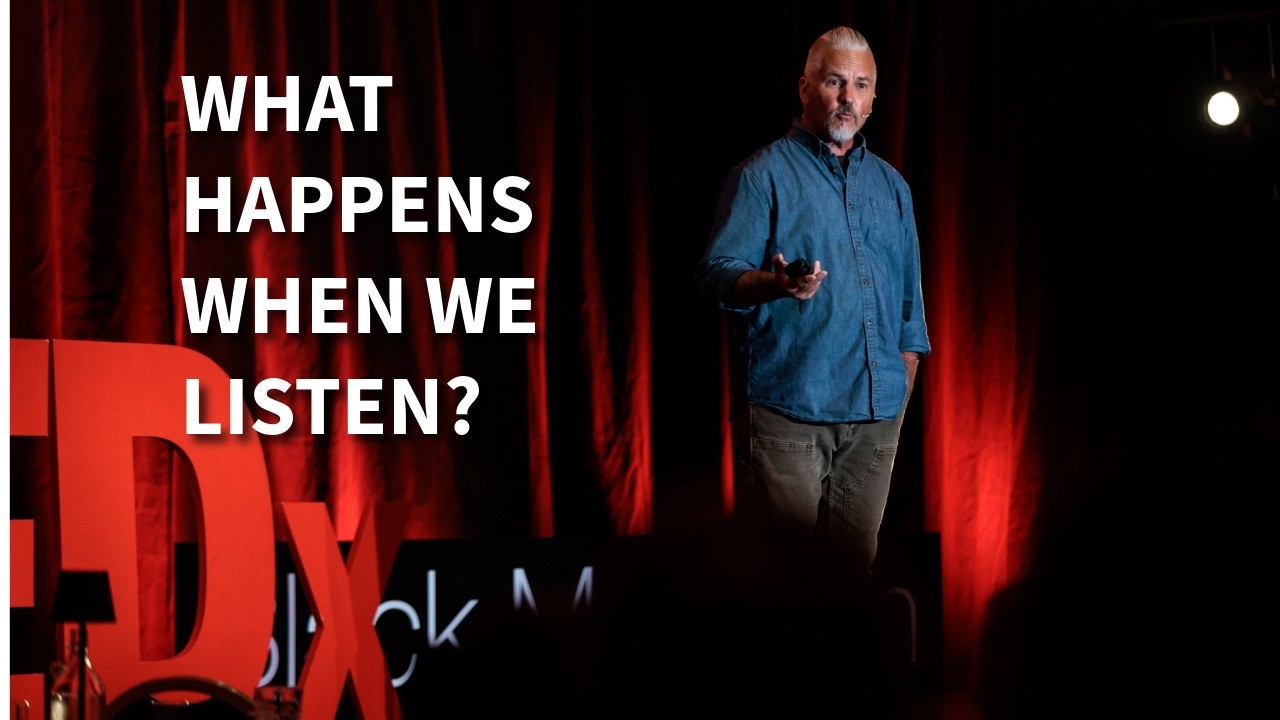
How To Listen For What Else Is True | John Noltner | TEDx Black Mountain
Keywords
Summary
155 words
Critical Evaluation
The talk offers a compelling and heartfelt argument for the power of listening and human connection in overcoming polarization. Noltner’s storytelling is engaging and emotionally resonant, drawing on personal experiences and vivid anecdotes. The strength of the talk lies in its ability to humanize complex social issues and inspire empathy. However, from a scientific perspective, the evidence presented is largely anecdotal and lacks rigorous methodology. The quantitative data mentioned (e.g., 62% to 90% hopefulness) is presented without details on sample size, control groups, or statistical significance, making it difficult to assess its validity. The talk is more of an inspirational narrative than a scientific analysis. The speaker’s credibility as a photographer and storyteller is well-established, but he is not a social scientist, and his claims should be viewed as personal observations rather than empirical findings. The talk does not engage with counterarguments or potential limitations of his approach. The title is appropriate, and the content aligns well with it. Overall, the talk is valuable for its humanistic perspective and practical wisdom, but it lacks the rigor expected of a scientific source. It is best suited for a general audience seeking inspiration rather than for those seeking evidence-based solutions to polarization.
200 words
Title / Content Match
The title accurately reflects the central theme of the talk: listening for deeper truths beyond surface-level narratives.
Quality & Reliability
7/10
The talk is based on personal experience and anecdotal evidence from the speaker's storytelling project. It includes some quantitative data from program evaluations, but lacks rigorous scientific methodology. The speaker is credible as a photographer and storyteller, but the claims are not peer-reviewed.
Key Moments
Markers derived by PSI from the transcript: the creator did not define chapters.
- Introduction: The speaker introduces the idea that toxic polarization is not inevitable and that we can choose compassion, curiosity, and connection.
- The speaker describes his project 'A Peace of My Mind' and his journey across the US in a van named Vinnie.
- Story of Joe McGill and the Slave Dwelling Project, illustrating the importance of getting uncomfortable to learn.
- Story of Tanaya Abed and the Anishinaabe perspective of seven generations, emphasizing long-term thinking.
- Story of Rose Berger and her experiences in conflict zones, highlighting the courage to get close.
- Presentation of data showing shifts in hope and confidence after the programs.
- Conclusion: The speaker shares the story of Alex Lowe and emphasizes that we can choose to be the light.
Cited Sources
- TEDx Talks — The talk was given at a TEDx event, and this link provides information about TEDx.
Concurring Sources
- Greater Good Science Center — Research on empathy, compassion, and social connection aligns with the talk's themes.
Dissenting Sources
Contribution & Novelties
The talk offers a unique perspective on polarization by focusing on the power of listening and storytelling as tools for connection. It provides practical examples and a framework for engaging with others across differences. The emphasis on ‘what else is true’ encourages a more nuanced understanding of complex issues.
Pour aller plus loin :
- Active Listening — A key skill discussed in the talk, with techniques for improving communication.
- Empathy — Central to the talk’s message, with research on its role in social connection.
- Conflict Resolution — Methods and theories related to bridging divides, relevant to the talk’s themes.
99 words
Radar Profile
The radar profile shows moderate scores across most dimensions, with a notable strength in qualitative information and a weakness in technical depth. This reflects the talk's focus on personal narrative and emotional appeal rather than rigorous scientific analysis.
💬 No comments were provided for analysis.