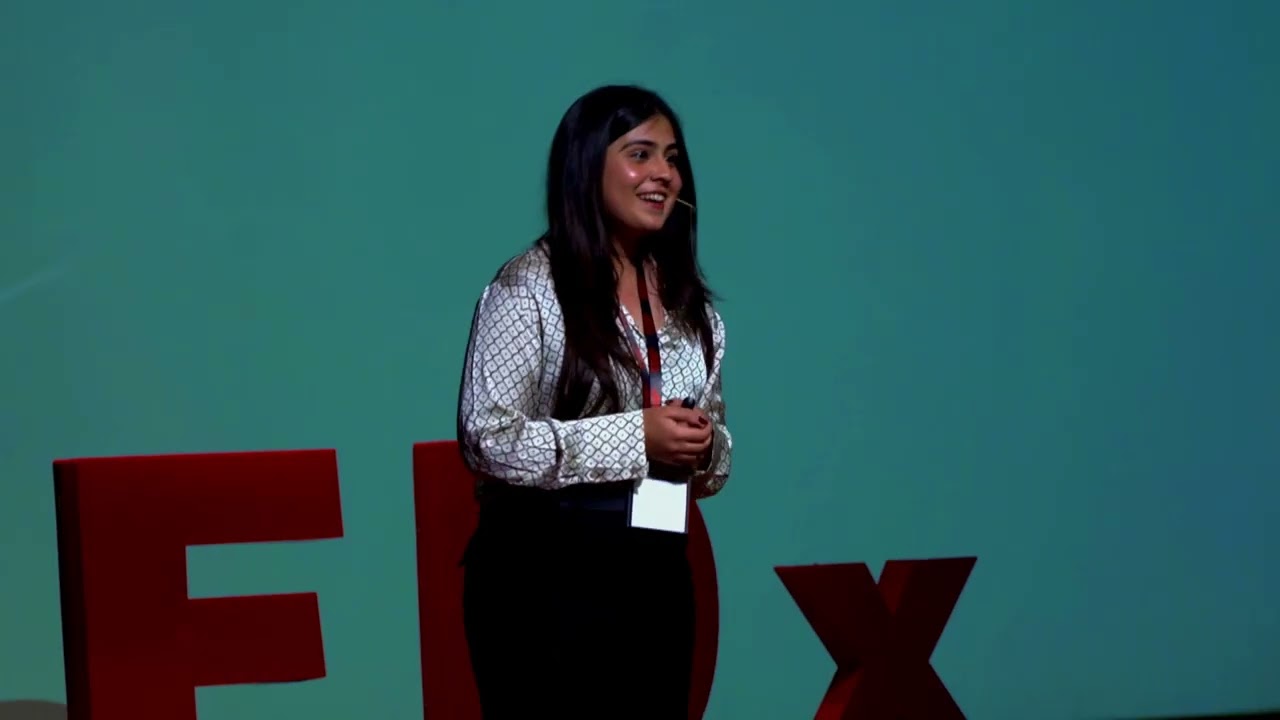
Why Resilience Comes Before Recovery | Aaliya Chug | TEDxTSMS Noida Youth
Keywords
Summary
171 words
Critical Evaluation
The talk is a personal narrative rather than a scientific exposition, which limits its generalizability but enhances its relatability. Aaliya Chug shares authentic experiences, including her grandmother’s cancer, her grandfather’s death, and her own academic setbacks, which lend emotional weight to her message. The framework she proposes—Awareness, Acceptance, Action, Resilience—is a simplified version of common psychological concepts like cognitive behavioral therapy (CBT) and resilience training, but she does not reference any scientific literature or empirical evidence to support its efficacy. The argumentation is largely anecdotal, relying on her personal story to illustrate her points. While this makes the talk engaging and accessible, it lacks the rigor expected of a scientific presentation. The quality of information is moderate; she offers practical advice such as making lists and taking small steps, which aligns with established stress management techniques, but she does not provide citations or data. The sources cited are minimal, only a link to TEDx, which is not a scientific source. The title accurately reflects the content, focusing on resilience as a precursor to recovery. The talk’s strength lies in its motivational and empathetic tone, which may resonate with students and young professionals. However, for a scientifically rigorous evaluation, the lack of evidence-based references and the reliance on personal anecdotes are significant weaknesses. The speaker’s credibility is enhanced by her academic background and professional experiences, but these do not substitute for scientific validation. Overall, the talk is a heartfelt and inspiring personal account, but it falls short of being a scientifically robust resource.
252 words
Title / Content Match
The title accurately reflects the talk's focus on resilience as a precursor to recovery, though the talk covers broader stress management.
Quality & Reliability
6/10
Personal anecdotal evidence, no scientific citations, but coherent framework and practical advice.
Key Moments
Markers derived by PSI from the transcript: the creator did not define chapters.
- Introduction and audience engagement about stressors
- Discussion on quiet signs of stress and procrastination
- Story of grandmother's cancer diagnosis and grandfather's reaction
- Personal low point: missing university offer by one mark
- Taking action: emailing universities and receiving acceptance
- Introduction of the 3 A's and R framework: Awareness, Acceptance, Action, Resilience
- Final advice: grades matter but not the measure of life, resilience through learning
Cited Sources
- TEDx Program — Mentioned as the organizing body for the talk
Concurring Sources
- Psychological resilience — Supports the concept of resilience as a dynamic process
Dissenting Sources
- No direct discordant sources — The talk does not contradict established scientific knowledge, but lacks empirical support.
Contribution & Novelties
The talk offers a personal, relatable framework for stress management, emphasizing the importance of resilience as a process rather than an endpoint. It provides a simple mnemonic (Awareness, Acceptance, Action, Resilience) that could be useful for students and young professionals. However, it does not introduce new scientific concepts.
Pour aller plus loin :
- Psychological resilience — Overview of resilience research and factors.
- Cognitive behavioral therapy — Evidence-based approach for managing stress and anxiety.
- Stress management — Techniques and strategies for coping with stress.
83 words
Radar Profile
The radar profile shows moderate scores across all dimensions, with a slight peak in quantity of information and a dip in technical level, reflecting the talk's accessible but non-technical nature.
💬 No comments were provided for analysis.