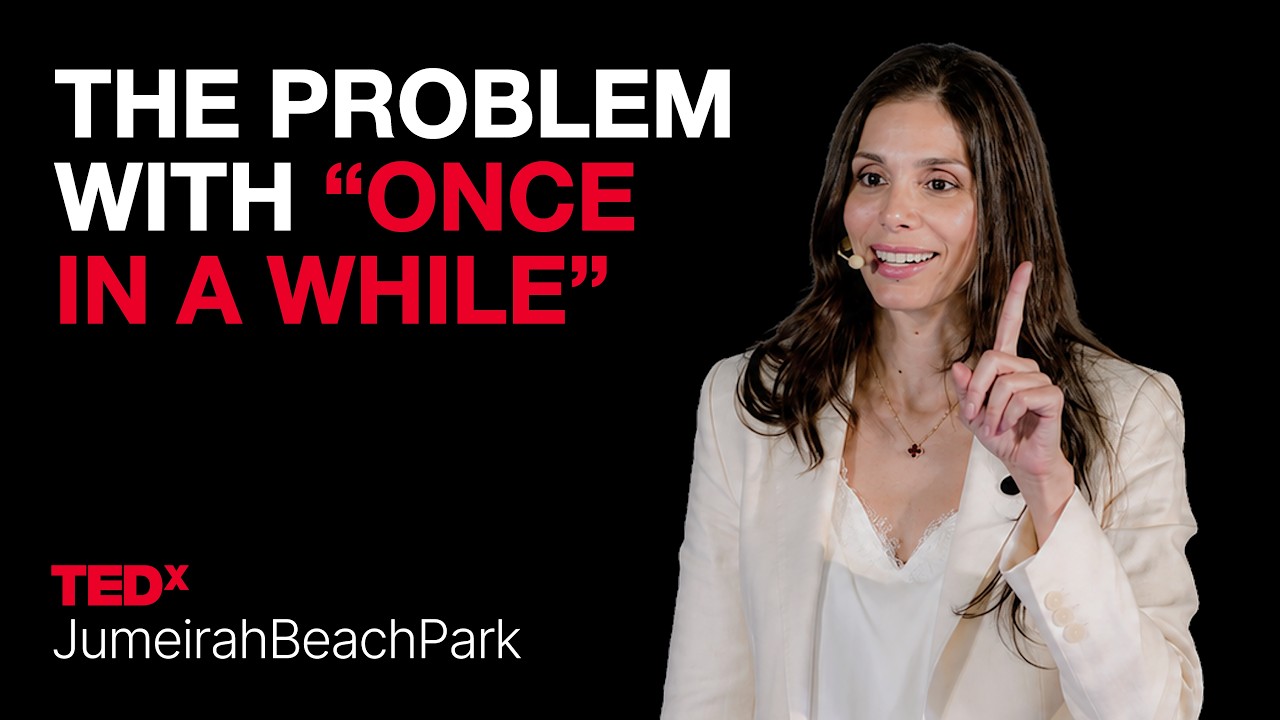
The Hidden Problem with “Once in a While”
Keywords
Summary
190 words
Critical Evaluation
The talk presents a compelling and emotionally resonant argument about the normalization of unhealthy food habits in children’s lives. Bernadette Abraham effectively uses personal anecdotes and vivid examples to illustrate how ‘once in a while’ treats accumulate into a pervasive culture that undermines children’s health. Her call for both individual and systemic change is well-intentioned and aligns with public health concerns about childhood obesity and diet-related diseases.
However, the scientific rigor is limited. The talk relies heavily on anecdotal evidence and personal experience rather than systematic research. While she cites WHO statistics on childhood obesity, she does not provide specific references or delve into the complexities of the evidence linking ultra-processed foods to health outcomes. The TED note explicitly cautions viewers not to look to this talk for health advice, indicating that it falls outside TED’s content guidelines. This suggests that some claims may be overstated or not fully supported by current scientific consensus.
The argumentation is persuasive but sometimes oversimplifies the issue. For instance, she implies a direct causal link between food habits and conditions like ADHD and anxiety, which are multifactorial and not solely diet-related. She also places significant responsibility on parents, which could inadvertently increase guilt, even though she acknowledges systemic factors. The talk would benefit from a more balanced discussion of the evidence and the challenges of changing food environments.
The speaker’s background in functional medicine and nutrition lends some credibility, but her perspective is that of a practitioner and advocate rather than a researcher. The talk is more of a motivational call to action than a rigorous scientific analysis. The lack of detailed sources and the reliance on personal anecdotes limit its scientific value.
Regarding the title, it accurately captures the central theme, and the content aligns well with it. The talk effectively highlights the hidden accumulation of ‘once in a while’ treats, which is a valuable insight.
Overall, the talk is thought-provoking and raises important issues, but its scientific depth is limited. It would be more impactful if it incorporated more robust evidence and acknowledged the complexities of the topic.
346 words
Title / Content Match
The title accurately reflects the central theme of the talk, which focuses on how 'once in a while' treats accumulate into a harmful food culture.
Quality & Reliability
4/10
The talk is a personal and anecdotal perspective on childhood obesity and food culture, with limited scientific depth. It cites WHO statistics but lacks detailed references and is flagged by TED for not meeting content guidelines. The speaker's expertise is in functional medicine and nutrition, but the talk is more motivational than evidence-based.
Key Moments
Markers derived by PSI from the transcript: the creator did not define chapters.
- Introduction: anecdote about a boy struggling to walk, highlighting the problem.
- WHO statistics on childhood obesity increase.
- Discussion of holiday-related treats and the cycle of celebrations.
- Examples of social events and school activities normalizing junk food.
- Health consequences: chronic conditions in children.
- Personal experiences of pushback and the difficulty of being the 'difficult parent'.
- Call for systemic change: nutrition education, regulations, and food labeling.
- Conclusion: the cumulative effect of 'once in a while' and the need for collective action.
Cited Sources
- TEDx Content Guidelines — Referenced in the video description as the guidelines that TEDx organizers follow, and used to flag the talk.
- TEDx Talks — Mentioned in the description as the platform for independently organized TEDx events.
Concurring Sources
- World Health Organization - Obesity — The WHO provides global data on childhood obesity, which aligns with the speaker's statistics.
- Ultra-processed foods and health outcomes — Research linking ultra-processed foods to various health conditions, supporting the speaker's concerns.
Dissenting Sources
- TEDx Content Guidelines — The talk was flagged by TED for not meeting content guidelines, indicating that some claims may lack scientific consensus.
Contribution & Novelties
The talk offers a personal and passionate perspective on the normalization of unhealthy food habits in children’s lives, emphasizing the cumulative effect of ‘once in a while’ treats. It highlights the systemic nature of the problem and calls for both individual and societal changes. While not scientifically novel, it provides a compelling narrative that may resonate with parents and advocates.
Pour aller plus loin :
- World Health Organization - Obesity — Official WHO page on obesity, providing global statistics and health impacts.
- Ultra-processed foods and health outcomes — A BMJ systematic review on the association between ultra-processed food consumption and health outcomes.
- Food environment and childhood obesity — A review on the role of food environments in childhood obesity.
119 words
Radar Profile
The radar profile shows moderate scores across all dimensions, with slightly higher scores in information quantity and quality, but lower in technical level and reliability. This reflects a talk that is informative and engaging but lacks deep scientific rigor.
💬 No comments were provided for analysis.