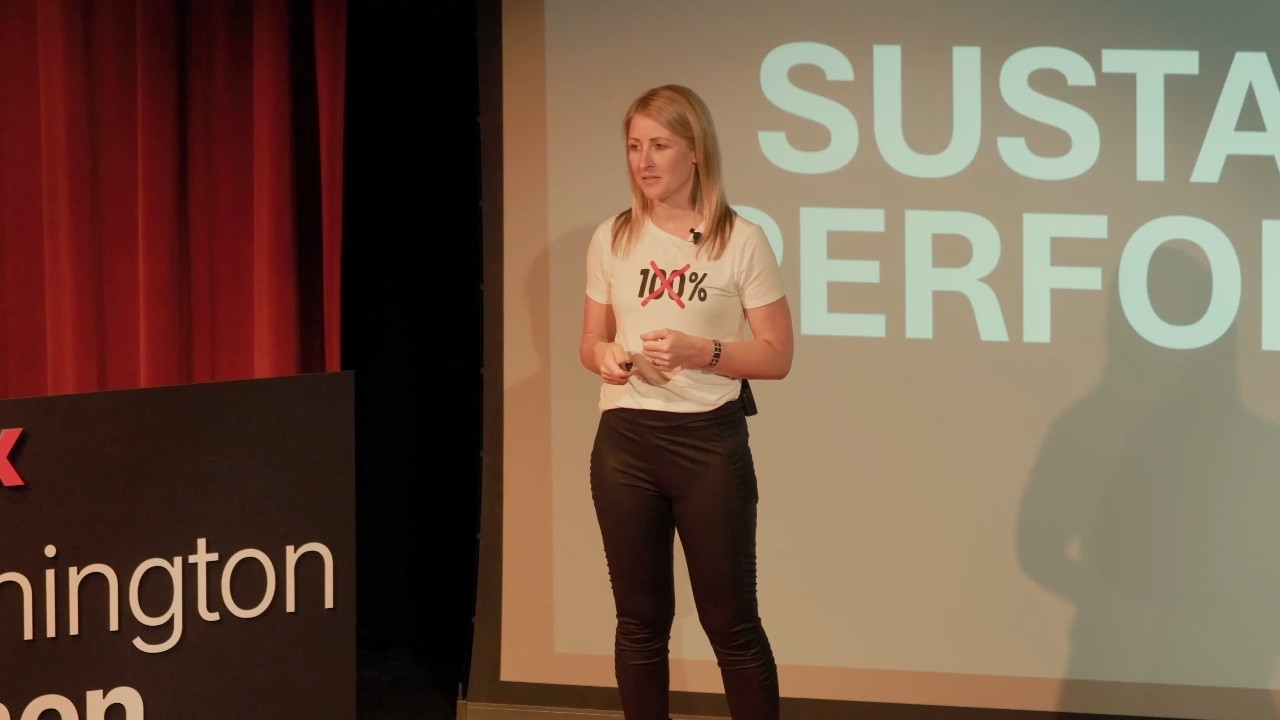
Escape the 100% Trap | Katie Virtue | TEDxWorthington Women
Keywords
Summary
127 words
Critical Evaluation
Value of the Information & Strength of the Argument
The talk provides a compelling personal narrative that resonates with common experiences of burnout in the workplace. The argument is structured around two key shifts: mindset and metric. The mindset shift from high performance to sustainable performance is well-articulated, with a clear formula of purpose, values, and behaviors. The metric shift to energy is intuitive and supported by analogies from sports. However, the argumentation relies heavily on anecdotal evidence and lacks empirical data or scientific citations. The speaker’s authority is based on personal experience and coaching credentials, which may not be sufficient for a rigorous scientific audience. The talk is persuasive but not evidence-based.
Scientific Rigor, Source Quality, Title Accuracy
The talk does not cite any scientific sources or studies. The only external reference is the TEDx program itself. The title accurately reflects the content, focusing on the ‘100% trap’. The speaker’s credibility is established through her personal story and professional role, but the lack of references weakens the scientific rigor. The content is consistent with established concepts in psychology and physiology, such as stress-recovery balance, but these are not explicitly referenced.
191 words
Title / Content Match
The title accurately reflects the central theme of escaping the trap of constant 100% effort.
Quality & Reliability
6/10
The talk is based on personal experience and anecdotal evidence, with no scientific references or data. The speaker is a burnout coach, not a researcher, and the content is largely motivational. However, the core concepts align with established psychological and physiological principles of stress and recovery.
Key Moments
Markers derived by PSI from the transcript: the creator did not define chapters.
- Introduction with rollerblades and personal story
- Description of the 100% trap in the workplace
- Personal anecdote about snapping at kids due to exhaustion
- First shift: mindset from high performance to sustainable performance
- Second shift: using energy as a metric instead of output
- Small steps and compound effects, example of pace
- Conclusion and call to action
Cited Sources
- TEDx Program — Mentioned as the organizing body for the talk
Concurring Sources
- World Health Organization on Burnout — WHO recognizes burnout as an occupational phenomenon, supporting the talk's premise.
Dissenting Sources
- Critique of 'hustle culture' — Some argue that high performance requires sustained intensity, but this is not directly referenced in the talk.
Contribution & Novelties
The talk offers a personal and accessible perspective on burnout, emphasizing the importance of energy management and sustainable performance. It provides a practical framework (purpose, values, behaviors) and a shift in metrics (from output to energy) that can be useful for individuals and organizations. While not scientifically novel, it synthesizes common knowledge in a motivational way.
Pour aller plus loin :
- Burnout (psychology) — Overview of burnout as a psychological condition.
- Stress recovery — Biological basis of stress and recovery.
- Energy management — General concept of managing personal energy.
89 words
Radar Profile
The radar profile shows moderate scores across all dimensions, with slightly higher quality of information and lower technical level. This indicates a talk that is accessible and engaging but lacks depth in scientific rigor and technical detail.
💬 No comments were provided for analysis.