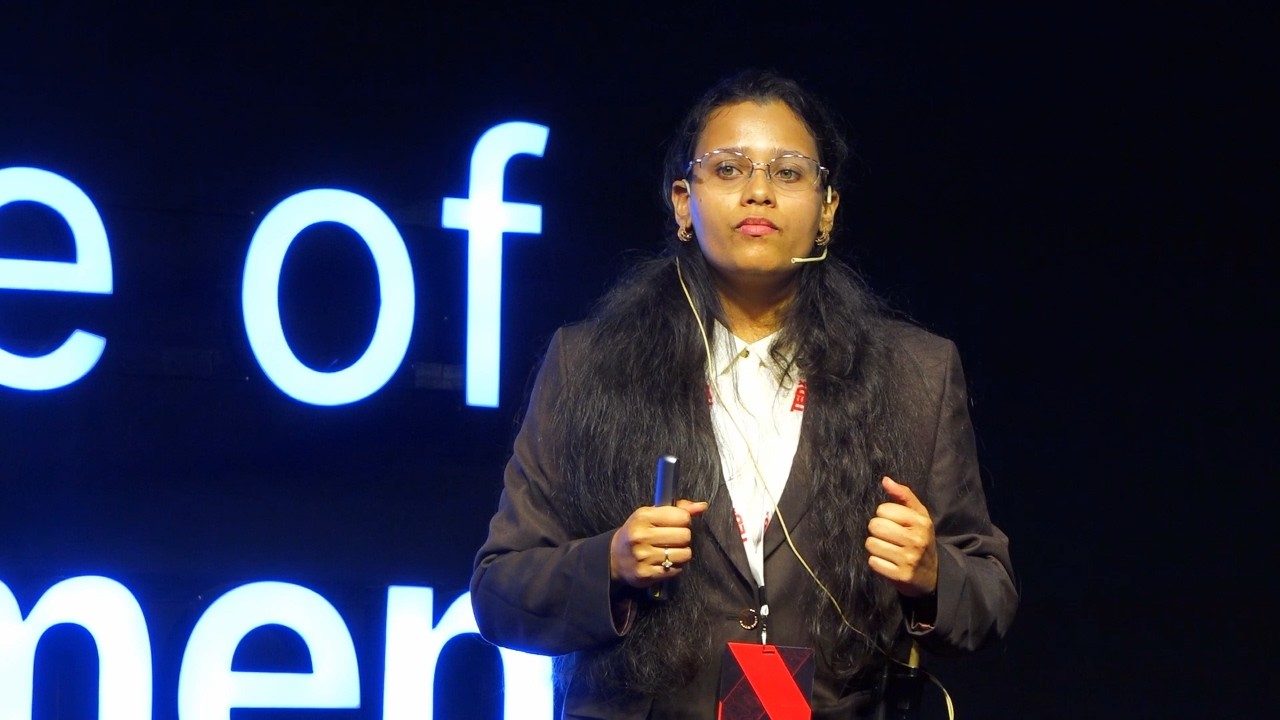
Educated: The Illusion of Choice
Keywords
Summary
149 words
Critical Evaluation
Value of the Information & Strength of the Argument
The talk’s value lies in its personal testimony and the articulation of a common paradox: educated women who still feel constrained. The argument is structured around a clear thesis—education ≠ empowerment—and is supported by relatable examples of social expectations. However, the argumentation is largely anecdotal and lacks empirical evidence or engagement with counterarguments. The speaker’s distinction between ‘how to think’ and ‘what to think’ is insightful but could be developed further. The emotional appeal is strong, but the intellectual rigor is limited by the absence of data or references.
Scientific Rigor, Source Quality, Title Accuracy
The talk does not cite any external sources, studies, or data, which significantly weakens its scientific rigor. The only reference is the generic TEDx link in the description. The title accurately captures the central theme, and the content stays on-topic. The lack of sources makes it difficult to verify claims, and the argument relies heavily on personal experience and general observations. The adéquation between title and content is good, but the absence of supporting evidence limits the talk’s credibility as a scientific or factual resource.
189 words
Title / Content Match
The title accurately reflects the core message: education alone does not guarantee empowerment, and the choices women make are often constrained by social expectations.
Quality & Reliability
5/10
The talk is a personal narrative and opinion piece, lacking empirical data or citations. It presents a coherent argument but relies on anecdotal evidence and generalizations, limiting its scientific reliability.
Key Moments
Markers derived by PSI from the transcript: the creator did not define chapters.
- Introduction: asks audience about making life decisions independently.
- Introduces the paradox: many women are educated but not empowered.
- Personal story: following the 'good girl' path and choosing science because it was approved.
- Distinguishes between 'how to think' and 'what to think' in education.
- Discusses social penalties and 'guilt tax' on women's choices.
- Highlights internalized surveillance and self-censorship.
- Defines real empowerment as presence of choice and absence of fear.
- Calls for measuring progress through freedom, not degrees.
Cited Sources
- TEDx Program — Mentioned in the video description as the organizing body for the talk.
Concurring Sources
- UN Women: Women's empowerment — Supports the idea that empowerment involves more than education, including economic and social agency.
Contribution & Novelties
The talk offers a personal perspective on the gap between education and empowerment, emphasizing the role of social conditioning and internalized expectations. It contributes to the discourse on women’s agency by framing empowerment as the freedom to choose, rather than just access to education.
Pour aller plus loin :
- Amartya Sen’s Capability Approach — Relevant for understanding empowerment as the expansion of real freedoms and choices.
- Internalized sexism — Directly related to the concept of internalized surveillance mentioned in the talk.
- Social conditioning — Provides a framework for understanding how societal expectations shape individual behavior.
95 words
Radar Profile
The radar profile shows moderate scores across information quantity, quality, and reliability, with a lower technical level. This reflects a talk that is personally engaging but lacks empirical depth, making it more of an opinion piece than a rigorous scientific analysis.