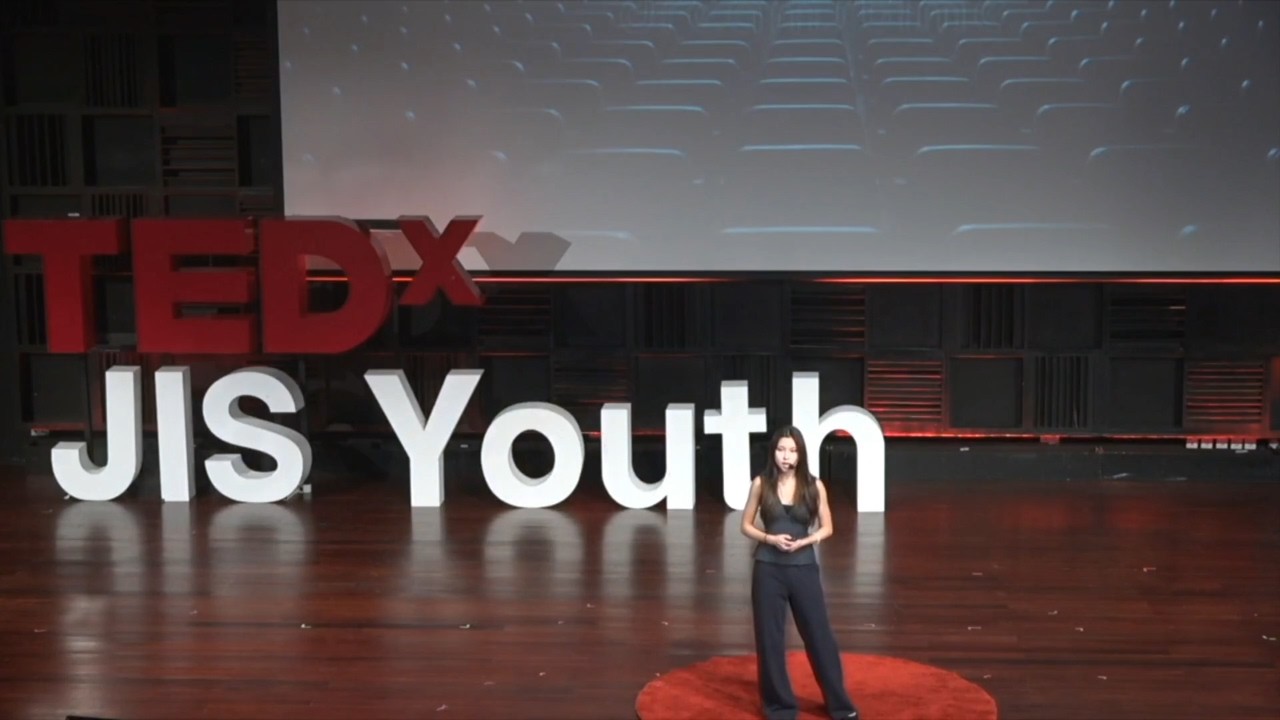
Mental Time Travel: Rewriting Anxiety | Eden Luu | TEDxJIS Youth
Keywords
Summary
175 words
Critical Evaluation
The talk offers a compelling and accessible reframing of anxiety, leveraging the concept of chronesthesia to explain its evolutionary purpose. The speaker effectively communicates complex ideas in a relatable manner, using personal anecdotes and clear metaphors. However, the scientific rigor is moderate: while she references reputable organizations like the CDC and NIH, she does not provide specific studies or citations, and the simplification of the default mode network’s role may overlook nuances. The argument that anxiety is inherently beneficial because it drives progress is somewhat one-sided, as it downplays the severe impairment caused by anxiety disorders. The discussion of therapeutic interventions is accurate but superficial, lacking depth on mechanisms and evidence. The talk’s strength lies in its empowering message and practical reframing, which could resonate with a broad audience. The title accurately reflects the content, and the structure is logical, moving from definition to explanation to solutions. Overall, it is an inspiring and informative talk, but it would benefit from more rigorous scientific backing and a more balanced view of anxiety’s negative impacts.
173 words
Title / Content Match
The title accurately reflects the content, focusing on mental time travel and reframing anxiety.
Quality & Reliability
6/10
The talk provides a coherent overview of chronesthesia and its link to anxiety, referencing credible institutions (CDC, NIH) and established therapies (CBT, exposure therapy). However, it simplifies complex neuroscience and lacks direct citations to primary literature, relying on general knowledge and personal anecdote.
Key Moments
Markers derived by PSI from the transcript: the creator did not define chapters.
- Introduction to mental time travel and chronesthesia.
- Statistics on adolescent anxiety from the CDC.
- Explanation of chronesthesia by Endel Tulving.
- Link between overactive chronesthesia and anxiety.
- Discussion of the default mode network's role.
- Therapeutic approaches: CBT, exposure therapy, psychodynamic therapy, medication.
- Reframing anxiety as a hypothesis, not a prophecy.
- Call to action: treat anxious predictions as drafts, not absolute truths.
Cited Sources
- TEDx Talks — General information about TEDx events, mentioned in the video description.
Concurring Sources
- National Institutes of Health (NIH) — Referenced in the talk regarding the default mode network's hyperactivity in anxiety.
- Centers for Disease Control and Prevention (CDC) — Cited for statistics on adolescent anxiety prevalence.
Dissenting Sources
- No specific discordant sources found — The talk does not directly contradict established science, but its simplification of complex topics may be seen as lacking nuance.
Contribution & Novelties
The talk offers a novel perspective by framing anxiety as a byproduct of chronesthesia, a concept not widely known outside academic circles. It synthesizes neuroscience and psychology to present anxiety as an adaptive mechanism rather than purely a disorder. The emphasis on ‘rewriting’ anxious thoughts as editable drafts provides a practical cognitive reframing.
Pour aller plus loin :
- Chronesthesia - Wikipedia — Overview of the concept and its origins.
- Default mode network - Wikipedia — Detailed explanation of the brain network implicated in self-referential thought and future simulation.
- Cognitive behavioral therapy - Wikipedia — Evidence-based therapy for anxiety and other conditions.
101 words
Radar Profile
The radar profile shows moderate scores across all dimensions, with slightly higher quality of information and lower technical depth. This indicates a balanced but not deeply technical presentation, suitable for a general audience.
💬 No comments were provided for analysis.