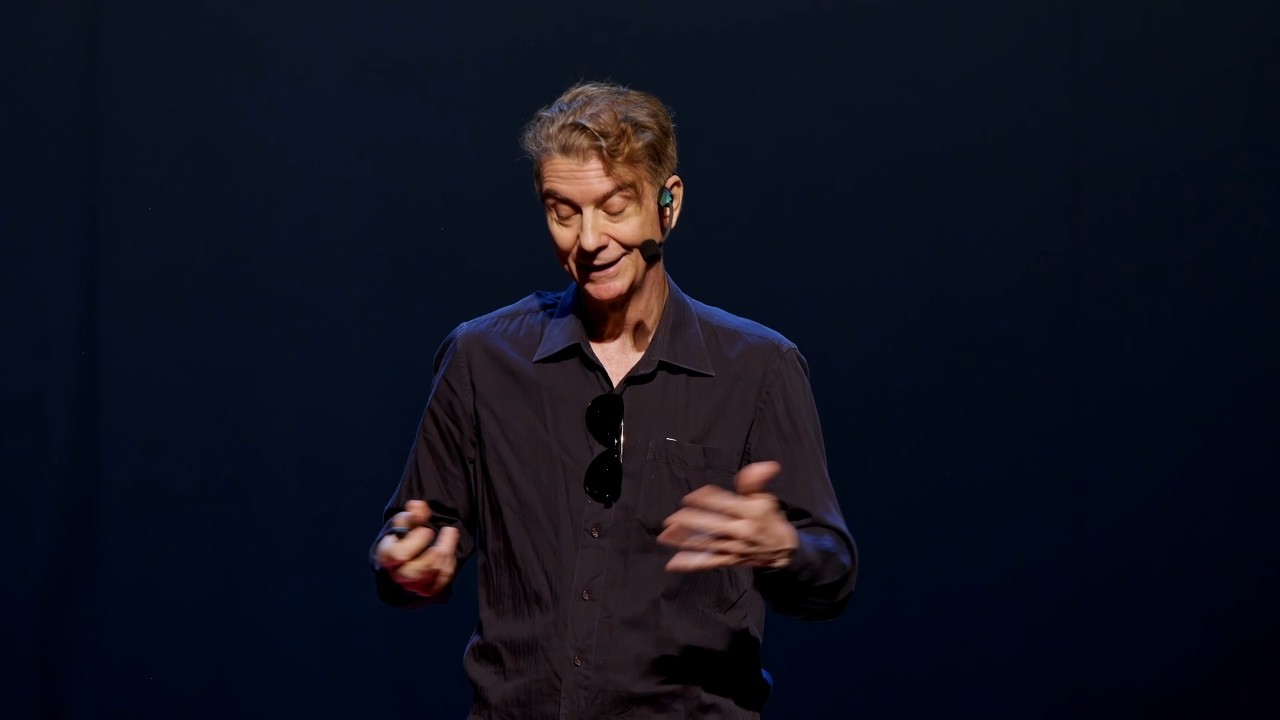
Inteligência Artificial: um meio para evoluir a inteligência humana | Weber Martins | TEDxGoiânia
Artificial Intelligence: A Means to Evolve Human Intelligence | Weber Martins | TEDxGoiânia
Keywords
Summary
180 words
Critical Evaluation
Value of the Information & Strength of the Argument
The talk provides a valuable perspective from an experienced researcher, emphasizing the importance of human-centered AI in education. The argumentation is coherent, moving from a critique of current AI use to a constructive proposal for its integration. However, it relies heavily on personal experience and general observations rather than specific studies or data. The distinction between ‘cognitive debt’ and ‘cognitive damage’ is a key contribution, though it is presented without empirical backing. The use of the ‘flow’ concept is relevant but not deeply explored.
Scientific Rigor, Source Quality, Title Accuracy
The talk is an expert opinion, not a scientific review. The speaker references his own experience and mentions the WHO statistic on loneliness, but provides no direct citations. The title accurately reflects the content. The description includes a link to TEDx, which is a general resource, not specific to the talk’s claims. The talk’s strength lies in its ethical and educational perspective, but its scientific rigor is limited by the lack of verifiable sources.
173 words
Title / Content Match
The title accurately reflects the talk's central thesis: using AI as a means to evolve human intelligence, not replace it.
Quality & Reliability
6/10
The speaker is a professor and researcher with decades of experience in AI and education, but the talk is largely opinion-based, with limited empirical evidence or citations. The argument is coherent but relies on anecdotal observations and general references.
Key Moments
Markers derived by PSI from the transcript: the creator did not define chapters.
- Introduction: speaker acknowledges stutter, sets ambitious goals to answer three questions.
- Discusses the era of 'false synthesis' and the unreliability of visual perception.
- Introduces the concept of 'cognitive debt' and argues it is actually 'cognitive damage'.
- Mentions the WHO statistic on loneliness and the use of AI for emotional support.
- Plays his original song 'Eterno Agora' to illustrate the theme of living in the present.
- Discusses the role of technology as a means, not an end, and the importance of human mediation.
- Shares his experience with intelligent tutoring systems and the concept of 'flow' in learning.
- Concludes with a call to action: embrace AI while maintaining vigilance and human values.
Cited Sources
- TEDx Program — General reference to the TEDx event format, not specific to the talk's content.
Concurring Sources
- TEDx Program — The talk is part of the TEDx series, which is known for sharing expert opinions and ideas.
Contribution & Novelties
The talk offers a nuanced perspective on AI in education, distinguishing between ‘cognitive debt’ and ‘cognitive damage’, and advocating for a human-centered approach. It emphasizes the importance of preserving human intelligence and relationships in the face of technological advancement.
Pour aller plus loin :
- Flow (psychology) — Relevant to the concept of optimal learning states.
- Intelligent tutoring system — Directly related to the speaker’s experience and proposal.
- Cognitive development — Relevant to the discussion of cognitive damage and learning windows.
80 words
Radar Profile
The radar profile shows moderate scores across all dimensions, with a slight emphasis on quality and reliability over quantity and technical depth. This reflects a talk that is more about perspective and ethics than detailed technical analysis.
💬 Sur les 0 commentaires analysés, aucune tendance n'est disponible.