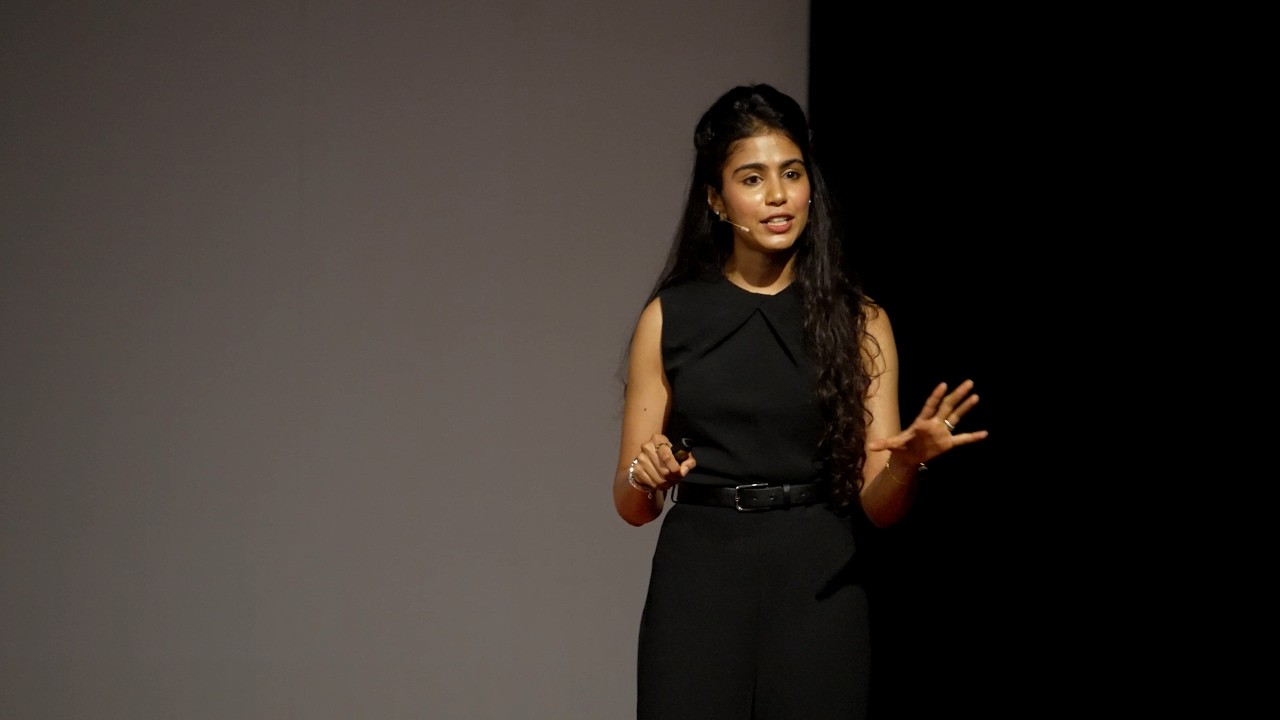
Before It's Chosen For You
Keywords
Summary
173 words
Critical Evaluation
Value of the Information & Strength of the Argument
The talk provides valuable insights into the subtle ways algorithms influence daily decisions and identity formation, a topic of growing relevance. The argument is built on personal anecdotes and literary references (Orwell, Huxley, Jung) rather than empirical evidence, which weakens its scientific rigor. However, the speaker’s perspective as an artist adds a unique, introspective dimension, effectively illustrating the tension between authentic taste and algorithmic curation. The reasoning is coherent and accessible, though it could benefit from concrete examples or data to strengthen its claims.
Scientific Rigor, Source Quality, Title Accuracy
The talk lacks formal citations or references to scientific studies, relying instead on well-known literary works (1984, Brave New World) and a quote from Carl Jung. The only source provided in the description is the general TEDx page, which does not offer specific references. The title accurately captures the central theme, and the content aligns with it, though the argumentation is more philosophical than empirical. The absence of verifiable sources limits the talk’s scientific credibility, but it remains a thoughtful commentary on digital culture.
183 words
Title / Content Match
The title accurately reflects the core theme of the talk: the pre-emptive shaping of choices by algorithms.
Quality & Reliability
6/10
The talk offers a personal, reflective perspective on algorithmic influence, drawing on psychological concepts and literary references, but lacks empirical data or citations to support its claims.
Key Moments
Markers derived by PSI from the transcript: the creator did not define chapters.
- Anecdote about using Google to choose a café, illustrating reliance on algorithms.
- Introduction of the concept of control as a personalized feed, referencing Huxley's Brave New World.
- Discussion on outsourcing judgment, from restaurant ratings to movie reviews.
- Exploration of how identity is shaped by algorithmic conditioning, with examples like the 5 AM routine.
- Personal reflection on the museum experience, realizing the urge to share art online before experiencing it.
- Conclusion: the importance of trusting one's own judgment and small acts of resistance to reclaim authorship.
Cited Sources
- TEDx Talks — General TEDx page, mentioned as the platform for the talk.
Concurring Sources
- Filter bubble — Concept of algorithmic personalization limiting exposure to diverse information, aligning with the talk's theme.
Contribution & Novelties
The talk offers a personal, artistic perspective on algorithmic influence, emphasizing the erosion of authentic taste and identity. It synthesizes existing critiques of recommendation systems with introspective observations, making the issue tangible. The call to ‘make meaning instead of inheriting it’ is a compelling framing.
Pour aller plus loin :
- Algorithmic curation and filter bubbles — Relevant to the concept of personalized feeds shaping choices.
- The paradox of choice — Discusses how too many options can lead to decision paralysis, related to the café anecdote.
- Self-determination theory — Explores intrinsic vs. extrinsic motivation, relevant to the discussion of authentic vs. conditioned choices.
102 words
Radar Profile
The radar profile shows moderate scores across all dimensions, with a slight peak in quality of information and a dip in technical level. This reflects a talk that is intellectually engaging but not deeply technical or empirically grounded.