Not for Boys - Rethinking Male Roles: From Boy to Man, But What Kind?
Keywords
Summary
160 words
Critical Evaluation
The talk offers a compelling personal perspective on the construction of male identity, drawing on the speaker’s experience in children’s literature. The argument is well-structured, moving from a specific anecdote to broader societal analysis. Király effectively highlights the role of consumer culture in reinforcing gender stereotypes, and he references studies on boys’ reading habits, though without providing specific citations. The critique of the manosphere is relevant and timely, but the discussion remains at a general level. The speaker’s call for using stories to foster empathy is persuasive, but the scientific basis could be strengthened with more concrete references. The talk is more of an expert opinion than a rigorous scientific analysis, but it raises important questions about gender roles and parenting. The title accurately reflects the content, and the talk is engaging and thought-provoking. However, the lack of detailed sources and the reliance on personal anecdotes limit its scientific depth. Overall, it is a valuable contribution to the discourse on masculinity, but it would benefit from more empirical support.
169 words
Title / Content Match
The title accurately reflects the content, which explores the construction of male identity and the need to rethink traditional roles.
Quality & Reliability
7/10
The talk is based on personal experience and references some studies, but lacks detailed citations. The argument is coherent and grounded in observations, but the scientific rigor is moderate due to anecdotal evidence and limited data presentation.
Key Moments
Markers derived by PSI from the transcript: the creator did not define chapters.
- Anecdote about a mother rejecting books for her son as 'not for boys'.
- Discussion on the historical roots of gender stereotypes in consumer culture.
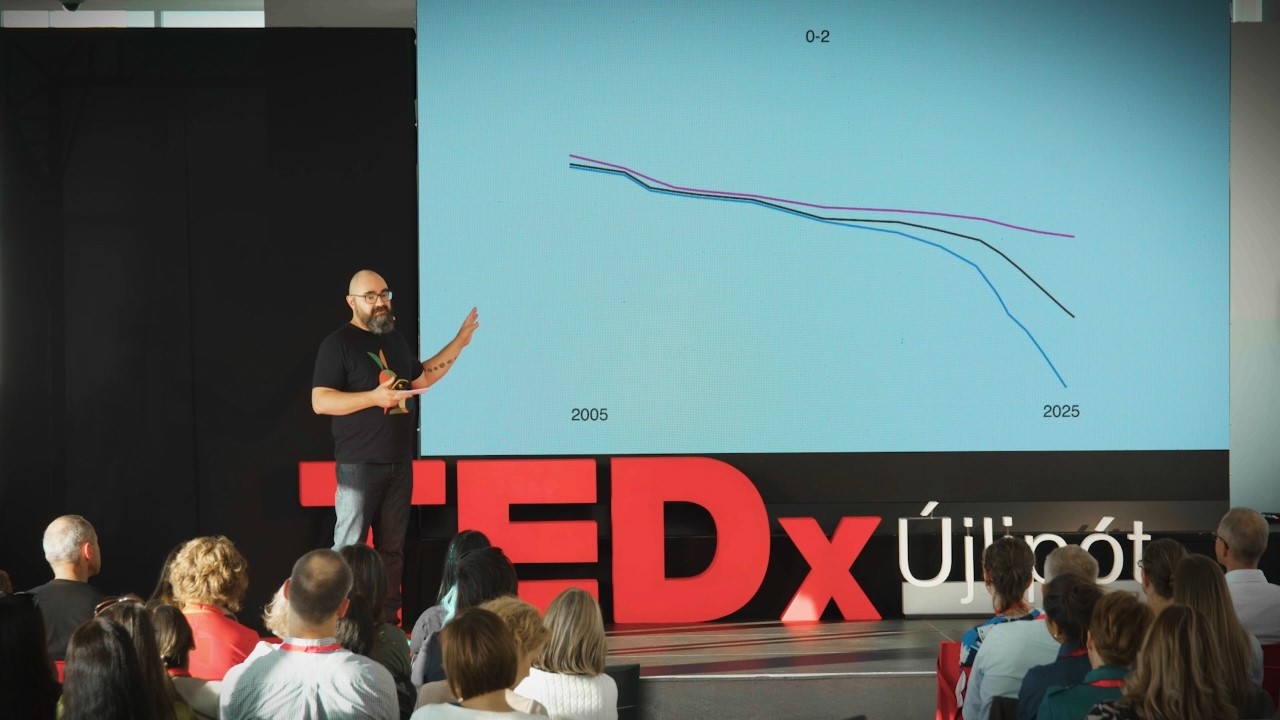
- Presentation of data on boys' declining reading rates.
- Critique of the manosphere and Andrew Tate.
- Personal story about a friend's funeral and the qualities celebrated.
- Advocacy for using stories to develop empathy in boys.
Cited Sources
- Hunor Király LinkedIn profile — Speaker's professional background.
- TEDx program — Information about the TEDx event format.
Concurring Sources
- TEDx Talks — Platform for independent TED-like events.
Contribution & Novelties
The talk provides a personal and practical perspective on the impact of gender stereotypes on boys’ development, emphasizing the role of children’s literature. It connects historical trends in consumer culture to contemporary issues like the manosphere. The speaker’s call for using stories to build emotional intelligence offers a concrete approach for parents and educators.
Pour aller plus loin :
- The Manosphere: A New Form of Misogyny? — Overview of the manosphere phenomenon.
- Gender schema theory — Psychological framework for understanding gender role acquisition.
- Reading for pleasure and empathy — Article on how reading fiction can enhance empathy.
97 words
Radar Profile
The radar profile shows a balanced distribution across scores, with slightly higher scores in information quantity and quality, and lower in technical level and reliability. This indicates a talk that is informative and well-argued but lacks deep scientific rigor.