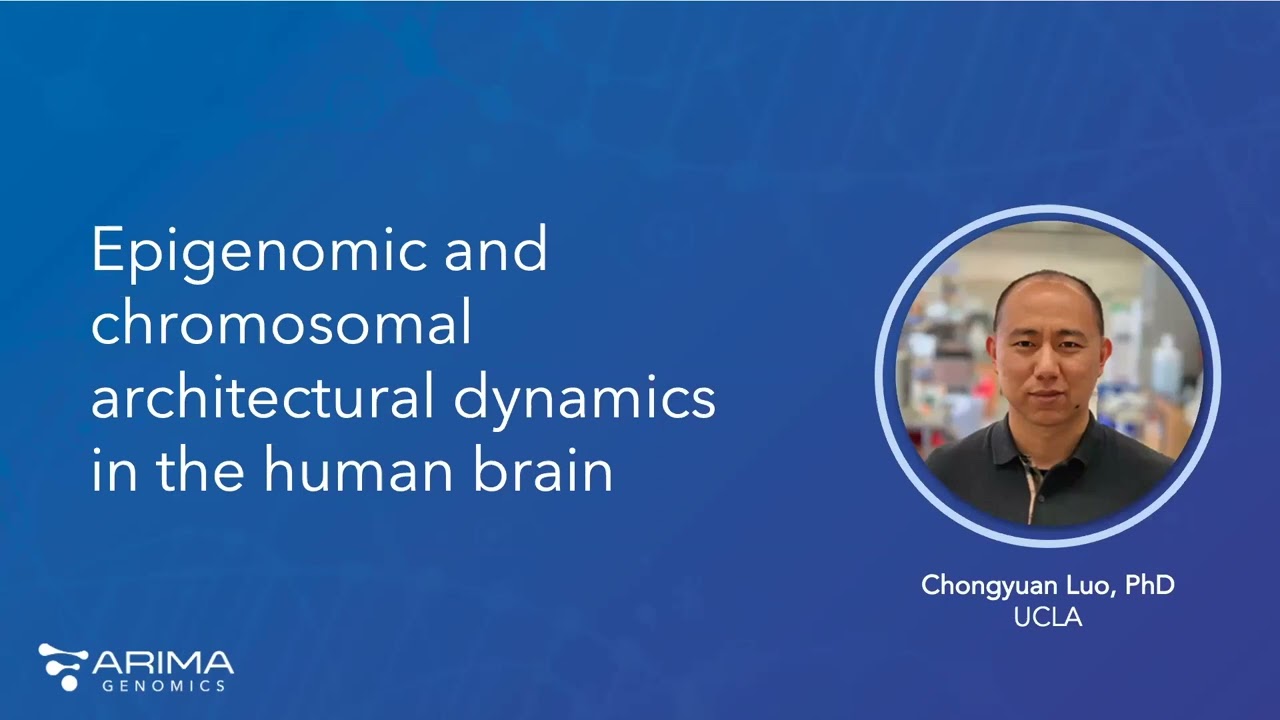
Single-Cell 3D Genomics in Neuroscience and the BRAIN Initiative
Keywords
Summary
205 words
Critical Evaluation
Value of the Information & Strength of the Argument
The webinar provides valuable insights into the latest single-cell 3D genomic technologies and their applications in neuroscience. The speakers present concrete examples of how these methods can identify novel cell types, resolve developmental trajectories, and link regulatory elements to genes. The argumentation is solid, grounded in published research and ongoing projects like the BRAIN Initiative. However, the webinar is also a promotional platform for Arima Genomics’ products, which may introduce a bias towards their kits. The technical depth is high, making it valuable for researchers in the field.
Scientific Rigor, Source Quality, Title Accuracy
The scientific rigor is high, as the speakers are leading researchers and the methods are published in reputable journals. The sources cited are primarily the speakers’ own publications and the BRAIN Initiative. The title accurately reflects the content, focusing on single-cell 3D genomics in neuroscience and the BRAIN Initiative. The webinar is well-structured, with clear presentations and a panel discussion. The promotional aspect is present but does not undermine the scientific content.
175 words
Title / Content Match
The title accurately reflects the content, which focuses on single-cell 3D genomics applications in neuroscience and the BRAIN Initiative.
Quality & Reliability
8/10
The webinar features leading researchers from Stanford, UCLA, and the Salk Institute, presenting peer-reviewed methods and data. The content is technical and grounded in published research, though it is a promotional webinar by Arima Genomics, which may introduce bias.
Key Moments
Markers derived by PSI from the transcript: the creator did not define chapters.
- Introduction by Arima Genomics on 3D genomics and single-cell applications.
- Dr. Chongyuan Luo presents sn-m3C-seq method and its application to human brain development.
- Dr. Luo discusses identification of novel gliogenic progenitor cells using chromatin conformation.
- Jingtian Zhou presents computational tools scHiCluster and SnapHiC for single-cell Hi-C analysis.
- Zhou shows applications of these tools to identify cell types and chromatin domains across tissues.
- Panel discussion begins, with Q&A from the audience.
Cited Sources
- sn-m3C-seq paper — Mentioned by Dr. Luo as the method developed in 2019.
- BRAIN Initiative Cell Atlas Network — Mentioned as the context for the research.
- Arima Genomics — Host of the webinar and provider of kits used in the methods.
Concurring Sources
- BRAIN Initiative Cell Atlas Network — The webinar aligns with the goals of the BRAIN Initiative to map the brain at cellular level.
Contribution & Novelties
The webinar highlights the novel application of single-cell 3D genomics to neuroscience, particularly the sn-m3C-seq method that combines methylation and chromatin conformation. It demonstrates the ability to identify new cell types and resolve developmental trajectories, which is a significant advancement. The computational tools presented, such as scHiCluster and SnapHiC, address the challenges of data sparsity and scalability, enabling analysis of large datasets. The discussion on using chromatin loops to dissect disease loci provides a new avenue for understanding neuropsychiatric disorders.
Pour aller plus loin :
- sn-m3C-seq publication — Original method paper.
- scHiCluster — Computational tool for single-cell Hi-C clustering.
- SnapHiC — Tool for loop calling in single-cell Hi-C.
- BRAIN Initiative — Official NIH program.
114 words
Radar Profile
The radar profile shows high scores across all dimensions, indicating a technically rich and reliable webinar. The balance between quantity and quality of information is strong, with a slight emphasis on technical depth.
💬 No comments were provided for analysis.