AMP 2022 Presentation: How the 3D Genome Reveals Novel Disease Mechanisms
Keywords
Summary
157 words
Critical Evaluation
Value of the Information & Strength of the Argument
The presentation provides valuable insights into the utility of 3D genomics for detecting structural variants, particularly in cases where standard methods fail. The argumentation is solid, supported by specific examples and data from their studies. The presenters effectively explain the technical basis of the approach and its advantages, such as the ability to detect proximal fusions and work with archival FFPE samples. However, the presentation is also promotional, and the evidence is not fully detailed, which slightly weakens the overall argumentation.
Scientific Rigor, Source Quality, Title Accuracy
The scientific rigor is moderate; the presenters reference several studies and guidelines, but the talk is not a peer-reviewed presentation. The sources cited are primarily from their own work and collaborations, which may introduce bias. The title accurately reflects the content, and the presentation is well-structured. The use of specific data and examples adds credibility, but the lack of independent validation and the promotional tone reduce the overall rigor.
165 words
Title / Content Match
The title accurately reflects the content, which focuses on how 3D genomics can reveal novel disease mechanisms, particularly in cancer.
Quality & Reliability
7/10
The presentation is given by experts from Arima Genomics and NYU Langone Health, with specific data and references to published studies. However, it is largely promotional for their technology, and the evidence is presented without full methodological details or peer review in this context.
Key Moments
Markers derived by PSI from the transcript: the creator did not define chapters.
- Introduction to 3D genomics and the presentation's goals.
- Explanation of 3D genomics vs linear genomics.
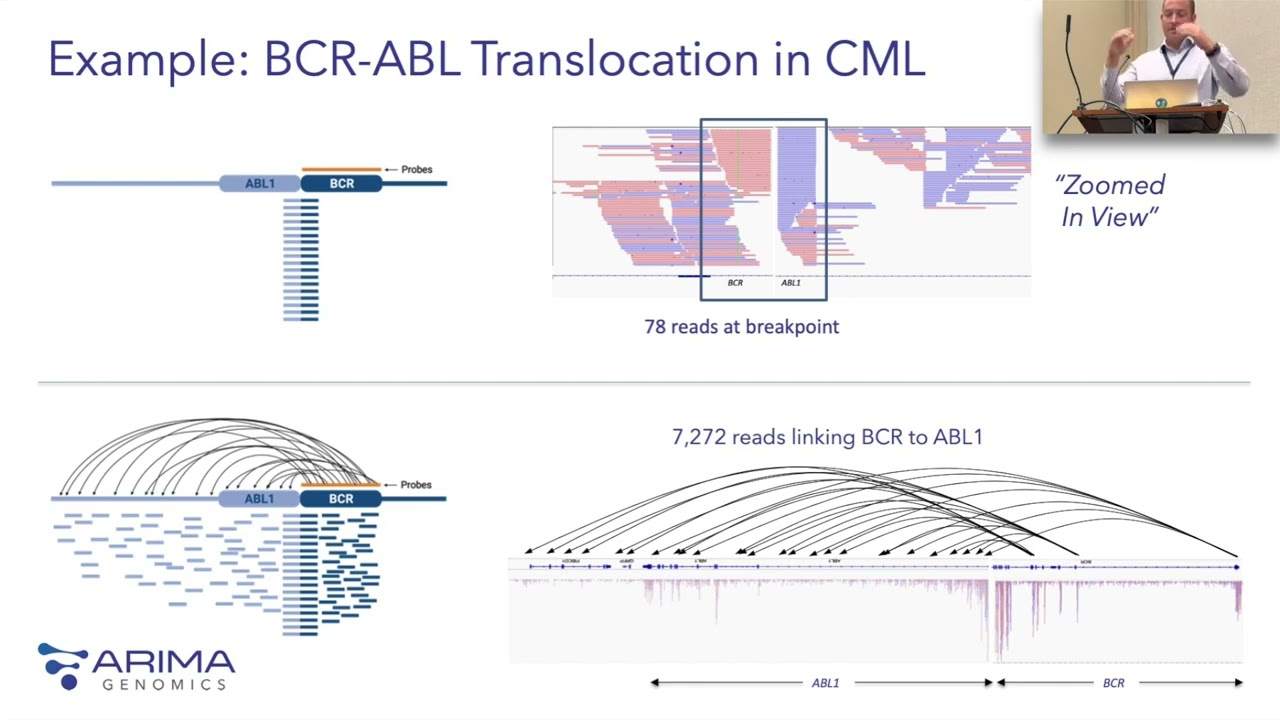
- Workflow of Arima Hi-C+ and how it detects structural variants.
- Comparison of linear and 3D genomics for fusion detection.
- Heat map interpretation and detection of fusions.
- Results from 217 patient samples and concordance with other methods.
- Conclusion and acknowledgments.
Cited Sources
- Arima Genomics website — Mentioned as a resource for more information about the company and technology.
- NCCN guidelines — Referenced in the context of clinical utility of fusion testing.
Concurring Sources
- Arima Genomics publications — The company's website lists over 300 customer publications supporting the technology.
Contribution & Novelties
The presentation highlights the novel application of 3D genomics to detect structural variants in cancer, particularly proximal fusions that are often missed by standard methods. It provides evidence of improved sensitivity and the ability to identify actionable biomarkers in driver-negative tumors. The talk also demonstrates the technology’s compatibility with archival FFPE samples, expanding its clinical utility.
Pour aller plus loin :
- Hi-C (genomics) — Overview of the Hi-C technique underlying 3D genomics.
- Structural variation — General concept of structural variants in genomics.
- Cancer genomics — Broader context of genomic approaches in cancer research.
93 words
Radar Profile
The radar profile shows high scores in information quantity and technical level, reflecting the detailed technical content. Quality of information and global reliability are moderate, indicating some promotional bias and lack of independent validation.