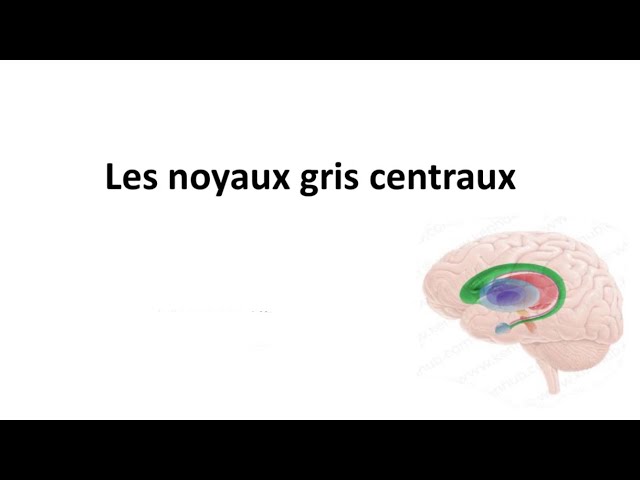
LES NOYAUX GRIS CENTRAUX
Keywords
Summary
157 words
Critical Evaluation
Value of the Information & Strength of the Argument
The video provides substantial educational value by breaking down complex neuroanatomical circuits into understandable segments. The instructor uses clinical correlations, such as Parkinson’s and Huntington’s diseases, to illustrate the functional significance of each pathway. The argumentation is logical and builds progressively from anatomy to physiology to pathology. However, the presentation is informal and lacks rigorous scientific citations, which weakens its authority for advanced learners. The use of repetition and mnemonic aids enhances retention but may be seen as overly verbose.
Scientific Rigor, Source Quality, Title Accuracy
The video does not cite specific scientific sources, and the description contains no references. The title accurately reflects the content, which is a focused tutorial on the basal ganglia. The scientific rigor is moderate: the instructor demonstrates a solid understanding of the subject but simplifies some concepts, potentially omitting nuances. The lack of sources limits the video’s reliability for academic citation, but it serves as a useful introductory resource.
164 words
Title / Content Match
The title accurately reflects the content, which focuses on the basal ganglia.
Quality & Reliability
6/10
The video provides a detailed and structured explanation of the basal ganglia, including anatomy, circuits, and clinical correlations. However, the presentation is informal and lacks citations to scientific sources, reducing its reliability for advanced academic use.
Key Moments
Markers derived by PSI from the transcript: the creator did not define chapters.
- Introduction and importance of understanding basal ganglia
- Overview of basal ganglia components and their functions
- Anatomy of striatum, globus pallidus, and substantia nigra
- Explanation of direct and indirect pathways
- Role of dopamine and its receptors in motor control
- Pathophysiology of Parkinson's disease and symptoms
- Discussion of other movement disorders like Huntington's disease
- Treatment options including deep brain stimulation
- Summary and final remarks
Contribution & Novelties
The video offers a pedagogical approach to teaching basal ganglia, emphasizing conceptual understanding over rote memorization. It integrates clinical cases to make the content relatable. The novelty lies in its structured repetition and mnemonic devices, which aid in long-term retention.
Pour aller plus loin :
- Basal ganglia - Wikipedia — Comprehensive overview of anatomy and function.
- Parkinson’s disease - Wikipedia — Detailed clinical and pathophysiological information.
- Direct and indirect pathways - Wikipedia — Explanation of the circuits.
- Deep brain stimulation - Wikipedia — Treatment modality mentioned in the video.
89 words
Radar Profile
The radar profile shows high scores in quantity of information and technical level, indicating a content-rich tutorial. However, reliability is lower due to lack of citations, and quality is moderate, reflecting the informal presentation style.