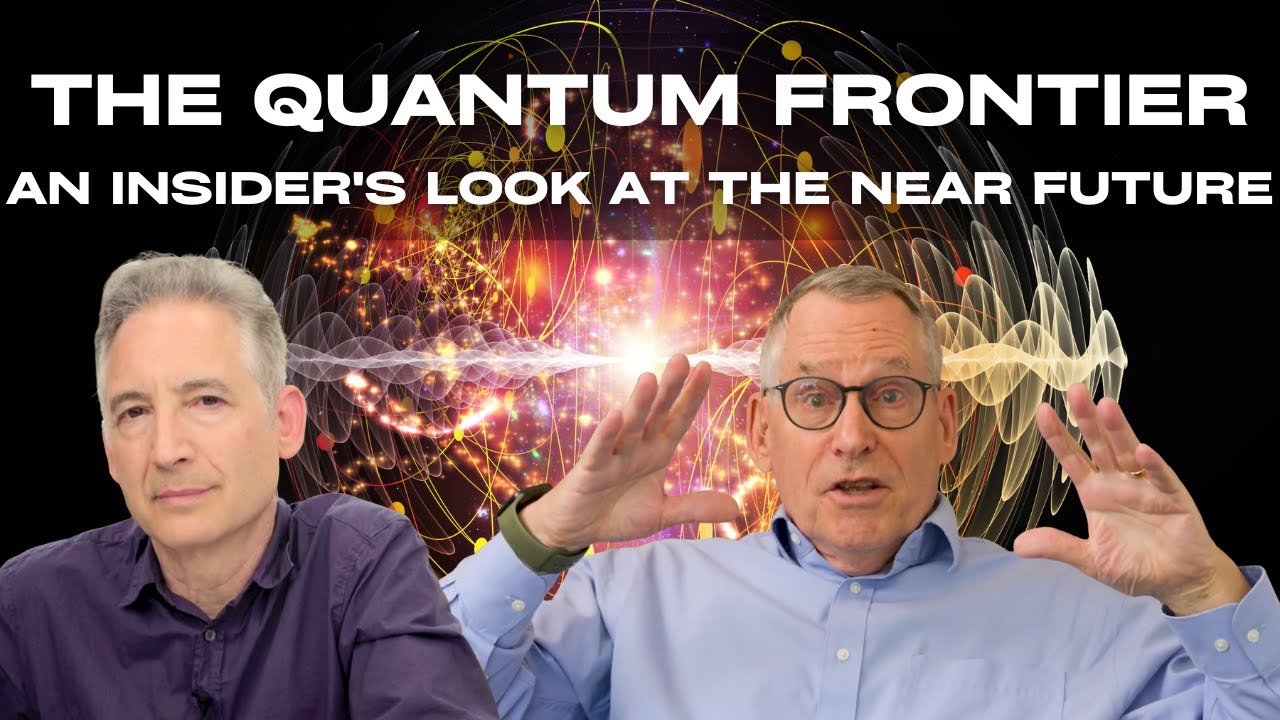
The Quantum Frontier with Brian Greene and John Preskill | World Science Festival
Keywords
Summary
170 words
Critical Evaluation
The conversation is a masterclass in science communication, featuring two leading physicists who articulate complex ideas with clarity and precision. The value of the information is exceptionally high, as it provides an authoritative overview of quantum mechanics and quantum computing, grounded in the latest research and theoretical understanding. The argumentation is solid, with each concept introduced logically and built upon previous points. The discussion of quantum entanglement and Bell’s theorem is particularly rigorous, correctly explaining the experimental verification of quantum non-locality and its implications. The treatment of the measurement problem is nuanced, acknowledging ongoing debates without oversimplifying. The sources cited are primarily the speakers’ own expertise and the scientific literature they reference implicitly; no external sources are explicitly cited, but the credibility of the speakers is unquestionable. The title accurately reflects the content, and the production quality is high. The only minor critique is that the technical level may be challenging for absolute beginners, but this is not a flaw given the target audience of the World Science Festival. Overall, this is an exemplary scientific discussion that offers deep insights into the quantum frontier.
184 words
Title / Content Match
The title accurately reflects the content: a deep dive into quantum mechanics and quantum computing with leading experts.
Quality & Reliability
9/10
Discussion between two renowned physicists (Brian Greene and John Preskill) with deep expertise in quantum mechanics and quantum computing. The content is accurate, well-structured, and reflects current scientific consensus. No commercial bias detected.
Chapters
- Introduction
- Are There Still Quantum Mysteries?
- Three Pillars of Quantum Mechanics
- Einstein and Quantum Entanglement
- Quantum Weirdness and Relativity
- The Measurement Problem
- Intro to Quantum Computing
- Why Preskill Switched Fields
- What is Quantum Error Correction?
- Quantum Supremacy
- Can Quantum Systems Impact Society?
- The Black Hole Diary Thought Experiment
- The Black Hole Bet with Stephen Hawking
- What We Still Don’t Understand About Black Holes
- From Baseball Cards to Quantum Physics
- Credits
Cited Sources
- World Science Festival — Official website of the organization producing the video.
- World Science Festival LinkedIn — LinkedIn page of the World Science Festival.
- World Science Festival YouTube Channel — YouTube channel for subscribing to World Science Festival content.
Concurring Sources
- Quantum Mechanics (Stanford Encyclopedia of Philosophy) — Philosophical and conceptual foundations of quantum mechanics.
- Quantum Computing (IBM Research) — Industry perspective on quantum computing development.
Contribution & Novelties
The video provides an original and insightful synthesis of quantum mechanics and quantum computing, featuring John Preskill’s unique perspective as a leading researcher. It bridges foundational concepts with cutting-edge applications, offering a comprehensive overview that is both educational and thought-provoking.
Pour aller plus loin :
- Quantum mechanics — Overview of the fundamental theory.
- Quantum computing — Introduction to quantum computing principles.
- Bell’s theorem — Key result on quantum non-locality.
- Quantum error correction — Essential technique for fault-tolerant quantum computing.
- Black hole information paradox — Related to the thought experiment discussed.
90 words
Radar Profile
The radar profile shows high scores across all dimensions, with particularly strong performance in information quality and reliability. The video excels in providing accurate, well-explained content with minimal weaknesses.
💬 Très positif. Sur les 30 commentaires analysés, l'immense majorité exprime une admiration et une gratitude pour la qualité de la conversation, soulignant la clarté des explications et la profondeur des échanges.