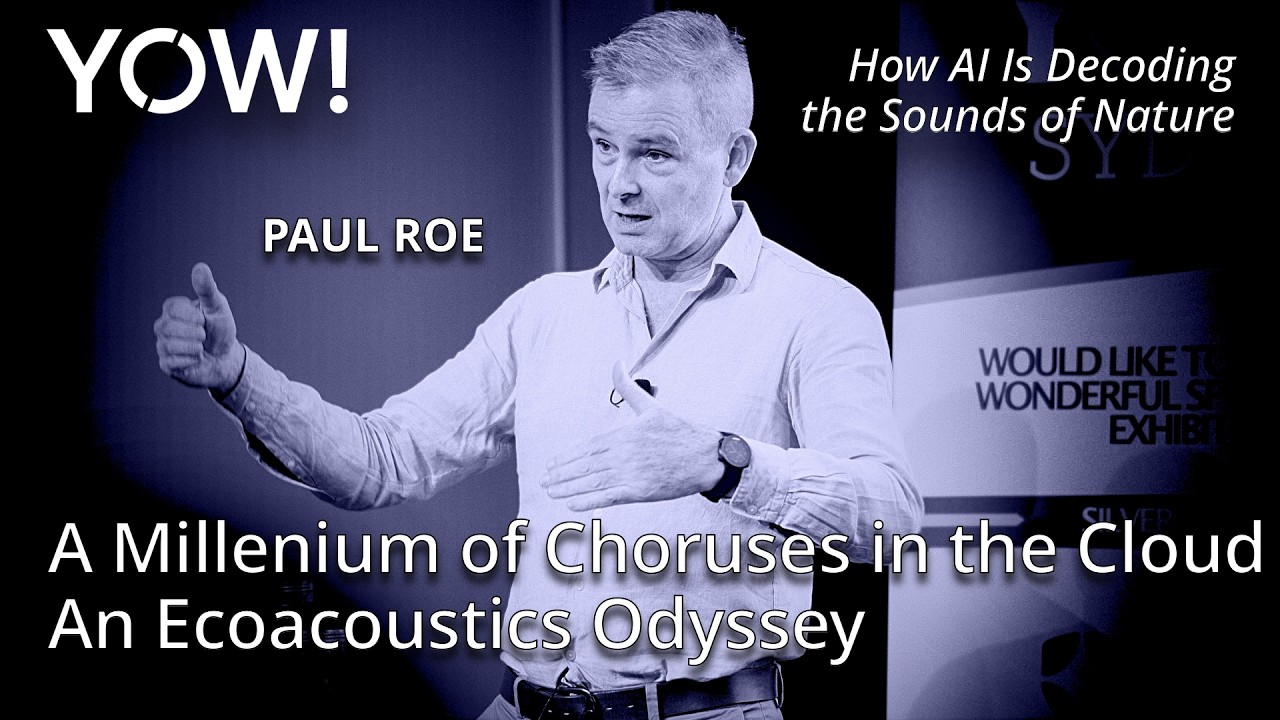
A Millenium of Choruses in the Cloud - An Ecoacoustics Odyssey
Keywords
Summary
170 words
Critical Evaluation
The talk provides a compelling and informative overview of ecoacoustics, grounded in the speaker’s extensive personal experience. The value of the information is high, as it offers insights into the practical challenges and successes of large-scale acoustic monitoring. The argumentation is solid, with the speaker clearly explaining the rationale behind ecoacoustics and its benefits for conservation. The scientific rigor is generally good, with references to specific projects and some external sources, though the talk is more of a narrative than a detailed scientific presentation. The sources cited are credible, including the Australian Acoustic Observatory and relevant publications. The title accurately reflects the content, which is a personal journey through the field. The talk is well-structured and engaging, with a clear progression from introduction to lessons learned. The speaker’s enthusiasm and expertise are evident, making the talk valuable for both newcomers and those familiar with the field. However, the talk could benefit from more concrete examples of how the data has been used to inform conservation decisions, and some technical details are glossed over. Overall, the talk is a valuable contribution to the understanding of ecoacoustics and its potential.
188 words
Title / Content Match
The title accurately reflects the content, which is a personal journey through ecoacoustics, highlighting the scale of data collection and the use of cloud and AI.
Quality & Reliability
8/10
The talk is given by a researcher with extensive experience in ecoacoustics, and it references credible sources and projects. The information is presented as personal experience and general knowledge, with some scientific references. The reliability is high, though not all claims are backed by specific citations.
Chapters
Cited Sources
- Australian Acoustic Observatory — The main project described in the talk, a network of recorders across Australia.
- arXiv paper (2505.03071) — A recent paper related to ecoacoustics or AI, likely cited for further reading.
- Australia's Strategy for Nature — Mentioned as a national strategy that ecoacoustics can support.
- UN Sustainable Development Goals — Referenced to highlight the global importance of biodiversity conservation.
- Xeno-canto — A community database of bird sounds, likely used for reference or validation.
- Paul Roe's JCU profile — Speaker's academic profile.
- YOW! Conference session page — Contains slides and abstract for the talk.
Concurring Sources
- Australian Acoustic Observatory — The project itself aligns with the talk's claims about large-scale acoustic monitoring.
- Xeno-canto — A platform for sharing bird sounds, supporting the idea of using sound for biodiversity.
External References
Contribution & Novelties
The talk provides a unique perspective on the development of ecoacoustics as a field, highlighting the journey from small-scale projects to a continent-wide observatory. The speaker’s emphasis on open science and collaboration offers valuable insights for researchers. The talk also underscores the potential of cloud computing and AI in processing large environmental datasets.
Pour aller plus loin :
- Ecoacoustics — Provides an overview of the field and its applications.
- Soundscape ecology — Related concept focusing on the study of soundscapes.
- Australian Acoustic Observatory — The main project discussed, offering access to data and further information.
- The Sounds of Life by Karen Bakker — A book recommended in the talk, exploring animal communication and sound.
114 words
Radar Profile
The radar profile shows high scores in quality and reliability, reflecting the speaker's expertise and credible references. The quantity of information is moderate, and the technical level is accessible, making the talk suitable for a broad audience.