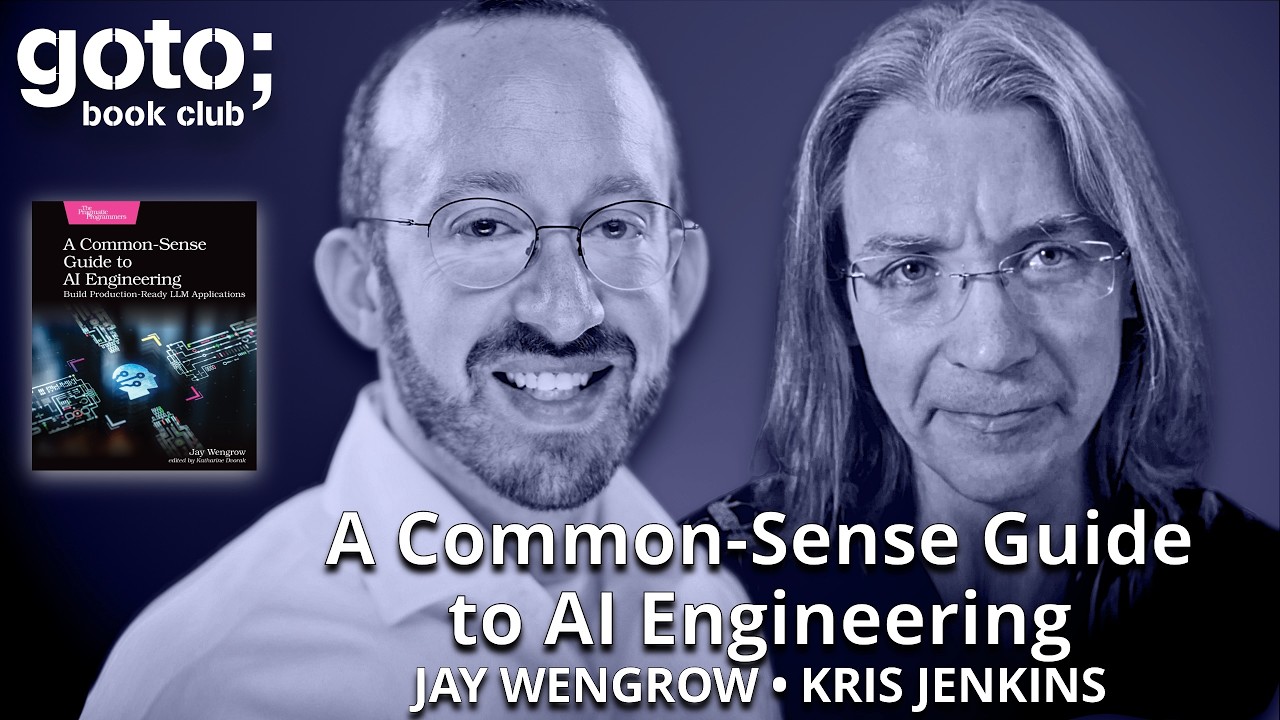
A Common-Sense Guide to AI Engineering
Keywords
Summary
163 words
Critical Evaluation
The interview provides a valuable, practical perspective on AI engineering, particularly for developers seeking to understand the mechanics behind AI agents. Wengrow’s explanation of the ‘man-in-the-middle’ approach to tool use is clear and demystifies a complex topic. The discussion on guardrails is nuanced, acknowledging the trade-offs between latency, cost, and effectiveness of different methods. The advice on when to use multi-agent systems is pragmatic, based on complexity and experimentation rather than rigid rules. However, the conversation is largely anecdotal, with no formal citations or empirical evidence to support claims. The author’s experience lends credibility, but the lack of references to specific studies or frameworks may limit the depth for advanced practitioners. The title is accurate, as the content focuses on common-sense, practical guidance. The episode is well-structured, with a logical progression from basic concepts to more advanced topics. The emphasis on building from scratch to understand fundamentals is a refreshing counterpoint to the trend of relying on frameworks. Overall, the content is informative and engaging, though it may not offer groundbreaking insights for those already familiar with AI engineering. The absence of critical examination of potential limitations or risks of the approaches discussed is a minor weakness. The discussion could benefit from more concrete examples or case studies to illustrate the points made. Despite these minor shortcomings, the episode is a solid resource for developers looking to deepen their understanding of AI engineering.
233 words
Title / Content Match
The title accurately reflects the content, as the conversation focuses on practical, common-sense approaches to AI engineering.
Quality & Reliability
8/10
The discussion is grounded in practical experience and offers clear technical explanations of AI agent mechanics, guardrails, and multi-agent systems. The author's background as a software engineer and educator adds credibility. However, the content is largely anecdotal and lacks formal citations or empirical data, which slightly reduces the reliability score.
Chapters
Cited Sources
- A Common-Sense Guide to AI Engineering (book) — The book being discussed, which provides a practical guide to AI engineering.
- GOTO Book Club episode page — The episode page for this interview, containing additional resources and links.
- Author's website — Jay Wengrow's website, likely containing information about his books and courses.
- Author's GitHub — Jay Wengrow's GitHub profile, possibly containing code examples from the book.
- Author's LinkedIn — Jay Wengrow's LinkedIn profile, providing professional background.
- Kris Jenkins' blog — Kris Jenkins' blog, where he writes about software development and other topics.
- GOTO Book Club — The GOTO Book Club page, where this interview was recorded.
Concurring Sources
- A Common-Sense Guide to AI Engineering (book) — The book itself, which aligns with the interview's content.
External References
Contribution & Novelties
The interview provides a clear, accessible explanation of how AI agents work, demystifying the ‘clever hack’ behind tool use. It offers practical advice on guardrails and multi-agent systems, emphasizing a pragmatic, from-scratch approach. The discussion on frameworks vs. building from scratch is timely and thought-provoking.
Pour aller plus loin :
- AI agent — Provides background on the concept of agents in AI.
- Large language model — Explains the technology behind LLMs, which are central to the discussion.
- Reinforcement learning from human feedback (RLHF) — A technique used to fine-tune LLMs, relevant to the discussion on reasoning models.
- Function calling (OpenAI) — Official documentation on how to implement tool use with LLMs, directly related to the ‘clever hack’ described.
118 words
Radar Profile
The radar profile shows high scores in quality of information and reliability, reflecting the practical and credible nature of the discussion. The quantity of information and technical level are moderate, indicating a focused but not exhaustive treatment of the topic.