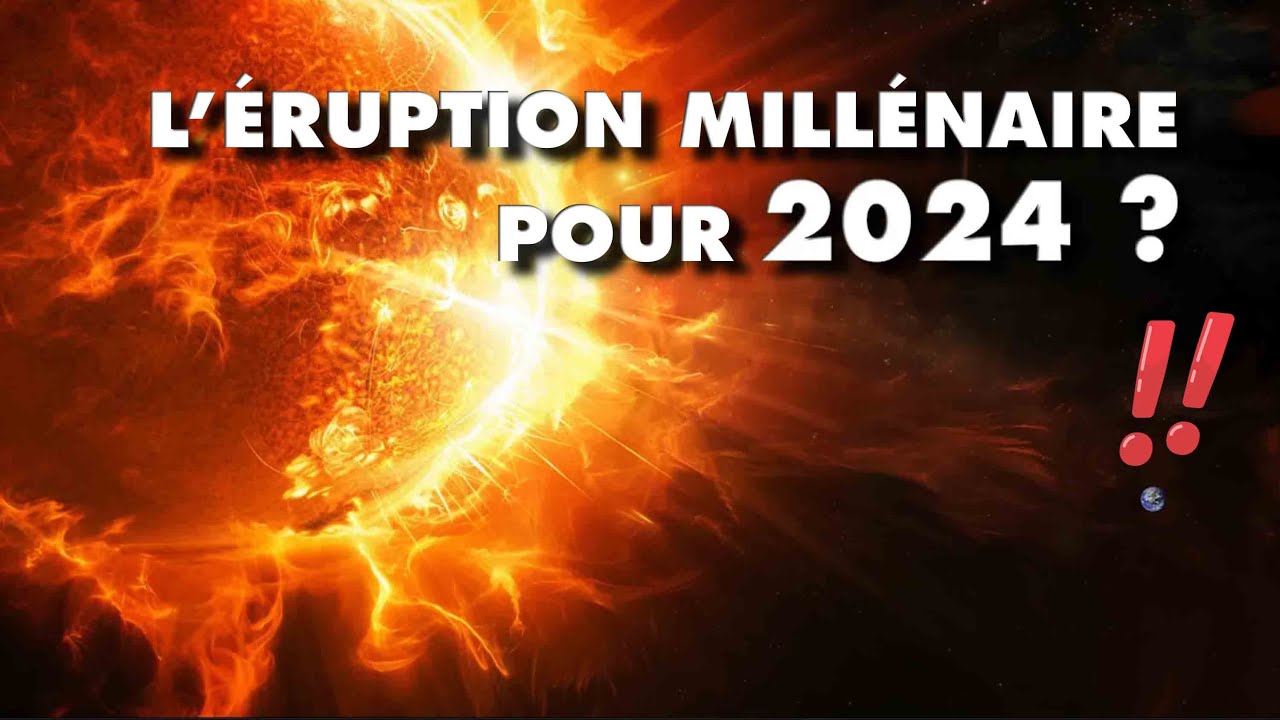
Et si cette année ça ne passait pas à côté ?
Keywords
Summary
163 words
Critical Evaluation
Value of the Information & Strength of the Argument
The video provides substantial value by synthesizing historical records, scientific research, and current solar activity data to build a compelling argument about the real and imminent threat of solar storms. The argumentation is solid, progressing logically from the 2012 near-miss to the historical Carrington Event, then to the physical mechanisms and potential impacts, and finally to the evidence of past superflares. It effectively uses concrete examples (e.g., the 1989 Quebec blackout, the 2022 Starlink satellite loss) to illustrate the potential consequences. The video also acknowledges uncertainties, such as the exact frequency of superflares, which adds to its credibility.
Scientific Rigor, Source Quality, Title Accuracy
The video demonstrates strong scientific rigor by referencing well-established sources, including Wikipedia articles on the Carrington Event and coronal mass ejections, Pour la Science articles on solar eruptions and historical events, and a Radio France program on solar storms. The information is presented accurately and aligns with current scientific understanding. The title is an effective hook that accurately reflects the video’s content, which is a detailed examination of the risk of a major solar storm. The video’s structure, with clear chapters, enhances its clarity and educational value.
200 words
Title / Content Match
The title is a rhetorical question that effectively captures the video's central theme: the imminent risk of a major solar storm. It is engaging and accurately reflects the content's focus on the potential impact of solar activity.
Quality & Reliability
8/10
The video presents a well-structured, scientifically grounded overview of solar storms, referencing historical events (Carrington Event), recent research (2012 near-miss), and scientific literature. It clearly distinguishes established facts from hypotheses (e.g., frequency of superflares). The presentation is engaging and accessible, with a clear narrative and appropriate visual aids.
Chapters
Cited Sources
- Carrington Event - Wikipedia — Referenced as a source for the historical 1859 solar storm.
- Coronal mass ejection - Wikipedia — Referenced as a source for the phenomenon of coronal mass ejections.
- Maximum solaire - Wikipédia — Referenced as a source for the solar cycle and solar maximum.
- La menace des éruptions solaires géantes - Pour la Science — Referenced as a source for the threat of giant solar eruptions.
- En attendant la tempête solaire du millénaire - Pour la Science — Referenced as a source for the anticipation of a millennial solar storm.
- La glace du Groenland révèle des traces d'une violente éruption solaire en 774 - Pour la Science — Referenced as a source for evidence of a violent solar eruption in 774 AD from Greenland ice.
- Faut-il craindre les tempêtes solaires ? - Radio France — Referenced as a source for a discussion on whether to fear solar storms.
- Balade Mentale - Site — Link to the creator's website, mentioned in the description.
- Odoo - Website Builder — Sponsor link, mentioned in the description.
- Utip - Balade Mentale — Support link, mentioned in the description.
Concurring Sources
- Carrington Event - Wikipedia — Provides historical details of the 1859 event, consistent with the video's account.
- Coronal mass ejection - Wikipedia — Explains the physics of CMEs, supporting the video's description of the phenomenon.
- Maximum solaire - Wikipédia — Confirms the solar cycle and the current approach to solar maximum, as mentioned in the video.
Contribution & Novelties
The video’s original contribution lies in its compelling synthesis of historical data, recent scientific findings, and current solar activity to communicate the imminent and potentially catastrophic risk of a major solar storm. It effectively translates complex scientific concepts into an engaging narrative, making the threat accessible to a broad audience. The video also highlights the relatively recent discovery of superflares from ice core and tree ring data, emphasizing that the most extreme events are not just theoretical but have occurred in the past.
Pour aller plus loin :
- Carrington Event - Wikipedia — The historical event that serves as the baseline for extreme space weather.
- Coronal mass ejection - Wikipedia — The physical phenomenon responsible for the most severe geomagnetic storms.
- Solar cycle - Wikipedia — The 11-year cycle of solar activity that modulates the frequency of solar storms.
- Miyake event - Wikipedia — The term for the extreme solar particle events identified in tree rings, such as the 774-775 AD event.
- Space weather - Wikipedia — The broader field of study that encompasses the effects of solar activity on Earth.
181 words
Radar Profile
The radar profile shows a well-rounded video with high scores across all dimensions, particularly in information quantity and quality. The technical level is appropriately high for an informed audience, and the reliability is strong due to the use of credible sources. This indicates a balanced and trustworthy science communication piece.
💬 Très positif. Sur les 30 commentaires analysés, les spectateurs expriment une admiration unanime pour la qualité de la narration, des images et du contenu, certains mentionnant avoir revu la vidéo plusieurs fois.