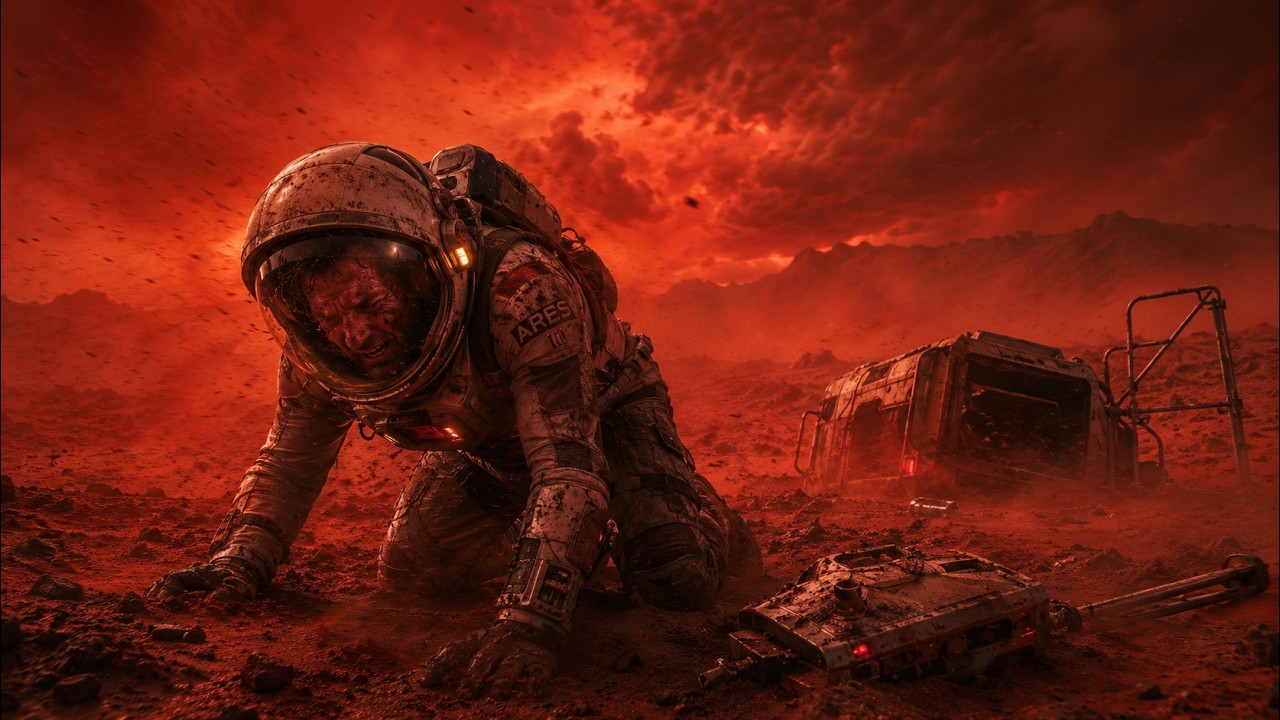
Ce qui attend vraiment les premiers astronautes sur Mars
Keywords
Summary
147 words
Critical Evaluation
The video provides a thorough and well-structured analysis of the challenges of a human mission to Mars, grounded in scientific evidence. It effectively communicates complex topics such as the physiological effects of microgravity, radiation exposure, and the engineering hurdles of landing and surviving on Mars. The argumentation is solid, with references to real missions and studies, and it avoids sensationalism while still engaging the viewer. The use of AI-generated imagery, while visually striking, may detract from the scientific credibility for some viewers, but it does not undermine the factual content. The video’s critical stance on the feasibility of Mars colonization is well-supported, and it offers a refreshing counterpoint to overly optimistic portrayals. The sources cited are reputable, including Wikipedia articles on Mars500 and human missions to Mars, and the video’s own research is evident. The title accurately reflects the content, and the video succeeds in its goal of providing a realistic assessment. Overall, it is a high-quality piece of science communication that balances depth with accessibility.
166 words
Title / Content Match
The title accurately reflects the content, which details the harsh realities and dangers awaiting astronauts on Mars.
Quality & Reliability
8/10
The video provides a comprehensive and well-researched overview of the challenges of a human mission to Mars, referencing credible sources and scientific studies. The content is accurate and up-to-date, though it is presented in a popular science format with some dramatization.
Key Moments
Markers derived by PSI from the transcript: the creator did not define chapters.
- Introduction: The dream of Mars and the reality of its dangers.
- The journey: 7 months in space, physical effects of microgravity.
- Effects on the body: muscle atrophy, bone loss, fluid redistribution.
- Radiation: cosmic rays and solar flares, cancer risk and cognitive effects.
- Landing: the difficulty of entering Mars' thin atmosphere, past failures.
- Welcome to hell: toxic soil, dust storms, extreme cold.
- Radioactive soil and dust storms: further hazards.
- Water and recycling: essential for survival.
- Food challenge: growing food on Mars.
- Energy and survival: power sources.
- Maintenance and psychological well-being.
- The impossible return and the absurdity of the project.
Cited Sources
- Mammouth.ai — Sponsor of the video, providing AI tools.
- Mars500 — Reference for the psychological and physiological challenges of long-duration space missions.
- Mission habitée vers Mars — General reference for the challenges of human missions to Mars.
- Related video — Additional context on Mars missions.
Concurring Sources
- NASA Human Research Program — Research on the effects of spaceflight on the human body.
- ESA Mars500 — Study on the psychological and physiological effects of long-duration isolation.
Dissenting Sources
Contribution & Novelties
The video synthesizes existing knowledge into a compelling narrative that emphasizes the harsh realities of Mars exploration, countering popular optimism. It provides a comprehensive overview of the technical, physiological, and psychological challenges, making it a valuable resource for the general public.
Pour aller plus loin :
- NASA’s Mars Exploration Program — Official information on current and planned missions.
- The Mars Society — Advocacy and research on human Mars exploration.
- Effects of Space Radiation on Human Health — NASA’s research on radiation risks.
- Mars500 study — ESA’s overview of the Mars500 isolation study.
- Human Adaptation to Spaceflight — A comprehensive review of physiological changes in space.
105 words
Radar Profile
The radar profile shows high scores in information quantity and quality, with a moderate technical level. The reliability is strong, reflecting the video's use of credible sources and balanced presentation. The overall assessment is positive, with minor caveats regarding the use of AI imagery.
💬 The comments are predominantly positive, with many viewers praising the content and narration, but a significant number express disappointment with the excessive use of AI-generated images, which they feel detracts from the experience. Overall, the sentiment is balanced, with a notable minority calling for a return to the channel's previous style.