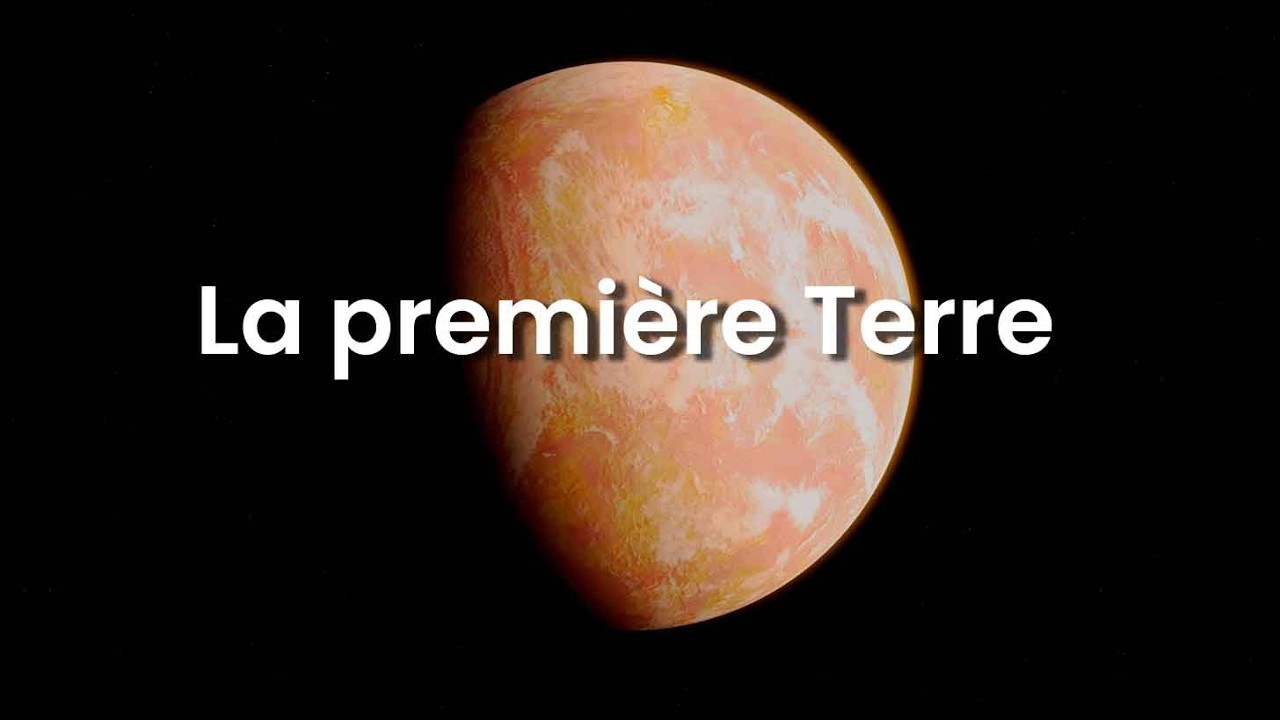
La folle Histoire de la Terre primitive
Keywords
Summary
129 words
Critical Evaluation
The video is a high-quality science communication piece that excels in both content and presentation. It provides a detailed and accurate account of Earth’s early history, drawing on current scientific knowledge and incorporating expert input from Franck Selsis, a CNRS researcher. The narrative is well-structured, taking the viewer through the Hadean and Archean eons with vivid descriptions of the environment and processes. The use of AI-generated imagery is a notable feature; while it enhances the visual appeal, it is clearly disclosed and does not detract from the scientific accuracy. The video also addresses the evidence for these reconstructions, such as zircon dating and lunar cratering, which adds to its credibility. The interview segment with Franck Selsis provides additional depth, discussing alternative scenarios and the uncertainties in our understanding. The sources cited include the book ‘Le grand livre de l’exobiologie’ and the PEPR Origins program, which are reputable. The video’s title accurately reflects its content, and the pacing is appropriate for a general audience without oversimplifying the science. Overall, this is an excellent example of science communication that balances entertainment with educational value.
182 words
Title / Content Match
The title accurately reflects the content, which is a detailed narrative of Earth's early history from its formation to the Archean, covering geological and biological evolution.
Quality & Reliability
8/10
The video is well-researched, with input from a CNRS researcher (Franck Selsis) and references to a book on exobiology. It presents current scientific understanding of early Earth, including the Hadean and Archean eons, with appropriate caveats about uncertainties. The use of AI-generated imagery is clearly disclosed, and the content aligns with established scientific knowledge.
Chapters
- Hadéen, océan de magma, et naissance d'un monde
- Atmosphère lourd et brulant
- Pluies diluviennes et premiers océans
- Un monde sous ultra violet
- Activités hydrothermale
- L’Archéen
- Atmosphère agitée
- Apparition de la vie et premiers continents
- La grande oxydation
- Glaciation totale
- Un monde qui rouille
- Les preuves ?
- Les zircons
- Météorite et traces lunaires
- Une histoire inscrite dans nos cellules
- échange avec Franck: les autres scénarios
- L'impact de la vie sur l'atmosphère
Cited Sources
- PEPR Origins — Program supporting the series 'Balade dans les origines'
- Le grand livre de l'exobiologie — Book referenced as a source for the video's content
- Balade dans les origines - playlist — Playlist of the series this video belongs to
Concurring Sources
- PEPR Origins — Official program supporting the series, indicating institutional backing.
Contribution & Novelties
The video synthesizes current scientific knowledge about early Earth into an engaging narrative, with expert input from Franck Selsis. It highlights the latest research on the Hadean and Archean eons, including the role of hydrothermal systems and the timing of life’s emergence. The inclusion of an interview with a researcher adds depth and credibility.
Pour aller plus loin :
- Hadean Eon — Provides an overview of the Hadean eon, complementing the video’s description.
- Archean Eon — Details the Archean eon, including geological and biological developments.
- Great Oxidation Event — Explains the rise of oxygen in Earth’s atmosphere, a key topic in the video.
- Origin of life — Discusses theories on how life began, relevant to the video’s discussion of life’s emergence.
121 words
Radar Profile
The radar profile shows high scores in quantity and quality of information, with slightly lower but still strong scores in technical level and reliability. This indicates a well-balanced video that is both informative and accessible, with a solid scientific foundation.
💬 Très positif. Sur les 30 commentaires analysés, les spectateurs expriment une admiration quasi unanime pour la qualité de la narration, la beauté des visuels générés par IA, et l'apport de l'interview avec le chercheur, certains le qualifiant de meilleure vidéo de la chaîne.