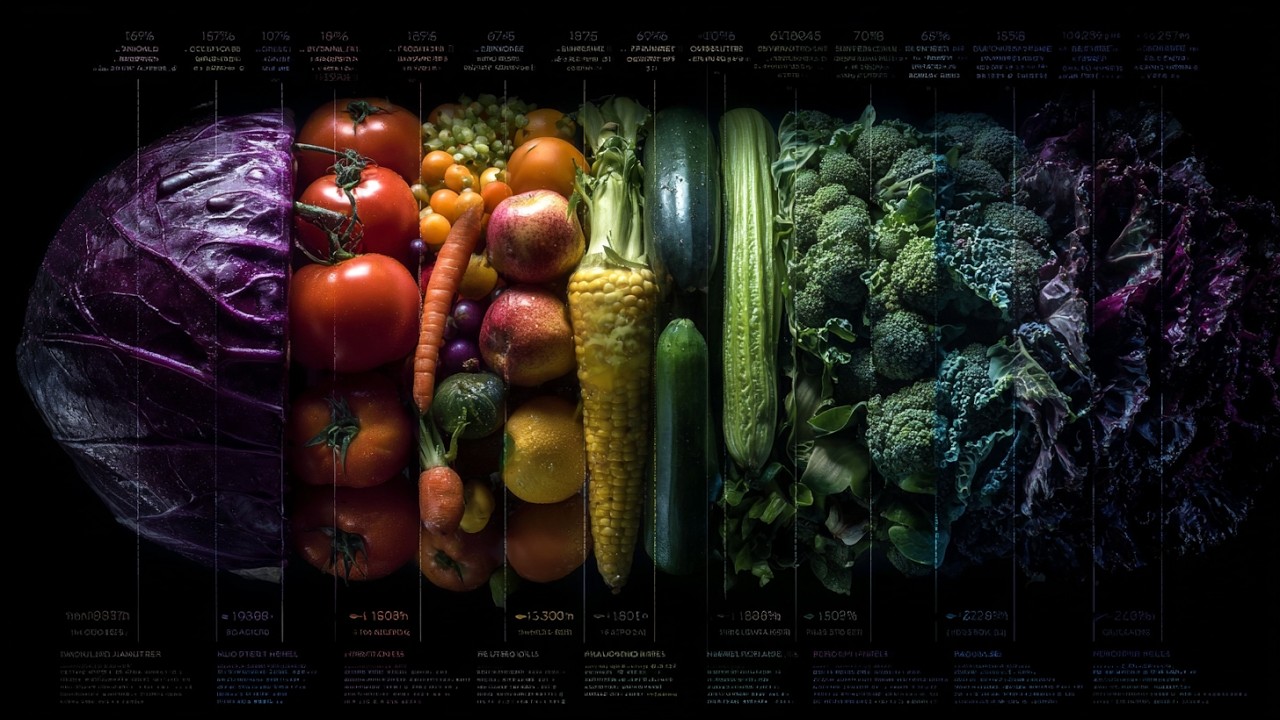
L’étonnante origine géographique des légumes
Keywords
Summary
193 words
Critical Evaluation
The video is an excellent example of science communication, blending rigorous research with engaging storytelling. The information presented is accurate and well-supported by references to books such as ‘Le voyage des plantes et les grandes découvertes’ by José Mandes Ferrao, ‘Dîner avec Darwin’ by Jonathan Silvertown, and ‘Le plus grand Menu du monde’ by Bill François. The video excels in explaining complex concepts like genetic plasticity and domestication in an accessible manner, using clear examples and visual aids. The argumentation is solid, with each vegetable’s history presented in a logical sequence, and the video does not shy away from acknowledging the role of human selection in shaping modern vegetables. The sources cited are credible and add to the video’s reliability. The title accurately reflects the content, and the video delivers on its promise to reveal the surprising origins of common vegetables. One minor criticism is that the video could have included more specific citations for some claims, but overall, it maintains a high standard of scientific rigor. The public comments reflect a very positive reception, with viewers praising the video’s quality, writing, and educational value. The video successfully achieves its goal of making viewers reconsider their relationship with the food on their plates.
203 words
Title / Content Match
The title accurately reflects the content, which explores the geographic origins and domestication history of common vegetables.
Quality & Reliability
8/10
The video is well-researched, citing several books and scientific concepts, and presents information in an engaging and accurate manner. Minor simplifications are present but do not undermine overall reliability.
Chapters
- Les légumes de nos assiettes
- Merci Ecosia
- Transformations et définition des légumes
- Les salades
- Les Tomates
- Les Aubergines
- Les Carottes
- Poireau, oignon et Ail
- Les Choux sont fou
- Les cucurbitacés
- Le concombre
- Le poivron
- L’avocat
- Radis
- La révolution de la Betterave
- Les légumineuses
- Une alimentation récente
- La découverte de l’hérédité
Cited Sources
- Ecosia — Sponsor of the video, a search engine that plants trees.
Concurring Sources
- Le voyage des plantes et les grandes découvertes — Book cited in the video description, providing historical context on plant movements.
- Dîner avec Darwin — Book cited in the video description, exploring the evolution of our diets.
- Le plus grand Menu du monde — Book cited in the video description, covering natural history in our plates.
Contribution & Novelties
The video provides a comprehensive and engaging overview of the geographic origins and domestication history of common vegetables, highlighting the remarkable transformations they have undergone through human selection. It synthesizes information from multiple sources and presents it in an accessible narrative style, making it a valuable educational resource.
Pour aller plus loin :
- Domestication — Provides a general overview of the domestication process.
- Brassica oleracea — Details the wild cabbage species from which many vegetables derive.
- Solanaceae — The nightshade family, including tomatoes, aubergines, and peppers.
86 words
Radar Profile
The radar profile shows high scores in quantity and quality of information, with a moderate technical level, indicating a well-balanced educational video that is both informative and accessible.
💬 Très positif : Les 30 commentaires analysés sont extrêmement élogieux, saluant la qualité de l'écriture, du montage et de la vulgarisation, avec des demandes de diffusion télévisée et des remerciements pour le contenu éducatif.