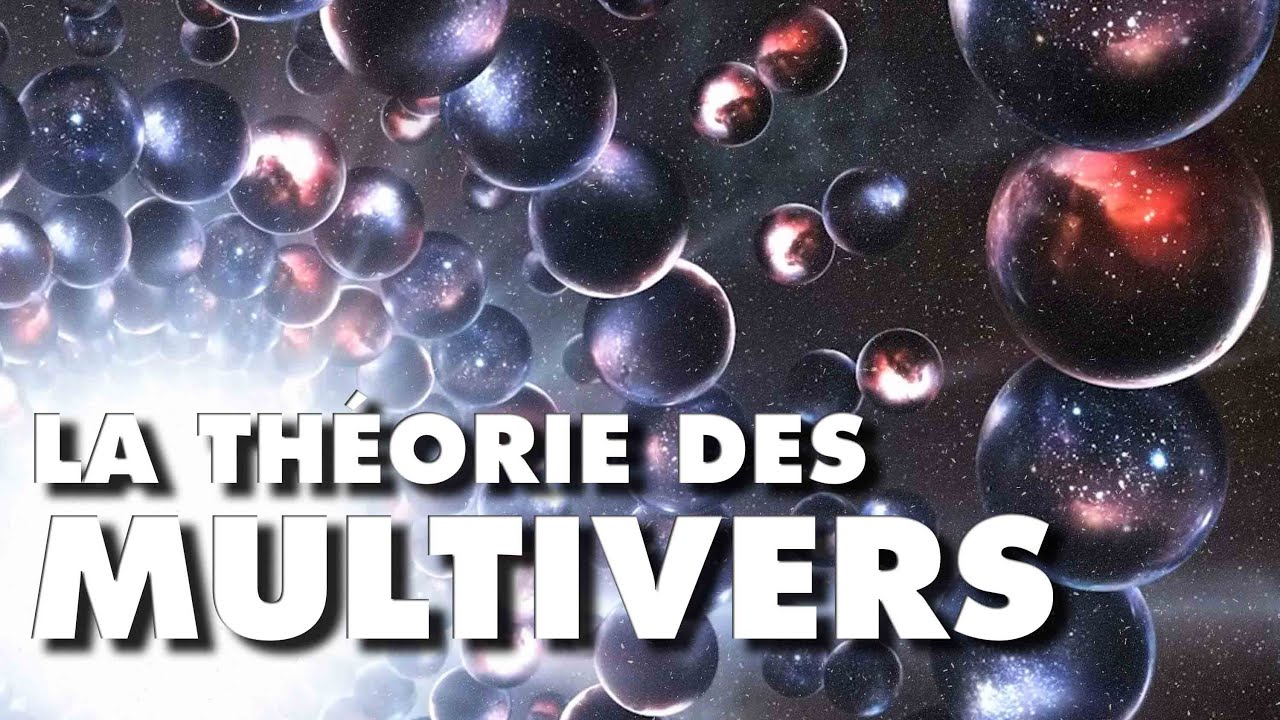
Univers Parallèles et MULTIVERS, combien sont-ils ?
Keywords
Summary
163 words
Critical Evaluation
Value of the Information & Strength of the Argument
The video provides a comprehensive and accessible overview of multiverse theories, effectively synthesizing complex cosmological and quantum concepts. It presents a clear hierarchical framework (Tegmark’s levels) that helps structure the discussion. The argumentation is generally solid, presenting each theory with its underlying physics and scientific basis. However, it tends to emphasize the more speculative aspects and does not deeply engage with criticisms or alternative viewpoints. The value lies in its ability to make these abstract ideas understandable and engaging, but it may overstate the certainty of some theories.
Scientific Rigor, Source Quality, Title Accuracy
The video demonstrates a good level of scientific rigor by referencing reputable sources, including works by Lee Smolin, John D. Barrow, and Max Tegmark, as well as articles from Pour la Science and other scientific publications. The sources are relevant and support the content. The title accurately reflects the content, which systematically explores the different levels of multiverse. The video does not present original research but rather a synthesis of existing scientific literature. The inclusion of a sponsorship segment is clearly separated and does not affect the scientific content.
192 words
Title / Content Match
The title accurately reflects the content, which systematically explores the different levels of multiverse as classified by Max Tegmark.
Quality & Reliability
8/10
The video presents a well-structured overview of multiverse theories, referencing established scientific works and researchers (Tegmark, Smolin, Barrow). It clearly distinguishes between levels of multiverse and mentions the scientific consensus status. However, it simplifies complex concepts and includes speculative elements without deep critical analysis.
Chapters
Cited Sources
- The Life of the Cosmos (Lee Smolin) — Referenced as an ouvrage on multiverse and cosmological natural selection.
- The Accidental Universe (Harper's Magazine) — Referenced in the description as a source on the multiverse and anthropic principle.
- Les Constantes de la nature (John D. Barrow) — Referenced as a source on physical constants and multiverse.
- De l'univers aux multivers (Pour la Science) — Referenced as a source on multiverse concepts.
- Le multivers existe-t-il ? (Pour la Science) — Referenced as a source on the existence of the multiverse.
- The Multiverse (Max Tegmark) — Referenced as the primary source for the classification of multiverse levels.
- Constante physique (Wikipedia) — Referenced as a source on physical constants.
- Sélection naturelle cosmologique (Dans la Lune) — Referenced as a source on Smolin's cosmological natural selection.
- Le multivers existe-t-il ? (Pour la Science) — Referenced as a source on multiverse existence.
- Le multivers quantique (Pour la Science) — Referenced as a source on quantum multiverse.
- Des univers multiples (La Vie des Idées) — Referenced as a source on multiple universes.
- Balade cosmologie (Futura Sciences) — Referenced as a source on cosmology.
Concurring Sources
- The Multiverse (Max Tegmark) — The video's classification of multiverse levels directly aligns with Tegmark's paper.
- Le multivers existe-t-il ? (Pour la Science) — The video's discussion of the scientific status of multiverse theories aligns with this article.
Dissenting Sources
- The Life of the Cosmos (Lee Smolin)
External References
Contribution & Novelties
The video provides a clear and engaging synthesis of the multiverse concept, structuring it according to Tegmark’s four levels. It effectively communicates complex scientific ideas to a general audience, using vivid metaphors and examples. The video’s originality lies in its presentation style and its ability to make these abstract concepts accessible, while still referencing scientific literature.
Pour aller plus loin :
- Max Tegmark’s Multiverse paper — The foundational paper classifying multiverse levels.
- Many-worlds interpretation (Wikipedia) — A key concept for Level 3 multiverse.
- Eternal inflation (Wikipedia) — The basis for Level 2 multiverse.
- Anthropic principle (Wikipedia) — A motivation for multiverse theories.
102 words
Radar Profile
The radar profile shows high scores in information quantity and quality, indicating a content-rich and well-sourced video. The technical level is moderately high, reflecting the complexity of the subject. The overall reliability is strong, but the speculative nature of some theories prevents a perfect score.
💬 Très positif. Sur les 30 commentaires analysés, les spectateurs expriment un enthousiasme marqué pour la qualité de la vidéo, sa capacité à stimuler la réflexion et son esthétique, avec quelques remarques sur la complexité du sujet.