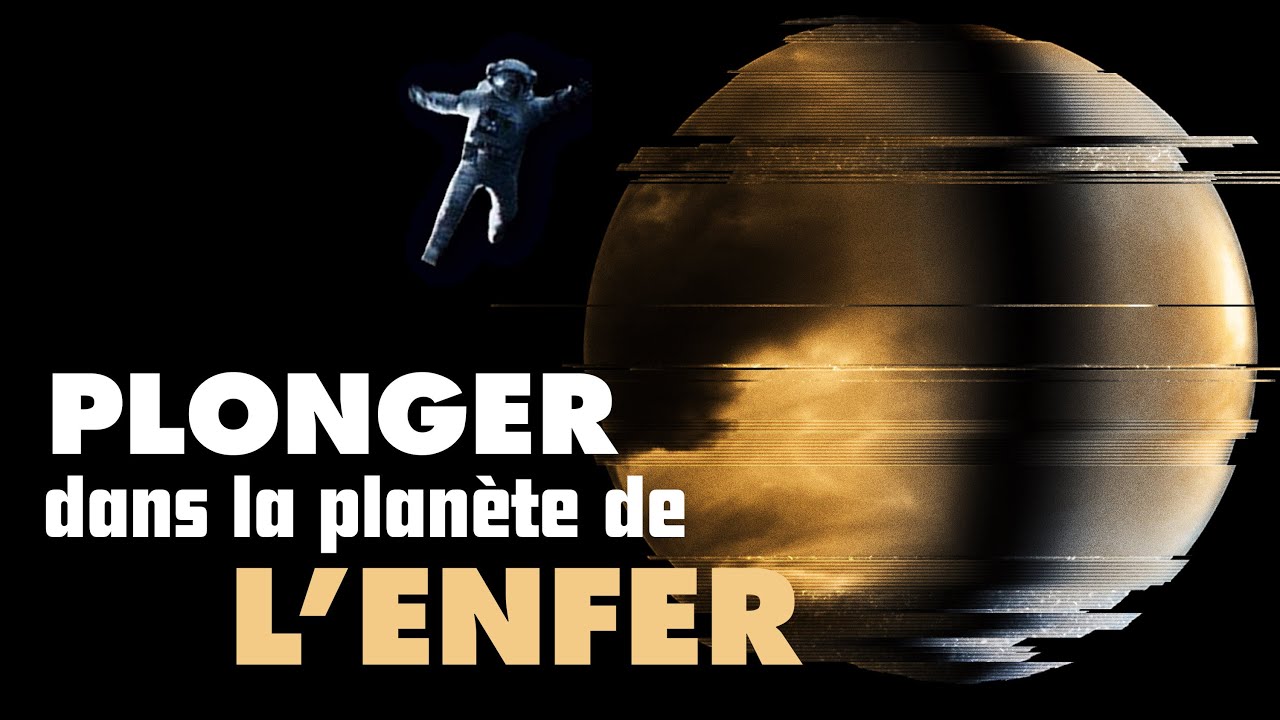
Et si vous plongiez dans l'enfer de VENUS ?
Keywords
Summary
146 words
Critical Evaluation
Value of the Information & Strength of the Argument
The video provides a wealth of accurate scientific information about Venus, presented in an engaging and accessible manner. The argumentation is solid, relying on well-established facts about the planet’s atmosphere, geology, and exploration history. The use of vivid descriptions and hypothetical scenarios effectively conveys the extreme nature of Venus, making the information memorable. The narrative is well-structured, logically progressing from the descent through the atmosphere to the surface and then to the broader geological context.
Scientific Rigor, Source Quality, Title Accuracy
The video demonstrates strong scientific rigor, with information consistent with current knowledge about Venus. The sources cited in the description include reputable references such as NASA, ESA, and Wikipedia articles, which support the accuracy of the content. The title accurately reflects the content, which is a creative exploration of Venus’s extreme environment. The video does not overstate claims and appropriately notes uncertainties, such as the possibility of past water. The production quality is high, with excellent narration and visuals that enhance the scientific communication.
174 words
Title / Content Match
The title accurately reflects the content, which explores the extreme conditions on Venus through a hypothetical descent.
Quality & Reliability
8/10
The video presents scientifically accurate information about Venus, supported by references to space missions (Venera probes) and geological features. The sources cited include reputable institutions like NASA, ESA, and Wikipedia. The content is well-researched and aligns with current scientific understanding.
Key Moments
Markers derived by PSI from the transcript: the creator did not define chapters.
- Introduction to Venus as a hostile planet
- Description of the runaway greenhouse effect and surface temperature
- History of Venera probes and their fate
- Effects of pressure and temperature on a human body
- Atmospheric composition and supercritical CO2
- Sound recording from Venera 14 and atmospheric acoustics
- Temperature variations with altitude and Maxwell Montes
- Metallic snow and volcanic features
- Cloud layers and sulfuric acid rain
- Potential habitable zone at 50 km altitude
- Surface geology: plains, volcanoes, and coronae
- Lack of plate tectonics and cyclical resurfacing
Cited Sources
- Venus - Wikipedia — General information about Venus
- Atmosphere of Venus - Wikipedia — Details on Venus's atmosphere
- Geology of Venus - Wikipedia — Geological features of Venus
- Exploration of Venus - Wikipedia — History of Venus exploration
- Colonization of Venus - Wikipedia — Current exploration and colonization concepts
- Mapping of Venus - Wikipedia — Mapping efforts of Venus's surface
- Maxwell Montes - Wikipedia — Information about Maxwell Montes
- Venus Express - What lies beneath Venus? - ESA — ESA's Venus Express findings
- Venus - Views of the Solar System — General Venus information
- Venus Topography - NOAA — Topographic data of Venus
- Venus Magellan Global Mosaic - USGS — Radar mosaic of Venus's surface
- Venus image - Flickr — Thumbnail image credit
Concurring Sources
- Venus - NASA — NASA's official Venus page confirms the extreme conditions described.
- Atmosphere of Venus - Wikipedia — Wikipedia article corroborates atmospheric composition and pressure data.
Contribution & Novelties
The video offers a unique and immersive narrative approach to presenting scientific facts about Venus, making it accessible and engaging for a general audience. It effectively combines historical mission data with hypothetical scenarios to illustrate the extreme conditions. The emphasis on the sensory experience (sound, temperature, pressure) adds a novel dimension to science communication.
Pour aller plus loin :
- Venus - NASA Solar System Exploration — Official NASA page with comprehensive information.
- Venera program - Wikipedia — Details on the Soviet Venera missions.
- Runaway greenhouse effect - Wikipedia — Explanation of the greenhouse effect on Venus.
96 words
Radar Profile
The radar profile shows high scores in information quantity, quality, and reliability, with a slightly lower technical level, indicating a well-balanced and accessible scientific communication.
💬 Très positif. Sur les 30 commentaires analysés, les spectateurs expriment une admiration unanime pour la qualité de la narration, la poésie du texte et la beauté des images, avec quelques touches d'humour appréciées.