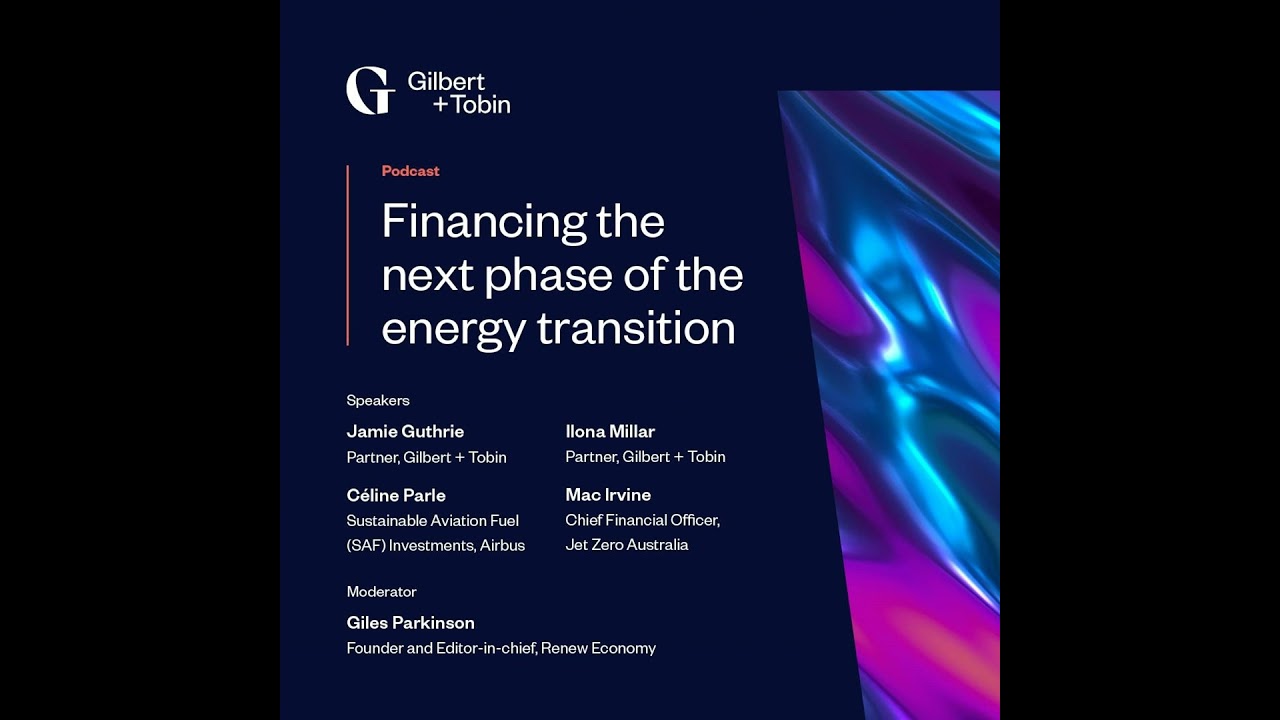
Special Episode: The missing molecules - SAF, energy security and Australia’s next industrial opp...
Keywords
Summary
183 words
Critical Evaluation
Value of the Information & Strength of the Argument
The value of the information is high for understanding the current state and challenges of SAF in Australia. The panel provides concrete examples from Jet Zero’s projects, explaining technological pathways (ATJ and HEFA) and the importance of policy mechanisms like mandates and production credits. The argumentation is coherent, with experts building on each other’s points, though it lacks deep technical detail and relies on general industry knowledge rather than specific data or studies. The discussion effectively argues that SAF is a necessary complement to electrification for hard-to-abate sectors, and that government support is critical to overcome the green premium and attract investment.
Scientific Rigor, Source Quality, Title Accuracy
The scientific rigor is moderate: the panelists are credible experts, but the discussion is based on professional experience rather than cited research. No specific sources are mentioned, though the Cleaner Fuels Program and CEFC report are referenced. The title accurately reflects the content, focusing on SAF and its role in Australia’s energy transition. The episode is a panel discussion, so it does not provide a systematic review or original research, but it offers valuable insights into industry perspectives and policy needs.
198 words
Title / Content Match
The title accurately reflects the focus on sustainable aviation fuel (SAF) and its role in Australia's energy transition, though it is truncated.
Quality & Reliability
7/10
The discussion features experts from Airbus, Jet Zero, and Gilbert + Tobin, providing credible insights into SAF technologies and policy. However, it is a panel discussion with limited technical depth and no formal citations, relying on expert opinion and general industry knowledge.
Key Moments
Markers derived by PSI from the transcript: the creator did not define chapters.
- Introduction to the topic: Australia's reliance on liquid fuels and the role of SAF.
- Jamie Guthrie explains the need to decarbonize beyond electricity, highlighting that 91% of primary energy comes from fossil fuels.
- Céline Parle discusses why batteries and hydrogen are not viable for long-haul aviation, emphasizing SAF as a drop-in solution.
- Mac Irvine introduces Jet Zero's projects Ulysses and Mandala, detailing the ATJ and HEFA pathways.
- Discussion on policy support needed, including grants, production credits, and mandates.
- Céline Parle highlights the importance of demand-side measures like mandates to create certainty.
- Jamie Guthrie discusses fuel security and the green premium, referencing California's renewable diesel market.
- Mac Irvine talks about Australia's potential as a feedstock superpower and the CEFC report on feedstock exports.
Cited Sources
- Cleaner Fuels Program (ARENA) — Mentioned as a forthcoming program to support SAF production.
- CEFC report on feedstock exports — Referenced by Mac Irvine regarding $3.9 billion export value of feedstocks.
Concurring Sources
- IATA: Sustainable Aviation Fuel — Provides general information on SAF and its role in aviation decarbonization.
Contribution & Novelties
The episode provides a comprehensive overview of the SAF landscape in Australia, highlighting the technological pathways (ATJ and HEFA) and the critical role of policy in enabling projects. It emphasizes the dual benefits of SAF for decarbonization and energy security, and positions Australia as a potential feedstock superpower. The discussion with industry insiders offers practical insights into the challenges of project development and financing.
Pour aller plus loin :
- Sustainable Aviation Fuel — Overview of SAF technologies and production pathways.
- HEFA — Explanation of the HEFA pathway.
- Alcohol-to-jet — Details on the ATJ pathway.
- Cleaner Fuels Program — ARENA’s program to support low-carbon fuels.
104 words
Radar Profile
The radar profile shows balanced scores across information quantity, quality, technical level, and reliability, indicating a well-rounded discussion with moderate depth. The high reliability score reflects the credibility of the panelists, while the technical level is moderate due to the accessible nature of the conversation.