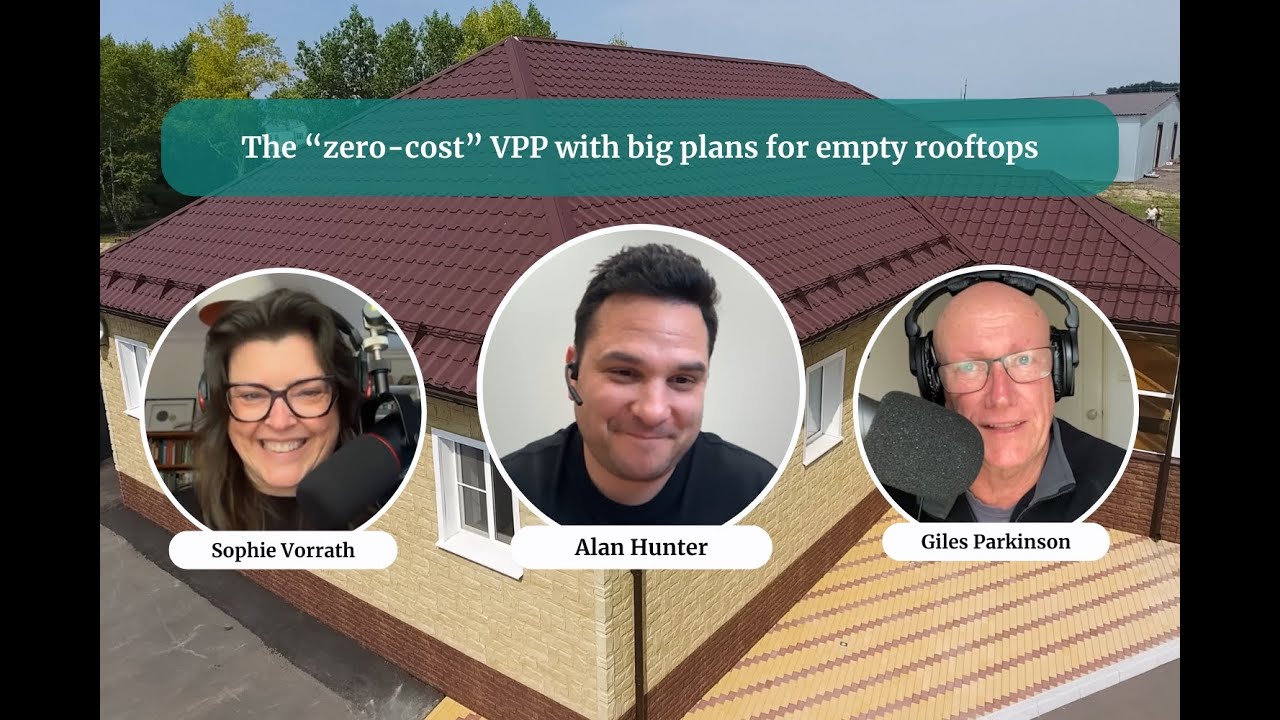
The "zero-cost" VPP with big plans for empty rooftops | Solar Insiders
Keywords
Summary
156 words
Critical Evaluation
Value of the Information & Strength of the Argument
The interview provides valuable insights into a novel business model that addresses the affordability barrier in the adoption of solar and batteries. Alan Hunter’s arguments are coherent and well-articulated, emphasizing the inequality in the current energy system and the need for managed generation. He uses analogies (e.g., phone plans) to explain the concept, making it accessible. However, the discussion is largely from the company’s perspective, and the host does not challenge the claims with independent data. The value lies in the detailed explanation of how the VPP model works and its potential benefits, but the argumentation would be stronger with more critical examination of potential drawbacks or risks.
Scientific Rigor, Source Quality, Title Accuracy
The scientific rigor is moderate. The interview is based on the guest’s expertise and company information, but no external sources are cited within the video. The title accurately reflects the content, focusing on the zero-cost VPP model. The description provides links to Renew Economy’s social media and newsletter, but these are not direct sources for the claims made. The discussion touches on topics like the duck curve and market dynamics, but these are not elaborated with references. Overall, the information is presented as expert opinion rather than peer-reviewed research.
212 words
Title / Content Match
The title accurately reflects the content, focusing on the zero-cost VPP model and its expansion plans.
Quality & Reliability
7/10
The interview provides detailed insights into NRN's business model and the Australian energy market, but relies heavily on the guest's claims without independent verification. The host asks probing questions, but the discussion remains largely promotional.
Chapters
- Introduction
- NRN raises $67 million in Series A funding
- Partnership with Alinta Energy and “Solar Together”
- How NRN’s VPP model works
- Why consumers shouldn’t have to buy their own energy assets
- Inequality in Australia’s grid
- The role of rebates and incentives in scaling batteries
- Partnering with solar retailers and creating new opportunities
- Consumer benefits: saving up to $1,000 a year with no upfront spend
- Market growth: from 1,000 to 30,000 assets planned
- Opportunities for renters and landlords to join the VPP
- Buying out the system and added home value
- Alan Hunter’s personal backstory and path into energy
- Battery rebate boom: 30,000 systems in six weeks
- Recycling solar panels: a looming challenge and opportunity
- Victoria’s success with energy upgrades and electrification
- Community energy and whether networks should innovate
- Wrap-up and final thoughts
Cited Sources
- Renew Economy LinkedIn — Company page for Renew Economy, the channel hosting the video.
- Renew Economy Bluesky — Social media profile for Renew Economy.
- Renew Economy Newsletter Sign-up — Link to subscribe to Renew Economy's daily newsletter.
Concurring Sources
- Renew Economy — The host's publication, which covers similar topics and may have related articles.
Contribution & Novelties
The video presents a novel business model for VPPs that eliminates upfront costs for consumers, potentially democratizing access to solar and storage. It highlights the role of energy retailers and solar installers in a new ecosystem. The discussion on battery rebates and their impact on scaling is timely.
Pour aller plus loin :
- Virtual power plant — Provides background on VPPs and their role in grid management.
- Duck curve — Explains the grid challenge caused by high solar penetration, relevant to the discussion on unmanaged generation.
- National Renewable Network — The company’s official website, offering more details on their services and partnerships.
102 words
Radar Profile
The radar profile shows high scores in information quantity and quality, with moderate technical depth and reliability. This indicates a content-rich interview that is accessible but relies on expert opinion rather than rigorous scientific evidence.