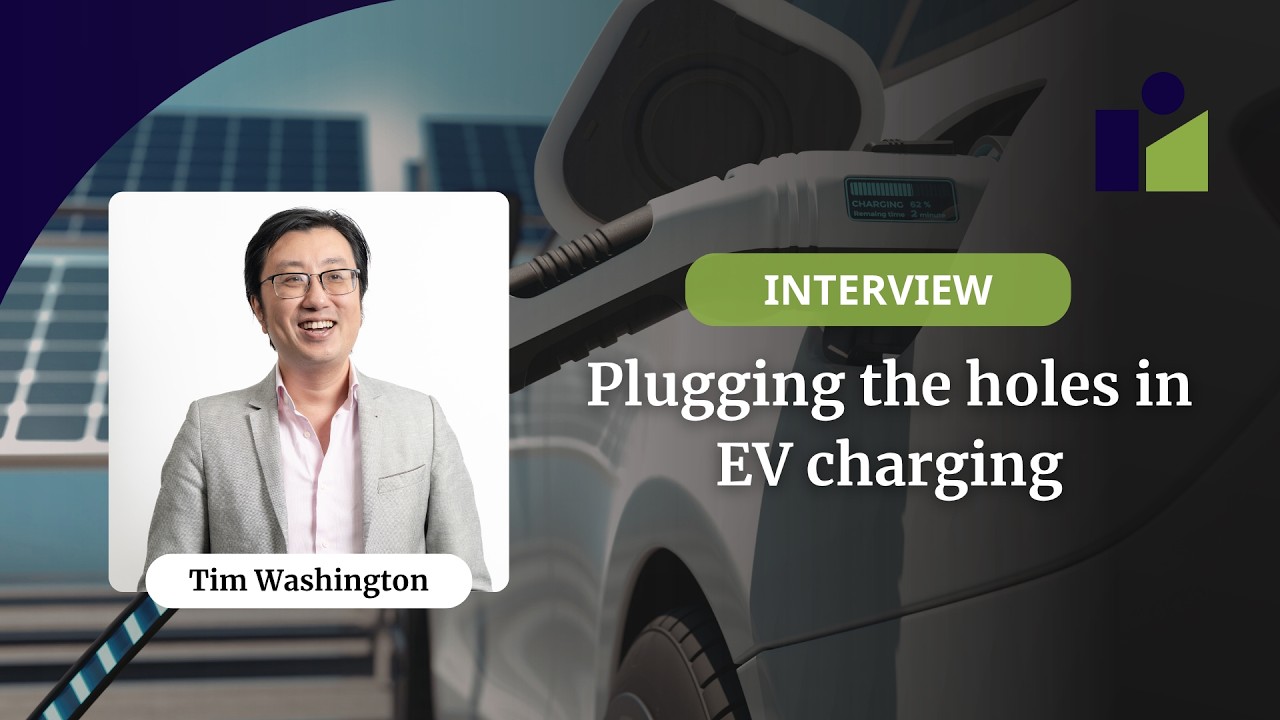
Plugging the holes in EV charging | Energy Insiders
Keywords
Summary
143 words
Critical Evaluation
Value of the Information & Strength of the Argument
The podcast provides valuable insights into the practical challenges and opportunities in EV charging infrastructure. Tim Washington’s arguments are well-founded, drawing on his extensive industry experience. He effectively explains complex topics such as the economics of charging sites, the role of battery storage, and the impact of charging speeds on site design. The discussion is balanced, acknowledging both the progress made and the gaps that remain. The hosts contribute with relevant questions and context, enhancing the depth of the conversation.
Scientific Rigor, Source Quality, Title Accuracy
The podcast demonstrates a strong understanding of the subject matter, with the guest providing specific examples and data points. While no formal sources are cited, the discussion is grounded in industry knowledge and practical experience. The title accurately reflects the content, focusing on the gaps in EV charging infrastructure. The hosts are credible energy journalists, and the episode maintains a high level of rigor. No comments were provided for analysis.
165 words
Title / Content Match
The title accurately reflects the content, which focuses on identifying and addressing gaps in EV charging infrastructure in Australia.
Quality & Reliability
8/10
The podcast features an in-depth interview with Tim Washington, co-founder and CEO of Jet Charge, a leading Australian EV charging company. The discussion is grounded in practical experience and industry knowledge, covering technical, economic, and regulatory aspects of EV charging infrastructure. While it is an opinion-based discussion, the arguments are well-reasoned and supported by concrete examples and data points. The hosts are experienced energy journalists, adding credibility. However, the content is not peer-reviewed and may reflect the speaker's perspectives.
Chapters
- Introduction
- How Tim Washington got into EV charging 14 years ago
- Home charging vs public charging and Australia’s off‑street parking
- Real‑world range anxiety and unreliable chargers on road trips
- Are we underbuilding sites or just not adding enough bays?
- Grid connection delays, upgrade costs and megawatt‑scale sites
- Future charging speeds, battery‑boosted hubs and Chinese examples
- Electrifying trucks: IKEA case study and depot charging economics
- Reflections on charging as critical infrastructure and industry readiness
- Wind, solar, batteries and Incat’s giant electric ferry
Cited Sources
- Renew Economy LinkedIn — LinkedIn page for Renew Economy, the podcast's publisher.
- Renew Economy on Bluesky — Bluesky profile for Renew Economy.
- Renew Economy Newsletter Sign-up — Link to subscribe to Renew Economy's daily newsletter.
Concurring Sources
- Renew Economy — The podcast is produced by Renew Economy, a leading Australian clean energy news site.
Contribution & Novelties
The podcast offers a unique perspective on EV charging infrastructure in Australia, combining insights from a leading industry figure with journalistic analysis. It highlights the importance of balancing public and home charging, the economic challenges of charging networks, and the potential for battery-boosted ultra-fast charging. The discussion on electric truck charging adds a forward-looking dimension.
Pour aller plus loin :
- Kempower — Manufacturer of satellite charging systems, relevant to the discussion on charging hardware.
- Megawatt Charging System (MCS) — Standard for high-power charging of heavy-duty vehicles, relevant to electric truck charging.
- BYD battery charging stations — Chinese company deploying battery-integrated charging stations, as mentioned in the podcast.
107 words
Radar Profile
The radar profile shows high scores across all dimensions, indicating a well-rounded and informative podcast. The strongest areas are information quantity and reliability, reflecting the depth of expertise and practical insights. The technical level is also high, making it suitable for an audience with some background in energy or EV topics.