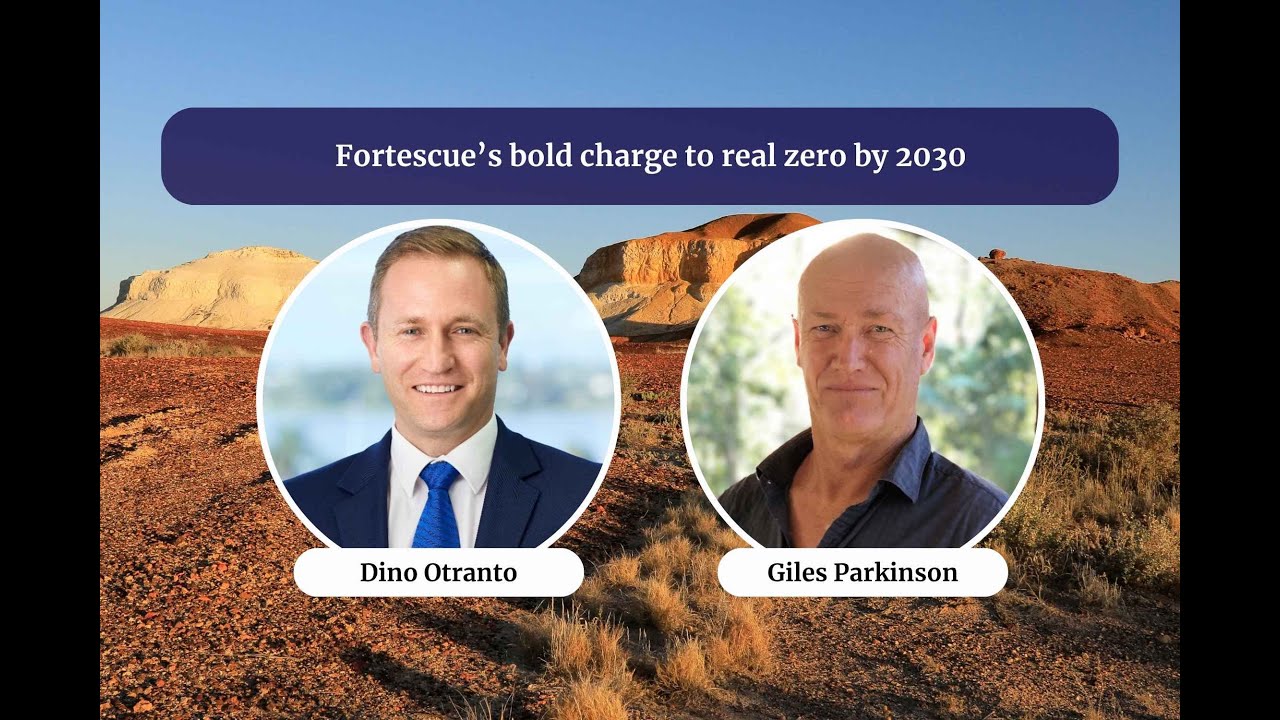
Fortescue’s bold charge to real zero by 2030 | Energy Insiders
Keywords
Summary
159 words
Critical Evaluation
Value of the Information & Strength of the Argument
The interview provides valuable insights into Fortescue’s decarbonization strategy, offering specific details on projects, partnerships, and technological innovations. Otranto’s argumentation is coherent, emphasizing economic viability alongside environmental goals. He presents a strong case for real zero, contrasting it with net zero and highlighting the cost reductions in solar, wind, and battery storage. The discussion is grounded in practical examples, such as the self-lifting turbines and electric trucks, which lend credibility. However, the perspective is one-sided, as it is an interview with a company executive, and potential challenges or criticisms are not deeply explored.
Scientific Rigor, Source Quality, Title Accuracy
The scientific rigor is moderate: the discussion is based on expert opinion and company announcements rather than peer-reviewed research. The sources cited are primarily company partnerships and projects, which are not independently verified. The title accurately reflects the content, focusing on Fortescue’s real zero target. The podcast is produced by Renew Economy, a reputable clean energy news outlet, which adds some credibility. However, the lack of external references and the promotional nature of the interview limit its scientific robustness.
187 words
Title / Content Match
The title accurately reflects the main topic: Fortescue's ambitious 'real zero' target and the technologies involved.
Quality & Reliability
8/10
The interview features a senior industry executive discussing concrete projects and partnerships, with technical details and economic rationale. However, it is primarily a promotional and opinion-driven discussion, lacking independent verification or peer-reviewed sources.
Chapters
- Introduction to Fortescue’s “real zero by 2030” target
- Net zero vs real zero explained
- Analyst and economic perspectives
- Visible progress: renewables and economic advantage
- Nabra Wind partnership and advanced turbines
- Decentralized solar/wind projects
- Electrification of operations, diesel displacement
- Mining trucks: agreements and Road Runner
- Battery technology and charging innovations
- Electric excavators and operational insights
- Infinity Train and ammonia for locomotives/ships
- Green hydrogen, green metal, and future impact
Cited Sources
- Renew Economy LinkedIn — Company page for Renew Economy, the podcast producer.
- Renew Economy Bluesky — Social media profile for Renew Economy.
- Renew Economy Newsletter Sign-up — Newsletter subscription page for Renew Economy.
Concurring Sources
- Renew Economy — The podcast is produced by Renew Economy, a reputable source for clean energy news in Australia.
Contribution & Novelties
The interview provides an insider perspective on Fortescue’s real zero strategy, highlighting innovative technologies like self-lifting turbines and battery electric haul trucks. It offers a unique view on the economic rationale for decarbonization in the mining sector. The discussion of the Infinity Train and ammonia as fuel for locomotives and ships adds novel insights. Overall, the content is informative but not groundbreaking, as similar topics are covered in other industry discussions.
Pour aller plus loin :
- Self-lifting wind turbine technology — Overview of wind turbine technology, including innovative designs.
- Battery electric haul trucks in mining — General information on mining trucks, with sections on electric variants.
- Green hydrogen — Explanation of green hydrogen production and its potential applications.
118 words
Radar Profile
The radar profile shows high scores in quantity and quality of information, reflecting the detailed discussion. The technical level is also high, indicating a specialized audience. Reliability is moderate, as the content is based on expert opinion rather than peer-reviewed sources.