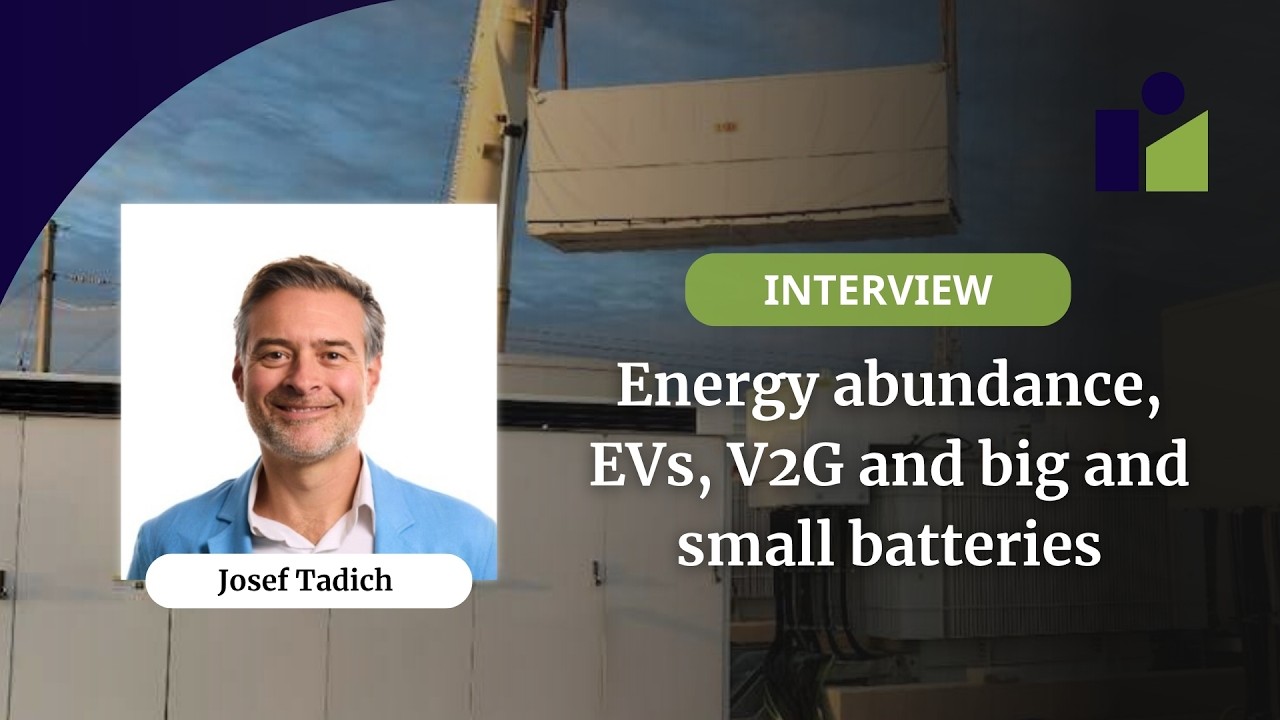
Tesla Energy boss on energy abundance, EVs, V2G and big and small batteries | Energy Insiders
Keywords
Summary
204 words
Critical Evaluation
Value of the Information & Strength of the Argument
The interview provides valuable insights into the energy transition from a key industry player. Tadich presents compelling arguments for the abundance of solar energy and the economic benefits of electrification, particularly for transport. He supports his claims with specific statistics, such as the cost per kilometer for diesel versus electric trucks, and the potential for EVs to reduce oil imports. The discussion on battery chemistry and grid-forming inverters offers technical depth, though it remains accessible. The argumentation is coherent and persuasive, but it is inherently one-sided, reflecting Tesla’s commercial interests. The hosts contribute with their own expertise, adding context and probing questions, which strengthens the overall value.
Scientific Rigor, Source Quality, Title Accuracy
The scientific rigor is moderate. While Tadich cites specific data points and references concepts like the Kardashev scale, he does not provide formal citations or sources. The discussion is based on expert opinion and industry knowledge rather than peer-reviewed research. The title accurately reflects the content, which is a focused interview on energy topics. The video includes a promotional segment for Pylon and Evergen, which is disclosed but does not detract from the core content. The hosts maintain a professional tone, and the conversation is well-structured, though it lacks critical examination of potential drawbacks or challenges.
218 words
Title / Content Match
The title accurately reflects the content, which covers energy abundance, EVs, V2G, and various battery applications.
Quality & Reliability
8/10
The interview features a senior Tesla Energy executive providing expert insights on energy abundance, EV adoption, and battery technology. Claims are supported by specific data points (e.g., solar resource, EV sales percentages) and references to industry trends. However, the content is largely promotional and lacks independent verification or critical analysis.
Chapters
- Introduction
- Introducing Tesla Energy’s Josef Tadich
- Explaining the Kardashev scale and energy abundance
- Australia’s solar resource and energy superpower status
- Electric vehicle S‑curve and Australia hitting 20 percent EV sales
- Electrification of trucks and lessons from China
- Battery chemistry evolution from NMC to LFP and cost drops
- Grid forming inverters, system strength, and replacing gas peakers
- Data centers, AI demand, and batteries for load smoothing
- Hybrid projects, dynamic pricing, and community concerns about big batteries
Cited Sources
- Renew Economy LinkedIn — Company page for Renew Economy, the channel hosting the interview.
- Renew Economy Bluesky — Social media profile for Renew Economy.
- Renew Economy Newsletter Sign-up — Link to subscribe to Renew Economy's daily newsletter.
Concurring Sources
- Renew Economy — The host's publication, which regularly covers energy transition topics and aligns with the interview's themes.
Contribution & Novelties
The interview offers a unique perspective from a Tesla Energy executive on the concept of energy abundance, using the Kardashev scale as a framework. It provides specific data on Australia’s solar potential and the economic case for electrification, particularly in transport. The discussion on battery chemistry and grid-forming inverters highlights recent technological advancements. The segment on V2G and vehicle-to-load features is timely, as Tesla has just introduced these capabilities in Australia.
Pour aller plus loin :
- Kardashev scale — Provides background on the scale used to measure civilization’s energy usage.
- Grid-forming inverter — Explains the technology discussed for maintaining grid stability.
- Vehicle-to-grid — Overview of V2G technology and its potential applications.
111 words
Radar Profile
The radar profile shows high scores in quantity and quality of information, reflecting the interview's depth and relevance. The technical level is moderate, making it accessible to a broad audience. The overall reliability is strong, though the content is primarily expert opinion rather than peer-reviewed research.
💬 Sur les 0 commentaires analysés, aucune tendance n'est disponible.