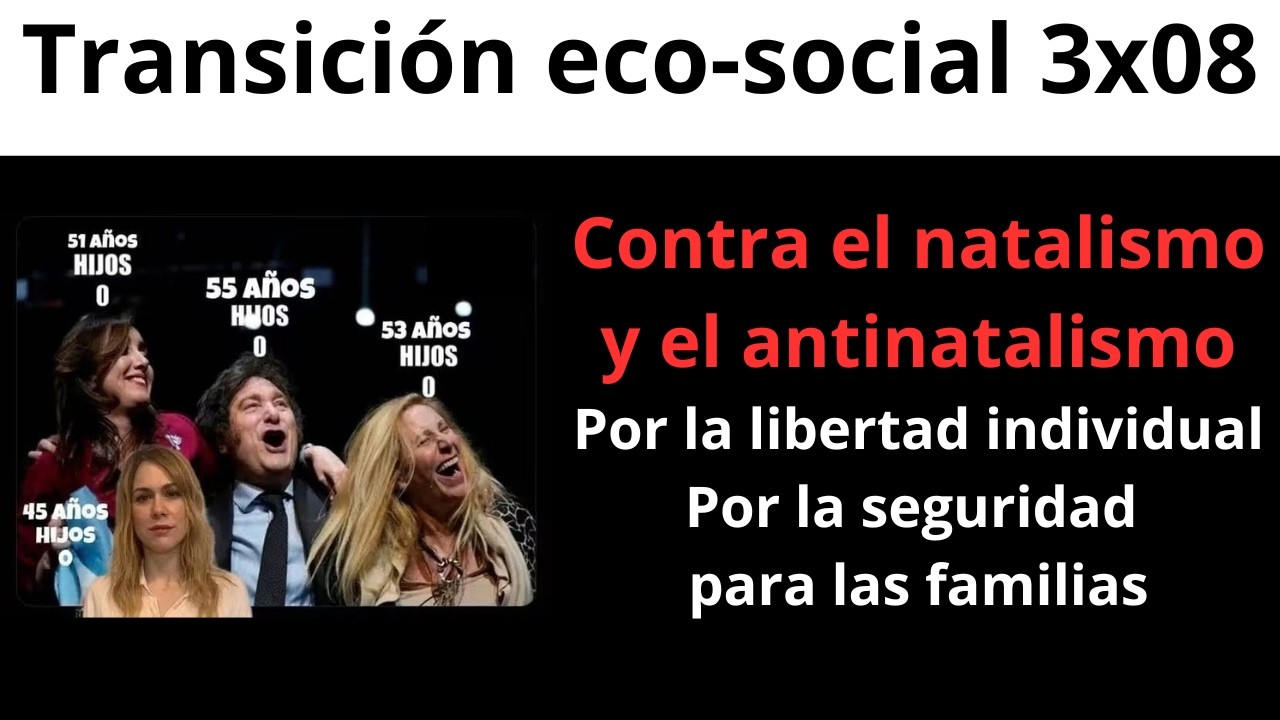
Podcast 3x08. La ultraderecha: natalismo en el discurso y antinatalismo en la práctica
Keywords
Summary
163 words
Critical Evaluation
Value of the Information & Strength of the Argument
The podcast provides a valuable critical analysis of a politically charged topic, effectively deconstructing a simplistic claim by presenting counter-evidence and highlighting the complexity of demographic trends. The hosts argue convincingly that declining birth rates are multicausal, citing factors such as women’s emancipation, economic pressures, urbanization, and lack of institutional support. They also expose the hypocrisy of far-right natalist discourse by pointing out that its proponents often do not have children themselves and do not support policies that would genuinely encourage family formation. The argumentation is coherent and well-structured, though it relies heavily on anecdotal evidence and ideological framing rather than systematic data. The hosts also engage with broader debates on Malthusianism and degrowth, offering a nuanced perspective that population is not the sole driver of environmental problems, but they do so in a somewhat cursory manner.
Scientific Rigor, Source Quality, Title Accuracy
The hosts reference a fact-checking article from Chequeado to support their data on Argentina’s birth rate, which adds credibility. However, they do not provide detailed citations for many other claims, such as the global decline in birth rates or the ineffectiveness of pro-natalist policies in Nordic countries. The discussion is largely based on the hosts’ opinions and interpretations, which are presented as authoritative. The title accurately reflects the content, which focuses on the contradiction between the far-right’s natalist rhetoric and its actual practices. The podcast does not include a formal review of sources, and the hosts do not engage with potential counterarguments in a systematic way.
258 words
Title / Content Match
The title accurately reflects the content, which contrasts the far-right's natalist discourse with their actual policies and personal choices.
Quality & Reliability
7/10
The hosts present a well-structured argument against a monocausal explanation of declining birth rates, citing specific data (decline since 2014, before the 2020 abortion law) and referencing a fact-checking article. However, the discussion is largely opinion-driven and lacks rigorous sourcing for many claims, and the tone is at times polemical.
Key Moments
Markers derived by PSI from the transcript: the creator did not define chapters.
- Introduction to the episode and the topic of Milei's statements on birth rates.
- Discussion of the Geneva Consensus and its anti-abortion agenda.
- Debunking Milei's claim: birth rates in Argentina have been declining since 2014, before abortion was legalized.
- Exploration of the multicausal nature of declining birth rates, including economic and social factors.
- Critique of far-right natalist discourse as hypocritical, noting that Milei and other proponents have no children.
- Discussion of Malthusianism and its relevance to contemporary population debates.
- Analysis of degrowth perspectives on population and environmental impact.
- Warning against monocausal narratives and conspiracy theories about population control.
- Examination of the role of economic systems and class in demographic trends.
- Conclusion: the need for systemic change rather than scapegoating social movements.
Cited Sources
- Chequeado: Javier Milei, el aborto y las caídas en la tasa de natalidad — Referenced as the source for data on Argentina's birth rate decline and the debunking of Milei's claim.
- La discusión sobre la población: malthusianismo vs decrecimiento — Mentioned as a related discussion on population, Malthusianism, and degrowth.
Concurring Sources
- Chequeado: Javier Milei, el aborto y las caídas en la tasa de natalidad — Supports the claim that birth rates in Argentina have been declining since 2014, before the abortion law.
Dissenting Sources
- No sources explicitly discordant were cited. — The podcast does not present opposing viewpoints or sources that contradict its main arguments.
Contribution & Novelties
The podcast offers a critical perspective on the far-right’s natalist discourse, highlighting the contradiction between their rhetoric and their actual policies and personal choices. It contributes to the debate by emphasizing the multicausal nature of demographic changes and warning against monocausal explanations that serve political agendas. The hosts also connect the topic to broader discussions on Malthusianism and degrowth, arguing that population is not the primary driver of environmental problems.
Pour aller plus loin :
- Geneva Consensus Declaration — Provides background on the international anti-abortion initiative mentioned in the episode.
- Demographic transition — Explains the broader demographic trends that contextualize declining birth rates.
- Malthusianism — Discusses the historical and contemporary relevance of Malthusian ideas, which the hosts critique.
118 words
Radar Profile
The radar profile shows a balanced performance across most dimensions, with slightly higher scores in information quantity and quality, and lower in technical level and reliability. This reflects a well-argued but opinion-driven discussion that could benefit from more rigorous sourcing and technical depth.
💬 No comments were provided for analysis.