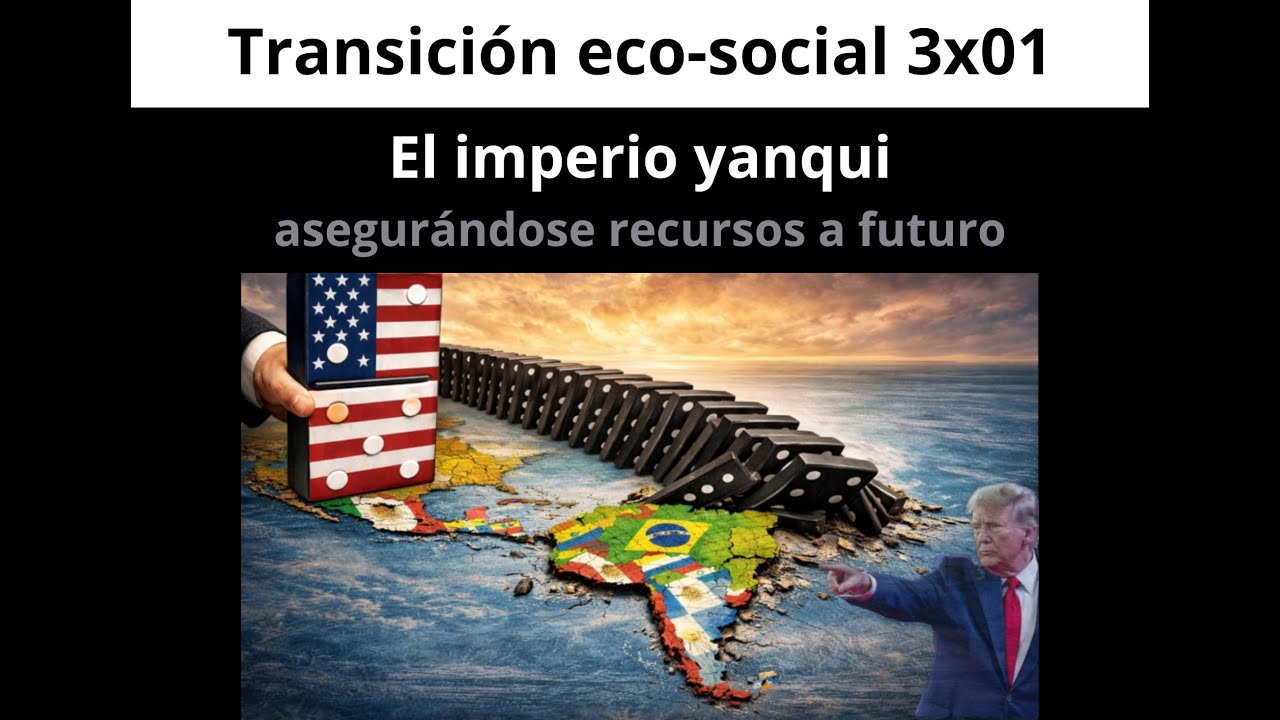
Podcast 3x01. La lucha mundial por los recursos: el imperio yanqui
Keywords
Summary
154 words
Critical Evaluation
Value of the Information & Strength of the Argument
The value of the information lies in its coherent framework linking resource scarcity to imperial behavior, offering a critical perspective often absent in mainstream media. The argumentation is logically structured, with each case (Venezuela, Iran, Greenland, Canada) illustrating the broader thesis of US resource-driven aggression. However, the hosts rely heavily on interpretation and opinion, with limited empirical data or citations. They acknowledge their own perspective and warn against geopolitical analysts, which adds reflexivity but also limits the argument’s objectivity. The discussion of binary thinking is insightful, encouraging nuanced analysis. Overall, the value is high for those seeking a critical geopolitical perspective, but the argumentation would benefit from more concrete evidence.
Scientific Rigor, Source Quality, Title Accuracy
The scientific rigor is moderate: the hosts reference their previous episode and a book (‘En la espiral de la energía’) but provide no direct citations or verifiable data. The quality of sources is limited to their own prior work and general knowledge. The title accurately reflects the content, focusing on the global resource struggle and US actions. The discussion is well-structured with clear sections, but the lack of external sources reduces its scholarly weight. The hosts’ explicit acknowledgment of their perspective and warning against geopolitical analysts adds a layer of critical self-awareness, but it does not substitute for rigorous sourcing.
225 words
Title / Content Match
The title accurately reflects the content, focusing on the global struggle for resources and the actions of the US empire.
Quality & Reliability
6/10
The podcast offers a coherent geopolitical analysis grounded in a materialist framework, but relies heavily on opinion and interpretation rather than verifiable data. The hosts explicitly acknowledge their perspective and warn against geopolitical analysts, which adds nuance but limits objective reliability.
Chapters
Cited Sources
- Podcast 2x11: El colapso del orden internacional — Referenced as the previous episode that laid the groundwork for this analysis.
Contribution & Novelties
The podcast offers a critical geopolitical analysis from a materialist perspective, linking resource scarcity to imperial aggression. It provides a framework for understanding recent US actions as part of a broader trend of imperial consolidation. The hosts emphasize the importance of avoiding binary thinking and advocate for a perspective centered on peoples rather than states.
Pour aller plus loin :
- Resource wars — Relevant to the discussion of conflicts driven by resource competition.
- Petrodollar recycling — Explains the mechanism behind US interest in controlling oil trade in dollars.
- En la espiral de la energía — The book referenced by the hosts, providing a materialist history of humanity. (Note: URL is a search link, not a direct source; consider citing without URL if uncertain.)
123 words
Radar Profile
The radar profile shows moderate scores across all dimensions, with slightly higher quantity of information and lower technical level. This suggests a balanced but not deeply technical analysis, relying more on interpretation than hard data.