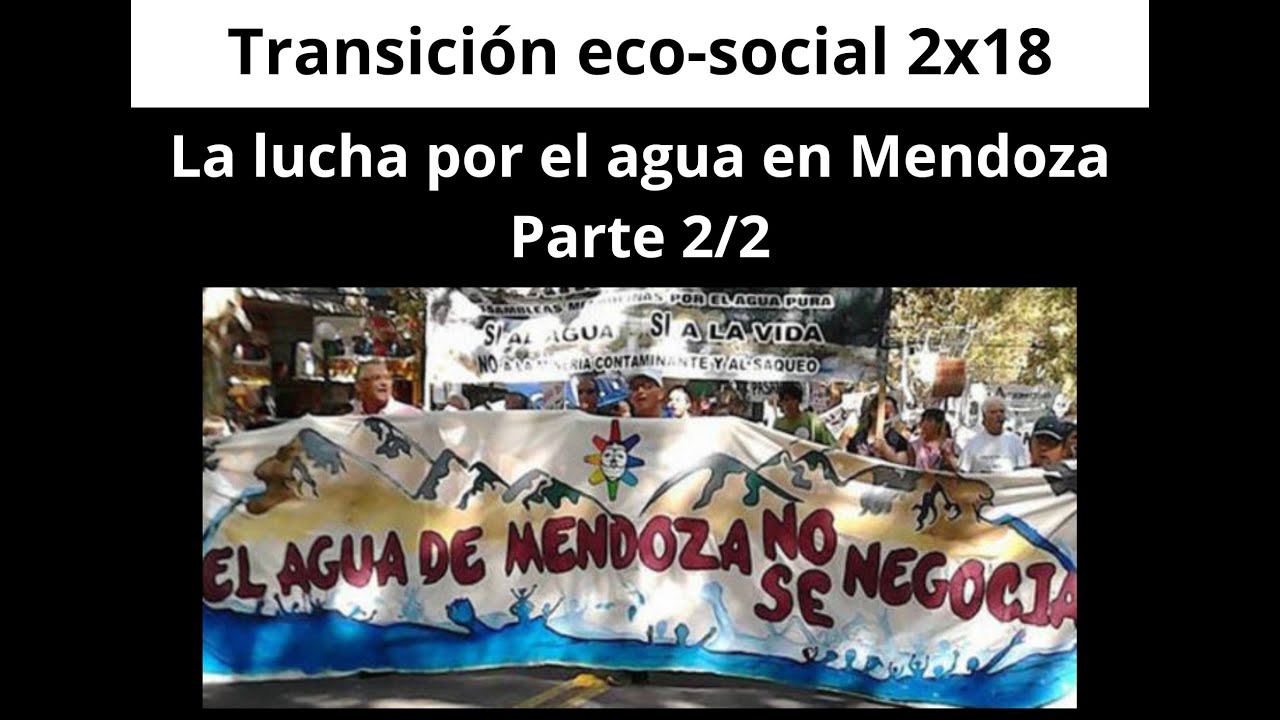
Podcast 2x18 parte 2: la lucha por el agua en Mendoza
Keywords
Summary
175 words
Critical Evaluation
Value of the Information & Strength of the Argument
The value of the information lies in its firsthand perspective from a local activist, providing insights into the social and environmental concerns of the community. The argumentation is coherent and based on personal experience and observations, but it lacks empirical data or references to scientific studies. The interviewee makes logical points about the potential contamination and the inadequacy of promised benefits, but the reasoning is primarily anecdotal. The discussion of broader geopolitical dynamics is interesting but remains at a general level without concrete evidence.
Scientific Rigor, Source Quality, Title Accuracy
The scientific rigor is limited as the video does not cite specific sources or studies. The information is based on personal testimony and general knowledge, which may not be fully verifiable. The title accurately reflects the content, focusing on the water struggle in Mendoza. The video does not provide references to external sources, and the claims made are not backed by documented evidence. The adequacy between title and content is good, as the episode indeed discusses the fight for water in the context of mining.
184 words
Title / Content Match
The title accurately reflects the content, as the episode focuses on the water struggle in Mendoza, specifically the opposition to megamining.
Quality & Reliability
7/10
The interview provides firsthand testimony from a local activist with two decades of involvement, offering specific details about the San Jorge mining project and its potential impacts. However, it lacks verifiable citations and relies heavily on personal accounts and opinions, which limits its scientific rigor.
Key Moments
Markers derived by PSI from the transcript: the creator did not define chapters.
- Introduction and context of the interview with Alder Corsanigo.
- Discussion on the distance of the mine from the town and wind patterns.
- Concerns about water contamination and the impact on the community.
- Criticism of the wine industry's lack of support for the movement.
- Tactics used by the mining company to gain local support.
- Analysis of the employment promises and the reality of the mining industry.
- Discussion on the broader geopolitical context and extractivism in Latin America.
- The need for popular self-organization and alternative development models.
Contribution & Novelties
The video provides a unique grassroots perspective on the water conflict in Mendoza, highlighting the social and environmental concerns of local communities. It offers insights into the tactics used by mining companies and the lack of support from local industries. The discussion on the need for popular self-organization and alternative development models is a valuable contribution to the discourse on environmental justice.
Pour aller plus loin :
- Mining and water pollution — Relevant to the discussion of acid mine drainage and water contamination.
- Environmental justice — Contextualizes the struggle of local communities against extractive industries.
- Sacrifice zones — Concept directly related to the interviewee’s description of their territory as a sacrifice zone.
112 words
Radar Profile
The radar profile shows moderate scores across all dimensions, with a slight emphasis on information quantity and quality. The video is strong in providing firsthand information but weaker in technical depth and scientific rigor, reflecting its nature as an activist interview rather than a scientific analysis.