Quantum Photonics: Unlocking New Possibilities in Computing, Communication and Sensing
Keywords
Summary
176 words
Critical Evaluation
Value of the Information & Strength of the Argument
The value of the information lies in the diverse perspectives from industry leaders and academics, offering insights into the practical challenges and opportunities in quantum photonics. The argumentation is generally coherent, with panelists building on each other’s points, though some claims are made without deep technical justification. The discussion is more qualitative than quantitative, but it provides a useful overview of the current state and future directions of the field.
Scientific Rigor, Source Quality, Title Accuracy
The scientific rigor is moderate: the panelists are credible experts, but they do not cite specific studies or data. The sources cited are limited to a registration link for Electro Optics, which is not directly relevant to the content. The title accurately reflects the content, covering computing, communication, and sensing. The discussion is more of an expert opinion than a rigorous scientific review, but it is informative for a general audience.
156 words
Title / Content Match
The title accurately reflects the content, which covers computing, communication, and sensing applications of quantum photonics.
Quality & Reliability
7/10
Panel of experts from academia and industry, providing informed perspectives on quantum photonics. However, the discussion is largely qualitative and promotional, with limited technical depth and no citations to specific studies.
Key Moments
Markers derived by PSI from the transcript: the creator did not define chapters.
- Introduction of panelists and topic.
- James Lee argues that integrated photonics is essential for quantum technologies.
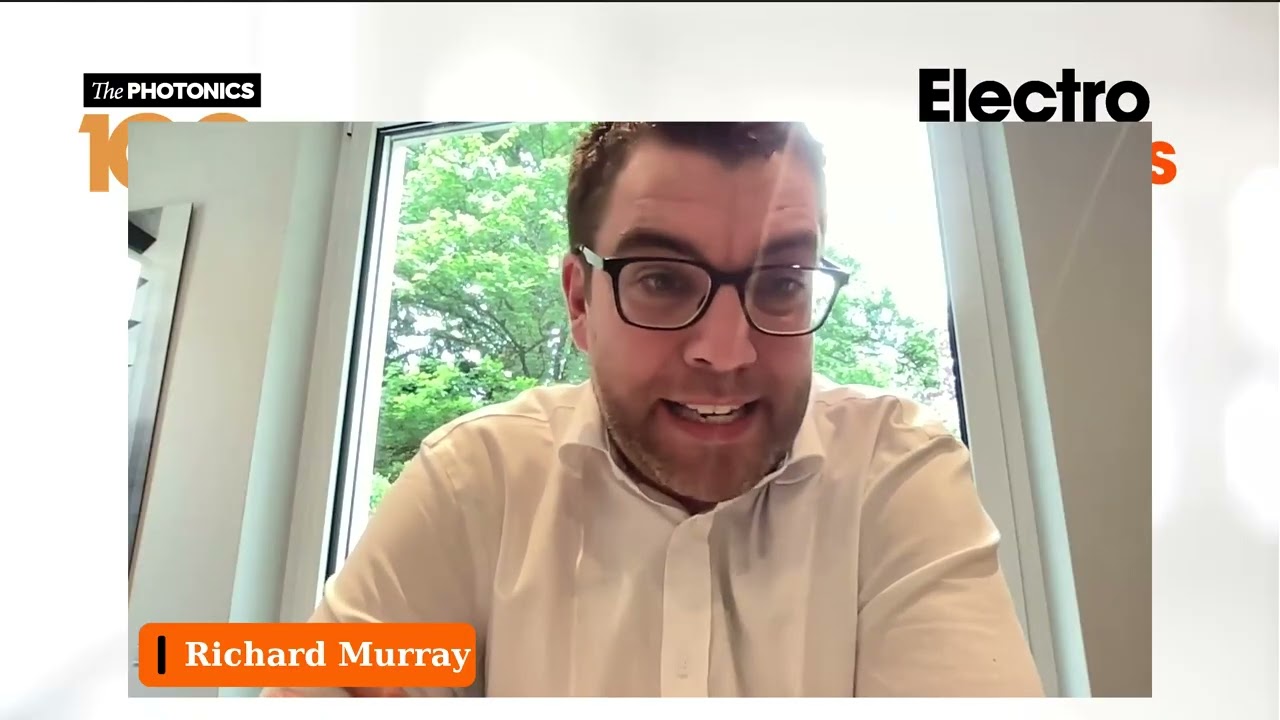
- Richard Murray discusses the challenges of control and isolation in photonics.
- Annika Möslein explains how Quantum Dice uses photonics for randomness generation.
- Luca Sapienza describes his group's work on single emitters and hybrid systems.
- Discussion on the impact of AI demand on photonic platforms.
- Panelists share advice on managing development risks.
- Q&A session begins with audience questions.
- Discussion on quantum networking and communication.
- Panelists discuss future of quantum sensing and commercialization.
Cited Sources
- Electro Optics registration — Mentioned at the end of the video as a way to receive more photonics insights.
Concurring Sources
- Integrated quantum photonics — Supports the discussion on integrated photonics for quantum technologies.
Contribution & Novelties
The video provides a current snapshot of the quantum photonics field from multiple expert perspectives, highlighting recent developments such as the emergence of thin-film lithium niobate and the influence of AI infrastructure on photonic technology. It offers practical insights into the challenges of scaling integrated photonics, which is valuable for researchers and industry professionals.
Pour aller plus loin :
- Integrated quantum photonics — Overview of the field and its applications.
- Quantum random number generation — Explanation of QRNG and its uses.
- Thin-film lithium niobate — Material properties and applications in photonics.
- Quantum key distribution — Secure communication method based on quantum mechanics.
102 words
Radar Profile
The radar profile shows a balanced performance across all dimensions, with slightly higher scores in information quantity and quality, and lower in technical level and reliability. This indicates a well-rounded but not deeply technical discussion, suitable for a broad audience.
💬 Sur les 0 commentaires analysés, aucune tendance n'a pu être dégagée.