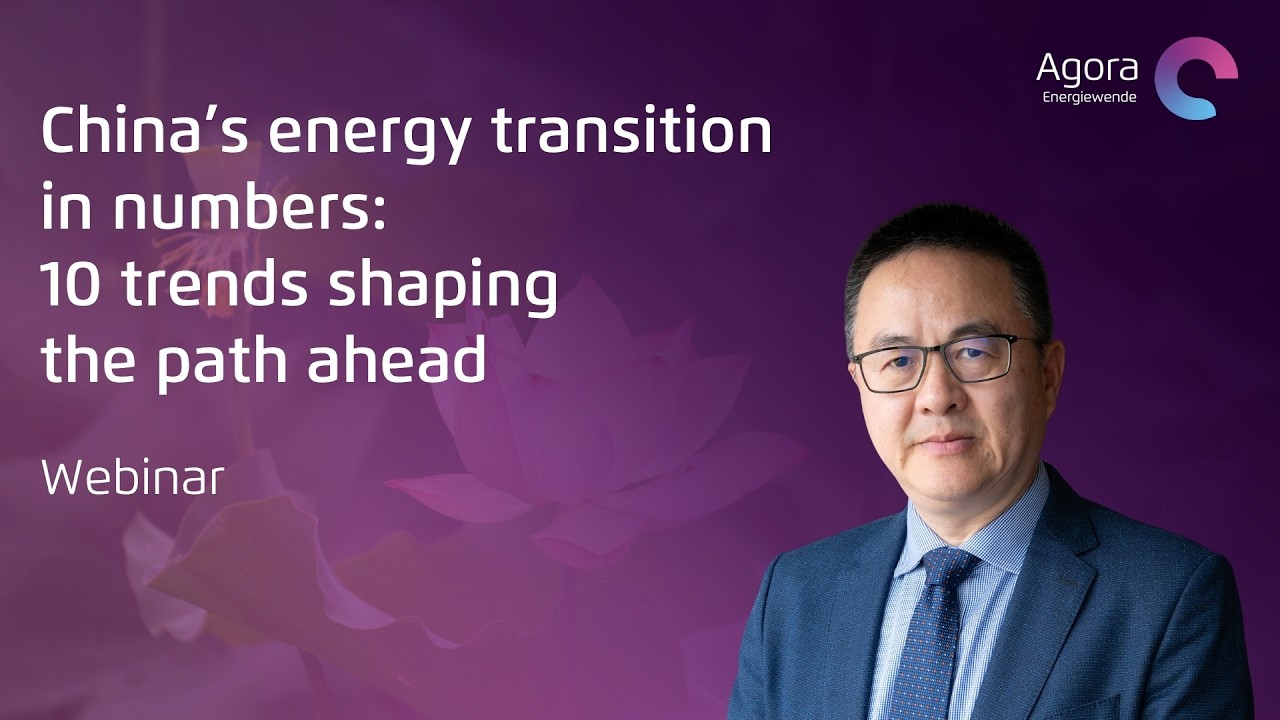
China’s energy transition in numbers: 10 trends shaping the path ahead
Keywords
Summary
180 words
Critical Evaluation
Value of the Information & Strength of the Argument
The video provides valuable insights into China’s energy transition, based on a comprehensive data-driven analysis by a reputable think tank. The argumentation is solid, with clear logical progression from status assessment to future outlook. The presentation is well-structured, and the key messages are supported by data and expert interpretation. The Q&A and panel discussion add depth, addressing topics like international cooperation, provincial enforcement, just transition, and industrial decarbonization.
Scientific Rigor, Source Quality, Title Accuracy
The scientific rigor is high, as the report is based on official statistics and expert analysis. The sources are not explicitly cited in the video, but the report is likely based on publicly available data. The title accurately reflects the content, which presents 10 trends in China’s energy transition. The video does not include any advertising or sponsorship.
141 words
Title / Content Match
The title accurately reflects the content, which presents 10 trends in China's energy transition based on data analysis.
Quality & Reliability
8/10
The video is a webinar by a reputable think tank (Agora Energiewende) presenting a data-driven report. The analysis is based on official statistics and expert interpretation, but lacks peer review and detailed methodological transparency.
Key Moments
Markers derived by PSI from the transcript: the creator did not define chapters.
- Introduction by moderator Julia Mets and presentation of Kevin Tu.
- Kevin Tu begins presentation, outlining the report's structure and central message.
- Discussion of China's global role and emissions status, including 2025 emissions growth.
- Analysis of coal power's changing role and the shift towards system integration.
- Discussion of energy security concerns and the role of coal chemicals.
- Renewable energy growth and the challenge of system integration, including utilization rates.
- Industry transformation and the need for deep decarbonization in steel, chemicals, and other sectors.
- Outlook for the 15th Five-Year Plan, including governance shift to carbon control.
- Q&A session begins with questions on international collaboration and provincial enforcement.
- Panel discussion starts with external experts.
Cited Sources
- Agora Energiewende Newsletter — Mentioned in the video description as a way to stay updated on future events.
Concurring Sources
- International Energy Agency (IEA) - China — The IEA provides data and analysis on China's energy sector, which aligns with the report's findings.
Contribution & Novelties
The video provides a comprehensive, data-driven analysis of China’s energy transition, highlighting the shift from capacity expansion to system integration and industrial transformation. It offers a nuanced view of the challenges ahead, including the need for carbon governance and just transition. The report’s identification of 10 trends provides a structured framework for understanding China’s energy future.
Pour aller plus loin :
- China’s 14th Five-Year Plan — Background on China’s five-year planning system.
- Carbon neutrality — Concept of achieving net-zero carbon emissions.
- Renewable energy in China — Overview of China’s renewable energy deployment.
92 words
Radar Profile
The radar profile shows high scores in information quantity, quality, and reliability, with a slightly lower technical level, indicating a well-balanced and credible presentation suitable for a professional audience.