Jeffrey Schwartz Lunchtime Talk Did Humans, Neanderthals, and Denisovans interbreed Facts versus R
Keywords
Summary
194 words
Critical Evaluation
Value of the Information & Strength of the Argument
The talk provides a valuable historical perspective on the development of molecular anthropology and raises important epistemological questions about the prioritization of molecular data over morphological evidence. Schwartz’s argument is well-structured, using specific examples like Ramapithecus and the Denisovan molar to illustrate his points. However, the argumentation is one-sided; he does not adequately address the strengths of molecular phylogenetics or the limitations of morphological interpretation. His critique of the Paabo group is pointed but lacks a balanced discussion of the molecular evidence for interbreeding. The talk is thought-provoking but would benefit from a more nuanced treatment of the topic.
Scientific Rigor, Source Quality, Title Accuracy
Schwartz demonstrates deep knowledge of the fossil record and the history of science, but his use of sources is selective. He references specific studies and researchers, such as the Paabo group, but does not provide citations for many claims. The title is somewhat misleading as the talk covers more than just interbreeding, but this does not significantly detract from the content. The talk is scientifically rigorous in its morphological analysis, but the molecular critique is less rigorous, relying on generalities rather than detailed rebuttals of specific molecular studies.
202 words
Title / Content Match
The title focuses on interbreeding, but the talk is broader, covering the history of human evolutionary studies and the role of molecules versus morphology. The interbreeding topic is addressed but not the central theme.
Quality & Reliability
7/10
The talk presents a critical perspective on molecular anthropology, grounded in the speaker's extensive experience with the fossil record. It relies on historical and morphological evidence, but the argumentation is selective and does not engage deeply with the molecular evidence it criticizes.
Key Moments
Markers derived by PSI from the transcript: the creator did not define chapters.
- Introduction and setup of the talk's theme.
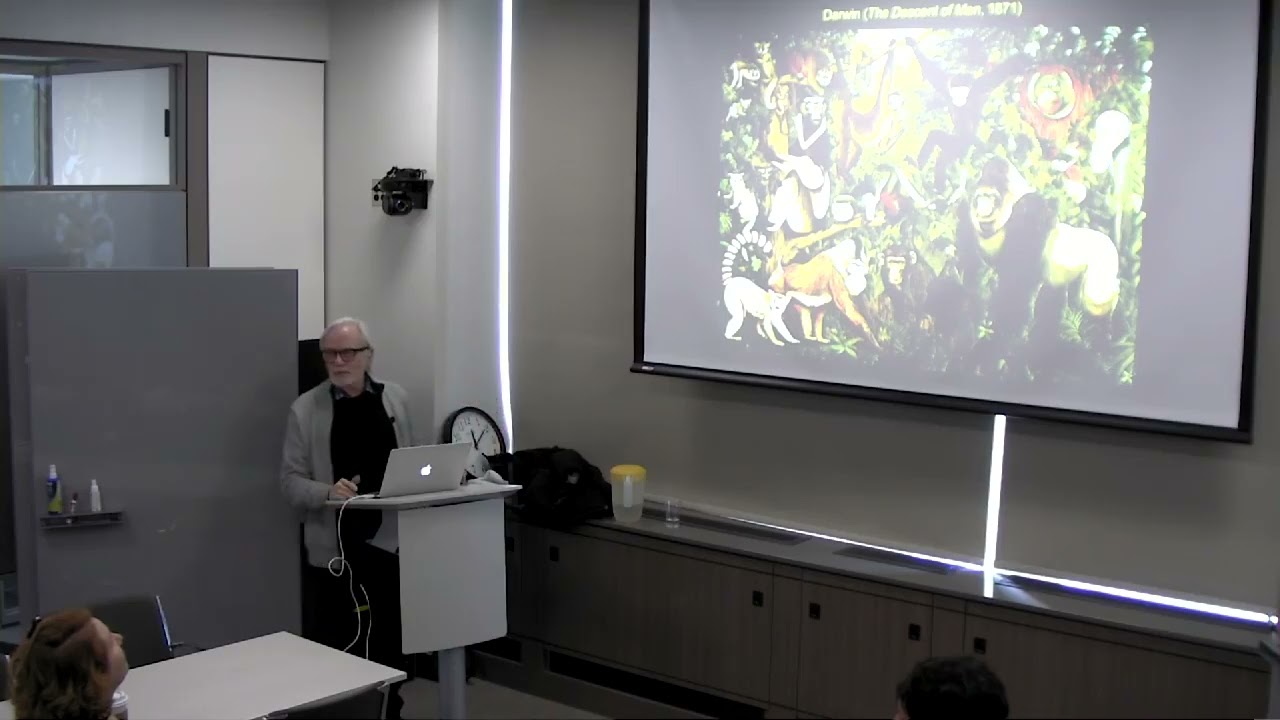
- Discussion of Darwin's views on human origins and the role of comparative morphology.
- Historical overview of molecular anthropology, including early blood serum studies.
- Explanation of the molecular assumption and its implications.
- Critique of the Paabo group's claims about Neanderthal and Denisovan interbreeding.
- Discussion of alternative splicing and the complexity of gene expression in metazoans.
- Analysis of the EVC2 gene and its potential role in molar morphology.
- Conclusion emphasizing the need to integrate molecular and morphological evidence.
Cited Sources
- No sources explicitly cited in the video description or transcript. — The speaker references various studies and researchers but does not provide specific citations.
Concurring Sources
- No specific concordant sources provided. — The talk does not cite external sources that align with its arguments.
Dissenting Sources
- No specific discordant sources provided. — The talk does not mention any sources that contradict its claims.
Contribution & Novelties
The talk offers a critical perspective on the dominance of molecular data in human evolutionary studies, arguing for a more integrated approach that considers both molecular and morphological evidence. It highlights historical examples where molecular conclusions were later questioned by morphological findings, such as the case of Ramapithecus. The speaker’s emphasis on the role of alternative splicing and the complexity of gene expression challenges the simplistic ‘one gene, one protein’ model often assumed in molecular phylogenetics.
Pour aller plus loin :
- Neanderthal genome project — Provides context on the molecular evidence for interbreeding.
- Denisovan — Overview of the Denisovan fossil and DNA findings.
- Alternative splicing — Explains the mechanism that challenges simple gene-function relationships.
- Ramapithecus — Historical example of morphological vs. molecular interpretations.
123 words
Radar Profile
The radar profile shows high scores in quantity of information and technical level, reflecting the speaker's expertise and the depth of the talk. However, the quality of information and global reliability are slightly lower, indicating that while the content is informative, the argumentation is selective and may not fully represent the scientific consensus.