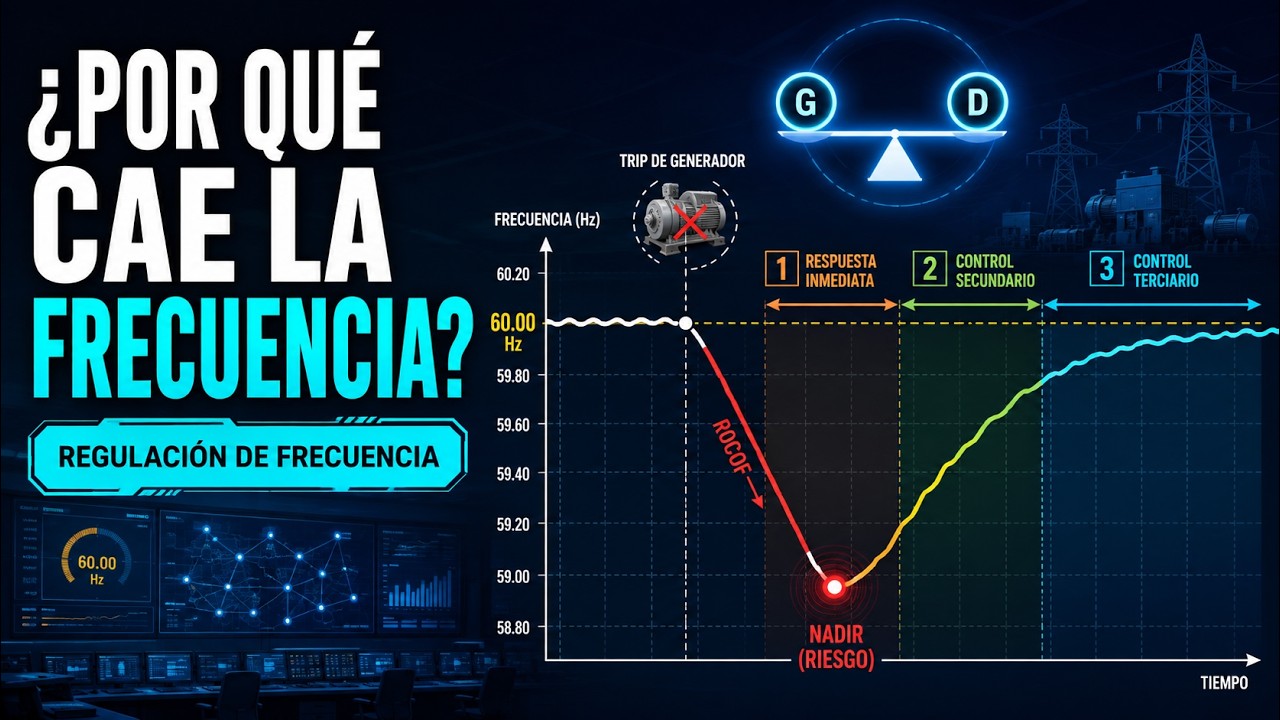
¿Por Qué Cae la Frecuencia? Inercia, ROCOF y Control | Clase 1
Keywords
Summary
194 words
Critical Evaluation
Value of the Information & Strength of the Argument
The video offers substantial value for electrical engineers and students by systematically breaking down complex concepts into digestible segments. The instructor’s argumentation is solid, grounded in established power system theory and practical examples. He effectively uses analogies and visual aids to explain the physical principles behind frequency dynamics. The progression from basic definitions to advanced topics like synthetic inertia is logical and well-paced. The explanation of the control hierarchy is particularly clear, with each level’s purpose and time frame clearly delineated. The inclusion of real-world examples, such as the interconnection between Peru and Ecuador and the analysis of COES data, enhances the practical relevance. However, the video could benefit from more quantitative examples or simulations to further solidify the concepts.
Scientific Rigor, Source Quality, Title Accuracy
The scientific rigor is high, with the instructor referencing international standards and definitions from organizations like ENTSO-E and National Grid. The content aligns with established power system engineering principles. The title accurately reflects the content, focusing on the causes of frequency drop and the control mechanisms. The video is well-structured with clear chapters, aiding comprehension. The instructor’s expertise is evident, and he provides a thorough explanation of the subject matter. However, the video lacks explicit citations to specific academic papers or standards documents, which would enhance its credibility. The description includes a link to the next class, but no external sources are provided. Overall, the content is reliable and well-presented, though it could be strengthened by referencing specific literature.
254 words
Title / Content Match
The title accurately reflects the content, which focuses on the causes of frequency drop, the role of inertia, ROCOF, and control mechanisms.
Quality & Reliability
8/10
The video provides a structured and technically accurate explanation of frequency control in power systems, referencing established concepts and standards. The content is presented by an expert in the field, with clear definitions and practical examples. However, the lack of explicit citations to external sources and the reliance on a single instructor's perspective slightly limit the overall reliability.
Chapters
Cited Sources
- Clase 2 – Control de Frecuencia — Continuation of the series, likely covering more advanced topics in frequency control.
Concurring Sources
- ENTSO-E — European network operator, referenced for definitions of frequency control.
- National Grid ESO — UK system operator, referenced for definitions of frequency control.
Contribution & Novelties
The video provides a comprehensive and accessible introduction to frequency control in power systems, particularly valuable for professionals in Latin America. It clarifies common misconceptions about inertia and its role in frequency regulation, especially in the context of renewable integration. The instructor’s emphasis on the distinction between inertia and control actions is a key contribution. The practical demonstration of analyzing COES data adds a unique regional perspective.
Pour aller plus loin :
- Frequency regulation in power systems — Overview of grid frequency and its control.
- Synchronous generator inertia — General concept of inertia, relevant to rotating machinery.
- ENTSO-E frequency control — European standards for frequency control.
- Synthetic inertia — Concept of emulating inertia in inverter-based generation.
116 words
Radar Profile
The radar profile shows high scores in information quantity, quality, and reliability, with a slightly lower technical level, indicating a well-balanced educational resource that is accessible yet technically sound.