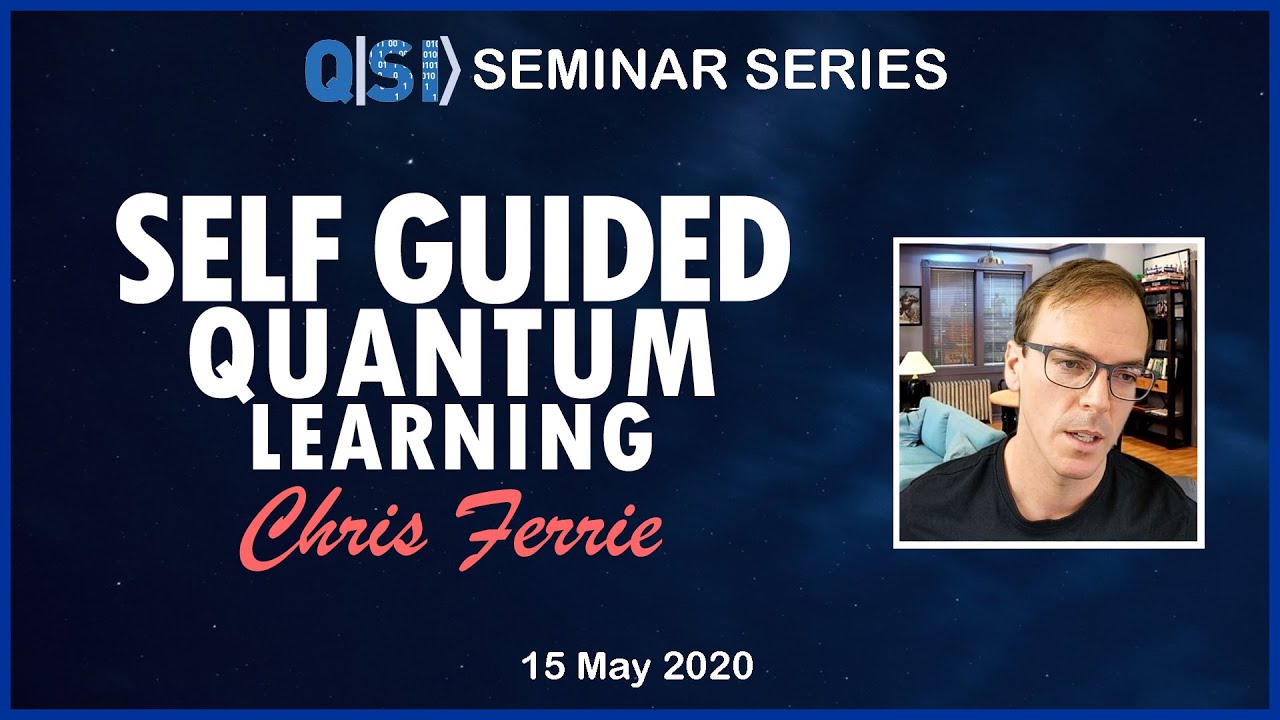
Self-Guided Quantum Learning
Keywords
Summary
141 words
Critical Evaluation
Value of the Information & Strength of the Argument
The talk provides valuable insights into a novel quantum tomography technique that offers significant computational advantages. The argumentation is solid, grounded in the principles of quantum mechanics and optimization theory. Ferrie clearly explains the trade-offs between computational and measurement complexity, and supports his claims with references to published papers. The presentation is well-structured, moving from the general problem to the specific algorithm and its applications.
Scientific Rigor, Source Quality, Title Accuracy
The scientific rigor is high, as the speaker is an expert in the field and the work is based on peer-reviewed research. The sources cited are relevant and credible, including arXiv papers on self-guided quantum tomography. The title accurately reflects the content, focusing on self-guided quantum learning. The talk is well-organized and the technical details are presented clearly.
138 words
Title / Content Match
The title accurately reflects the content, which focuses on self-guided quantum learning and its application to quantum tomography.
Quality & Reliability
8/10
The talk is given by an expert in quantum information, presents a novel algorithm with mathematical foundations, and references peer-reviewed papers. The presentation is clear and rigorous, though it is a seminar rather than a peer-reviewed publication.
Key Moments
Markers derived by PSI from the transcript: the creator did not define chapters.
- Introduction to quantum tomography and the induction problem.
- Overview of standard tomography and its computational challenges.
- Introduction to self-guided quantum learning and its key idea.
- Explanation of the optimization algorithm and its stochastic nature.
- Demonstration of the algorithm on a qubit example.
- Discussion of applications, including self-guided quantum process tomography.
- Open questions and future directions.
Cited Sources
- Self-guided quantum tomography — Original paper introducing the self-guided tomography algorithm.
- Experimental Demonstration of Self-Guided Quantum Tomography — Experimental implementation of self-guided quantum tomography.
- Experimental realization of self-guided quantum process tomography — Experimental realization of self-guided quantum process tomography.
- UTS Centre for Quantum Software and Information — Research center hosting the seminar.
- Clara Javaherian's UTS profile — Profile of the seminar host.
Concurring Sources
- Self-guided quantum tomography — The original paper presenting the self-guided tomography algorithm.
- Experimental Demonstration of Self-Guided Quantum Tomography — Experimental validation of the algorithm.
- Experimental realization of self-guided quantum process tomography — Extension of the method to process tomography.
Contribution & Novelties
The talk presents a novel adaptive optimization algorithm for quantum state estimation that avoids full state reconstruction, significantly reducing computational complexity. This approach is particularly relevant for near-term quantum devices where resources are limited.
Pour aller plus loin :
- Quantum Tomography — Overview of quantum tomography techniques.
- Stochastic Gradient Descent — The optimization method underlying the self-guided approach.
- Quantum State Estimation — A comprehensive review of quantum state estimation methods.
70 words
Radar Profile
The radar profile shows high scores in information quality, technical level, and reliability, with a slightly lower score in information quantity due to the focused scope of the talk. This indicates a technically rigorous and reliable presentation, though it may not cover all aspects of quantum tomography.