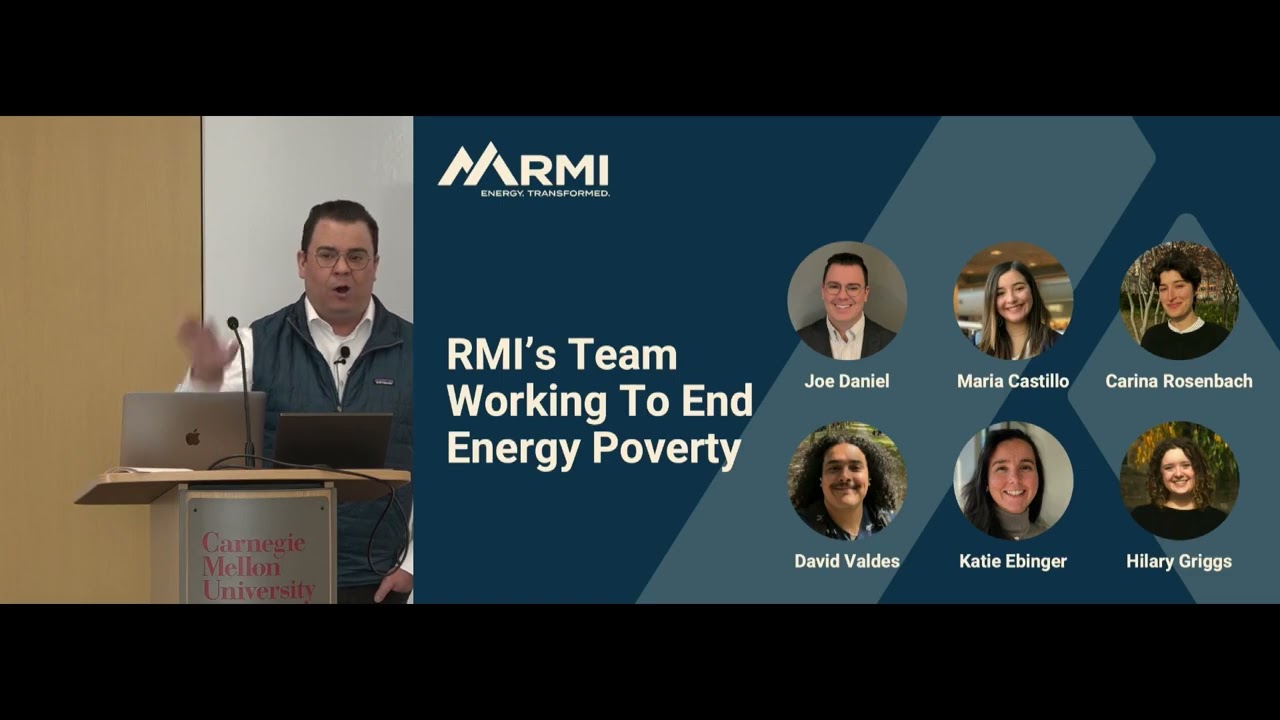
Tech Talk with Joe Daniel
Keywords
Summary
232 words
Critical Evaluation
Value of the Information & Strength of the Argument
The presentation provides valuable insights into the energy affordability crisis, offering a clear framework for understanding and addressing it. The argumentation is solid, based on data and the speaker’s extensive experience. The speaker effectively challenges the notion that energy bills have remained flat, explaining that the crisis is about the ability to pay, not just the bill amount. He uses compelling examples, such as the risk of losing child custody, to illustrate the severity of the problem. The three-step plan (adopt policies, pay for them, increase adoption) is logical and well-supported. The discussion of funding mechanisms is particularly valuable, highlighting the regressive nature of ratepayer-funded programs and the potential of federal taxes. The speaker also provides a concrete example of how a small surcharge on data centers could eliminate energy poverty in Pennsylvania. The introduction of the Energy Poverty Policy Simulator adds a practical tool for policymakers. Overall, the argumentation is persuasive and well-structured, though it is primarily an expert opinion rather than a peer-reviewed study.
Scientific Rigor, Source Quality, Title Accuracy
The speaker demonstrates strong rigor by referencing specific data points and reports, such as the rise in arrears and the percentage of eligible households receiving LIHEP. He acknowledges the limitations of metrics like energy burden and notes that different organizations use different thresholds. The talk is based on RMI’s research and the speaker’s professional experience, which adds credibility. However, specific sources are not cited in the presentation, and the description only mentions the talk’s title and co-hosts. The title ‘Tech Talk with Joe Daniel’ is generic and does not convey the specific topic, but the content is accurately described in the description. The talk is an expert opinion, not a peer-reviewed study, which is appropriate for a tech talk. The speaker’s credentials and experience are well-established, and the content is consistent with current policy discussions. Overall, the rigor is high, but the lack of explicit citations and the advocacy nature of the talk slightly reduce the score.
338 words
Title / Content Match
The title is generic but the content is a tech talk on energy poverty policy, which matches the title's broad scope.
Quality & Reliability
8/10
The speaker is a principal at RMI with extensive experience in utility regulation and energy policy. The presentation is based on data from RMI and other sources, but it is primarily an expert opinion with policy recommendations. The arguments are well-structured and supported by statistics, but the lack of peer-reviewed citations and the advocacy nature of the talk slightly reduce the score.
Key Moments
Markers derived by PSI from the transcript: the creator did not define chapters.
- Introduction by Daniel Tachick and Destenie Nock, highlighting Joe Daniel's background and the talk's relevance.
- Joe Daniel begins his talk, defining energy affordability and discussing the consequences of energy poverty.
- Presentation of statistics on energy arrears and energy burden, showing the disproportionate impact on low-income households.
- Discussion of the three-step plan to solve energy poverty: adopt policies, pay for them, increase adoption.
- Explanation of core policies such as LIHEP, low-income energy efficiency, discount rates, and disconnection protections.
- Overview of funding mechanisms: federal taxes, state taxes, ratepayer-funded, special tariffs, and shareholder contributions.
- Discussion of adoption strategies, including self-certification, and the example of data center surcharges in Pennsylvania.
- Introduction of the Energy Poverty Policy Simulator and its potential impact.
Cited Sources
Concurring Sources
Dissenting Sources
- Paper casting doubt on energy crisis — The speaker mentions a paper that argues energy bills have remained flat, but does not name it. This is a discordant source as it challenges the existence of an energy crisis.
Contribution & Novelties
The talk provides a comprehensive overview of the energy affordability crisis and introduces the Energy Poverty Policy Simulator, a novel tool for modeling policy impacts. The speaker’s emphasis on the non-engineering nature of the problem and the potential for rapid solutions is a fresh perspective. The discussion of funding mechanisms and adoption strategies offers practical insights for policymakers.
Pour aller plus loin :
- Energy Poverty Policy Simulator — The tool introduced in the talk, useful for exploring policy scenarios.
- LIHEAP — Federal program for energy assistance, central to the discussion.
- Energy burden — Concept used to measure energy affordability, relevant to the talk’s metrics.
- Utility regulation — Background on how utilities are regulated, relevant to the policy discussion.
118 words
Radar Profile
The radar profile shows high scores in quantity and quality of information, with a moderate technical level. The fiabilite is high, reflecting the speaker's expertise. The low technical level suggests the talk is accessible to a general audience, while the high information scores indicate a substantive presentation.
💬 No comments were provided for analysis.