Quantum Computing from Algorithm to Hardware in 3 Hours
Keywords
Summary
141 words
Critical Evaluation
Value of the Information & Strength of the Argument
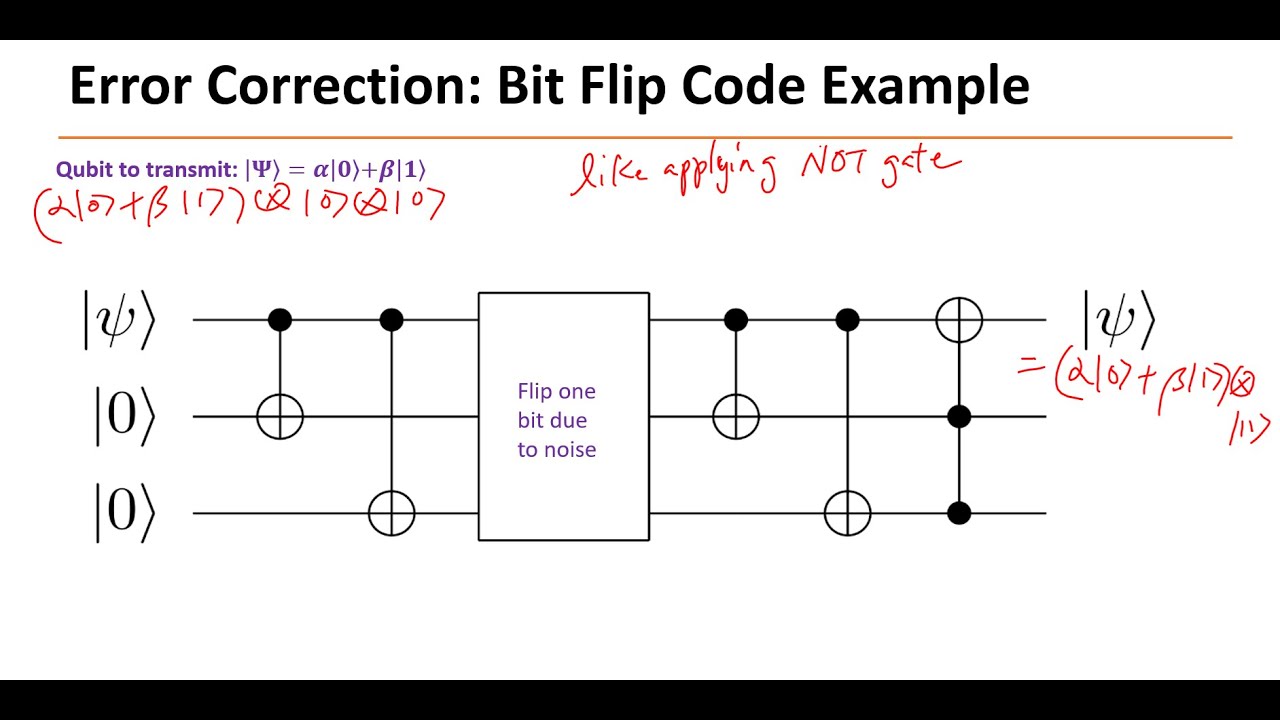
The lecture provides a solid foundation in quantum computing, clearly explaining complex concepts like superposition and entanglement with intuitive analogies (e.g., spinning coin). The argumentation is logical, building from basic principles to algorithms and hardware. The speaker effectively highlights the power of quantum parallelism while also addressing limitations, such as the difficulty of measurement and error correction. The use of the Deutsch algorithm as a concrete example helps demonstrate the potential speedup. The hardware discussion is grounded in real-world challenges, making the content valuable for engineering students.
Scientific Rigor, Source Quality, Title Accuracy
The speaker is a professor with relevant expertise and publications, lending credibility. The lecture is well-structured and technically accurate, though simplifications are made for pedagogical purposes. The title accurately reflects the content, covering both algorithms and hardware in a 3-hour session. No external sources are cited within the lecture, but the speaker mentions his own books and research, which are available on arXiv. The description provides a clear outline but no additional references.
175 words
Title / Content Match
The title accurately reflects the content: a comprehensive overview from algorithms to hardware, delivered in a 3-hour lecture.
Quality & Reliability
8/10
The lecture is given by an academic expert (professor at San Jose State University) with relevant publications in quantum computing education. The content is structured and covers fundamental concepts accurately, with appropriate caveats about limitations. However, it is a lecture, not peer-reviewed, and some simplifications are made for pedagogical purposes.
Key Moments
Markers derived by PSI from the transcript: the creator did not define chapters.
- Introduction and overview of the lecture structure
- Basics of quantum computing: qubits, superposition, and quantum parallelism
- Measurement and its probabilistic nature
- Entanglement and its role in quantum computing
- Quantum gates: Bloch sphere, Hadamard, and CNOT gates
- Deutsch algorithm as an example of quantum advantage
- Introduction to quantum hardware: criteria and challenges
- Superconducting qubits: design and operation
- Silicon spin qubits: implementation and challenges
- Other qubit technologies: photonic and trapped ion qubits
Cited Sources
- Introduction to Quantum Computing: From a Layperson to a Programmer in 30 Steps — Mentioned by the speaker as his book covering quantum computing basics.
- Quantum Computing Architecture and Hardware for Engineers — Mentioned by the speaker as his book on quantum hardware.
Concurring Sources
- Quantum Computing: A Gentle Introduction — A standard textbook covering similar fundamental concepts.
Contribution & Novelties
The lecture provides a comprehensive yet accessible introduction to quantum computing, bridging the gap between algorithms and hardware for engineering students. It emphasizes the practical challenges of building quantum computers, such as low-temperature electronics and qubit coherence, which are often overlooked in introductory materials. The speaker’s background in semiconductor physics adds a unique perspective on silicon spin qubits.
Pour aller plus loin :
- Quantum computing - Wikipedia — General overview and history.
- Deutsch–Jozsa algorithm - Wikipedia — Detailed explanation of the algorithm presented.
- Superconducting quantum computing - Wikipedia — More on superconducting qubit technology.
- Spin qubit - Wikipedia — Information on silicon spin qubits.
104 words
Radar Profile
The radar profile shows high scores in information quantity and quality, with a moderate technical level, indicating a well-balanced lecture suitable for beginners. The reliability score is high, reflecting the speaker's expertise. The overall profile suggests a comprehensive and trustworthy introduction to quantum computing.
💬 No comments were provided for analysis.