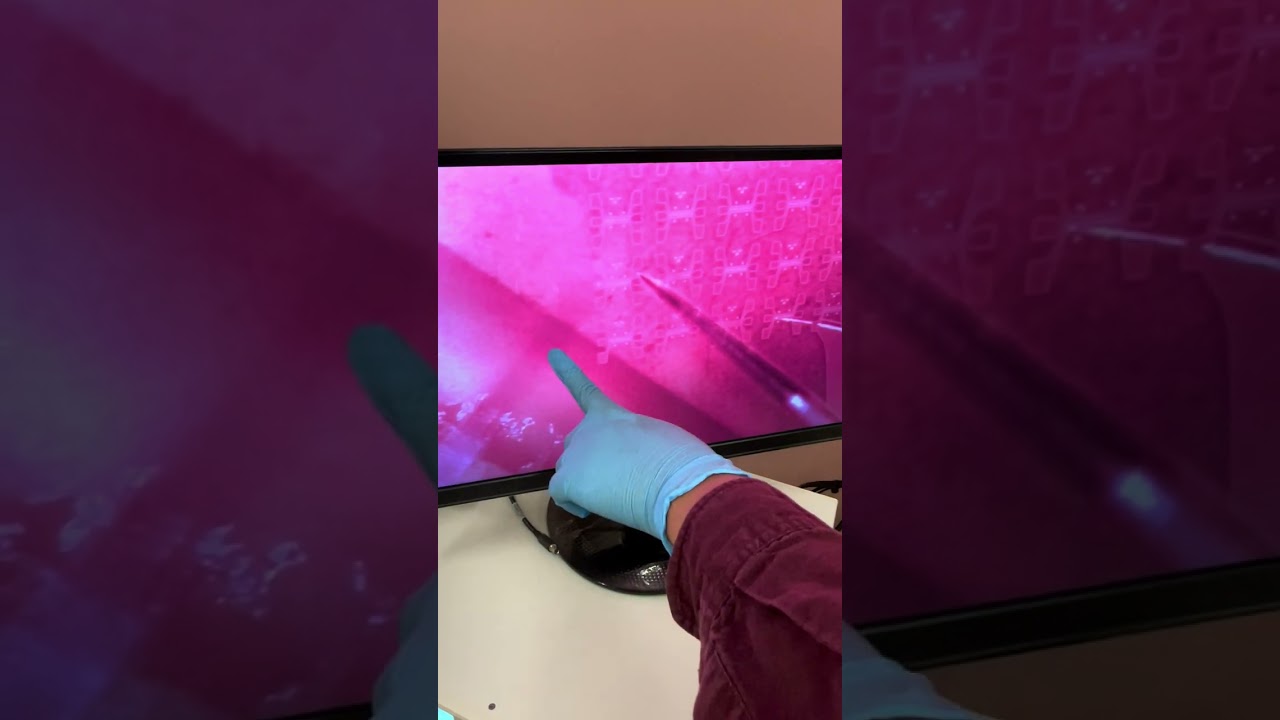
TTPX measurement 3: Connect cables, landing probe tips, measure using E5262A
Keywords
Summary
144 words
Critical Evaluation
Value of the Information & Strength of the Argument
The video provides valuable practical information for semiconductor device measurement, particularly for those new to probe stations. The step-by-step instructions are clear and detailed, covering cable connection, probe tip landing, and measurement setup. The instructor explains the reasoning behind certain actions, such as why pushing the probe tip in is easier than pulling it out due to vacuum, and the importance of scratching the pad for good contact. The argumentation is based on practical experience rather than theoretical analysis, which is appropriate for a tutorial. However, the video lacks depth in explaining the underlying physics or measurement principles, which could be a limitation for viewers seeking a deeper understanding.
Scientific Rigor, Source Quality, Title Accuracy
The video is a tutorial and does not cite external sources. The information presented is based on the instructor’s expertise and practical experience. The title accurately reflects the content, and the video is well-structured with clear demonstrations. The lack of formal references is expected for a tutorial, but the scientific rigor is limited to procedural accuracy. The video does not engage with existing literature or provide citations, which is acceptable for this format but reduces its value as a scientific reference.
205 words
Title / Content Match
The title accurately describes the content: connecting cables, landing probe tips, and measuring with the E5262A.
Quality & Reliability
7/10
The video is a practical tutorial demonstrating semiconductor device measurement procedures. The instructions are clear and based on hands-on experience. However, the video lacks formal citations or references to scientific literature, and the technical depth is limited to procedural steps without theoretical background.
Key Moments
Markers derived by PSI from the transcript: the creator did not define chapters.
- Introduction to equipment: capacitor and current measurement tools.
- Identifying cable labels (GNDL, 1L) and connecting them.
- Pushing probe tip into vacuum chamber, explaining difficulty due to atmospheric pressure.
- Using microscope to locate probe tips and adjust position.
- Zooming in and focusing on probe tips, adjusting light intensity.
- Setting up E5262A for measurement: selecting channel, setting voltage to 10 mV.
- Performing current measurement, observing noise and then conduction (12 µA).
- Demonstrating landing probe tip on pad, scratching for good contact.
- Lifting probe tips and observing scratches on the pad.
Contribution & Novelties
The video provides a practical, hands-on demonstration of semiconductor device measurement using a probe station, which is valuable for students and researchers new to this technique. It offers detailed visual guidance on cable connection, probe tip landing, and measurement setup, which is often not covered in textbooks. The tutorial emphasizes safety and precision, such as avoiding electrostatic discharge and ensuring good contact.
Pour aller plus loin :
- Semiconductor device fabrication — Provides background on the context of such measurements.
- Four-terminal sensing — Relevant to accurate resistance measurements.
- Parameter analyzer — Explains the instrument used in the video.
97 words
Radar Profile
The radar profile shows balanced scores across all dimensions, with slightly lower technical depth and source rigor, reflecting the tutorial's practical focus. The video excels in providing clear, actionable information for hands-on measurement tasks.