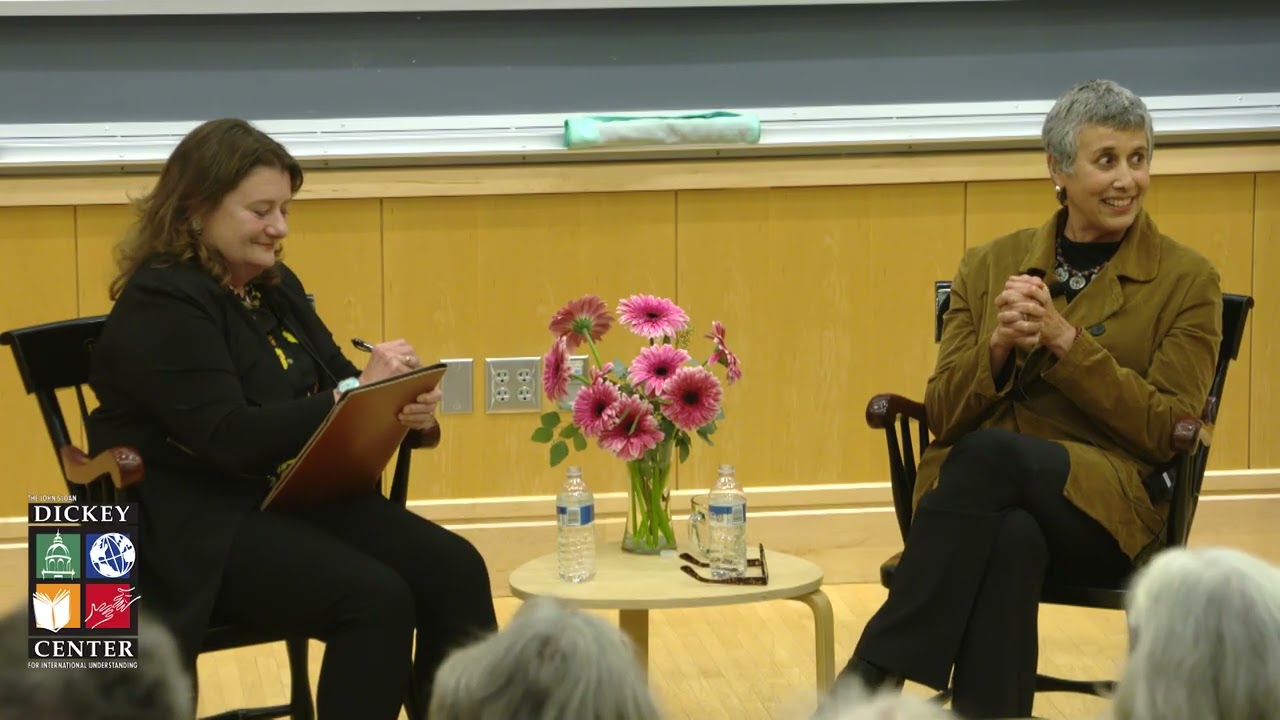
Geeta Anand: The Role of Journalism Today
Keywords
Summary
157 words
Critical Evaluation
Value of the Information & Strength of the Argument
The value of the information lies in the speaker’s extensive experience and her practical insights into the challenges and opportunities facing journalism today. She provides concrete examples from her career, such as reporting on drug-resistant TB and the founding of VTDigger, which illustrate her points effectively. Her argumentation is coherent and grounded in real-world observations, though it is primarily anecdotal rather than data-driven. She makes a compelling case for the importance of independent, nonprofit journalism and the need to adapt to changing media consumption habits.
Scientific Rigor, Source Quality, Title Accuracy
The speaker demonstrates rigor by referencing specific instances from her career and the operations of VTDigger. However, she does not cite external sources or studies, relying instead on personal experience and general observations. The title accurately reflects the content, which is a discussion of journalism’s role. The conversation is well-structured and stays on topic, though it is more of an opinion piece than a systematic analysis.
166 words
Title / Content Match
The title accurately reflects the content, which focuses on the role of journalism in today's society.
Quality & Reliability
8/10
The speaker is a Pulitzer Prize-winning journalist with extensive experience in investigative reporting and journalism education. The discussion is grounded in personal experience and professional expertise, but it is an opinion-based conversation rather than a peer-reviewed study.
Key Moments
Markers derived by PSI from the transcript: the creator did not define chapters.
- Introduction of Geeta Anand by Don Kerry, highlighting her career achievements.
- Geeta Anand discusses her transition from premed to history and her attraction to journalism.
- Anand talks about reporting against the narrative, citing her work on drug-resistant TB in India.
- Discussion on the book 'The Cure' and the story of a father's quest to save his children from Pompe disease.
- Anand addresses the global pressure on press freedom and the challenges journalists face.
- Anand discusses how to teach journalism students to overcome biases and seek diverse perspectives.
- Anand explains the nonprofit news model of VTDigger and its reliance on audience support.
- Q&A session begins; Anand answers a question about nonpartisan news sources and NPR defunding.
- Anand responds to a question about competing with sensationalized social media content.
- Anand discusses the challenge of media fragmentation and the importance of rebuilding trust locally.
Cited Sources
Concurring Sources
- Pew Research Center: Nonprofit News — Research on the role of nonprofit news and public trust.
Dissenting Sources
- Critique of Nonprofit News — Some critics argue that nonprofit news models may not be sustainable or may face conflicts of interest.
Contribution & Novelties
The conversation provides a personal and professional perspective on the current state of journalism, emphasizing the importance of independent, nonprofit news models and the need to adapt to digital media. Anand’s insights into reporting against the narrative and the challenges of maintaining objectivity are valuable for understanding journalistic practice.
Pour aller plus loin :
- Nonprofit news model — Explains the concept of nonprofit journalism and its evolution.
- Pompe disease — Background on the rare genetic disease discussed in the book ‘The Cure’.
- Press freedom — Overview of press freedom and its global challenges.
93 words
Radar Profile
The radar profile shows high scores in quality of information and reliability, reflecting the speaker's expertise and credibility. The lower score in technical level indicates that the content is accessible to a general audience, while the moderate quantity of information suggests a focused discussion rather than a comprehensive analysis.
💬 No comments were provided for analysis.