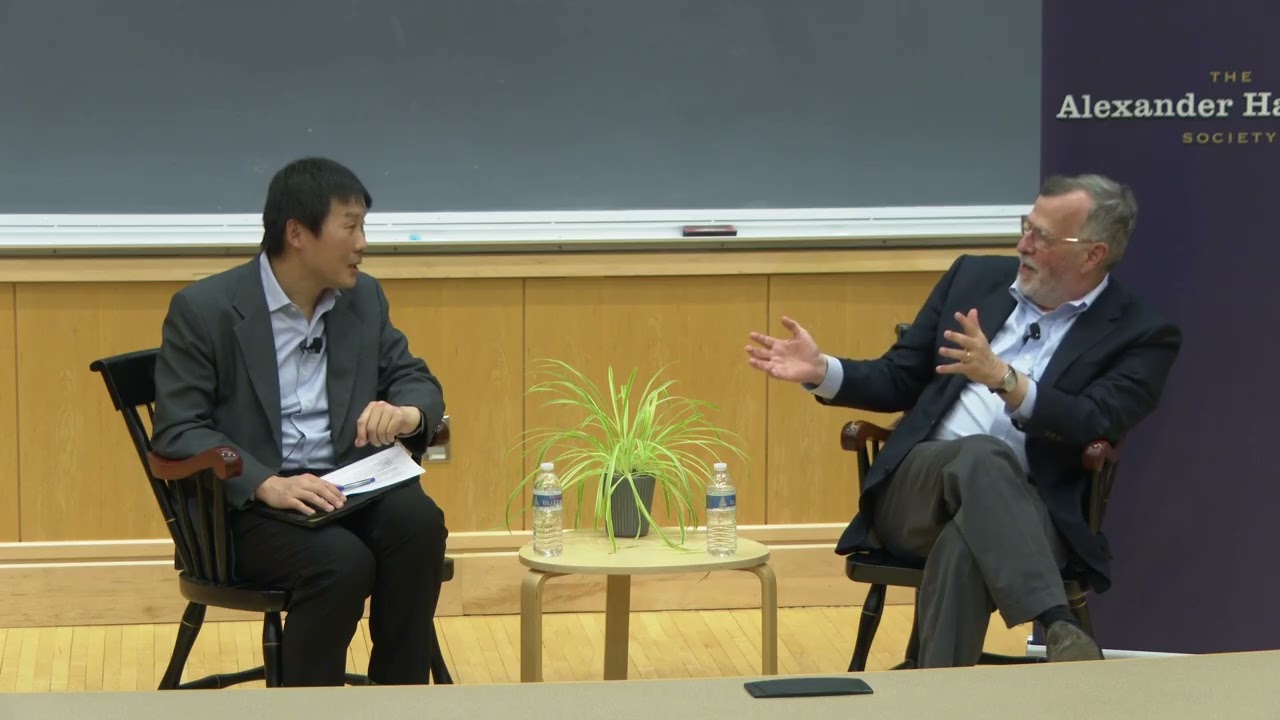
Weaponizing Commerce: The New Era of Industrial Policy and National Security.
Keywords
Summary
150 words
Critical Evaluation
Value of the Information & Strength of the Argument
The discussion provides valuable insights from a former trade official, offering a practitioner’s perspective on the motivations and consequences of recent US trade policy. Lavin’s arguments are well-structured, drawing on historical context and practical examples. He effectively critiques the administration’s approach, highlighting inconsistencies and potential negative outcomes. However, the argumentation is largely based on personal opinion and experience rather than rigorous data or academic research. The value lies in the expert analysis and the articulation of the tradeoffs involved, but it lacks empirical evidence to support some claims.
Scientific Rigor, Source Quality, Title Accuracy
The discussion is rigorous in its logical reasoning and use of historical examples, but it does not cite specific sources or data. The speakers rely on their expertise and general knowledge, which adds credibility but limits verifiability. The title accurately reflects the content, focusing on the intersection of commerce and national security. The event is co-sponsored by academic institutions, suggesting a certain level of scholarly rigor. However, the lack of formal citations and the conversational format reduce the overall scientific rigor.
184 words
Title / Content Match
The title accurately reflects the focus on using trade tools for national security, though the discussion is more general on trade policy shifts.
Quality & Reliability
7/10
Discussion by a former US Under Secretary for International Trade and a trade economist, providing expert insights but lacking formal citations or data verification.
Key Moments
Markers derived by PSI from the transcript: the creator did not define chapters.
- Introduction of speakers and event context.
- Lavin outlines the historical consensus on trade liberalization.
- Discussion of the Trump administration's shift in trade policy.
- Lavin critiques the blanket tariffs and their economic impact.
- Analysis of the political mood shift and reasons behind it.
- Discussion on using tariffs for supply chain security and reducing dependence on China.
- Audience Q&A begins with questions on inflation and policy structure.
- Lavin responds to pushback on the uniqueness of Trump's trade policy.
- Discussion on the uncertainty created by tariff policy and its effect on business investment.
- Lavin gives examples of limited reshoring and critiques the policy's effectiveness.
Cited Sources
- No specific sources cited in the video — The speakers refer to historical events and policies but do not cite specific documents or studies.
Concurring Sources
- Peterson Institute for International Economics — Research on the negative economic effects of tariffs.
Dissenting Sources
- The White House — Official administration claims that tariffs are beneficial and achieving goals.
Contribution & Novelties
The video offers a unique perspective from a former trade official on the recent shift in US trade policy, providing insider insights into the motivations and potential consequences. It contributes to the ongoing debate on the use of tariffs and industrial policy for national security, highlighting the tradeoffs between economic efficiency and security concerns.
Pour aller plus loin :
- US Trade Policy and National Security — Overview of US trade policy and its security implications.
- The Impact of Tariffs on Global Supply Chains — IMF working paper on tariff effects.
- Export Controls and Economic Security — Brookings analysis of export controls.
101 words
Radar Profile
The radar profile shows moderate scores across all dimensions, indicating a balanced but not exceptional video. The highest scores are in information quantity and reliability, reflecting the expert speakers, while technical level is moderate, suitable for a general audience.
💬 No comments were provided for analysis.