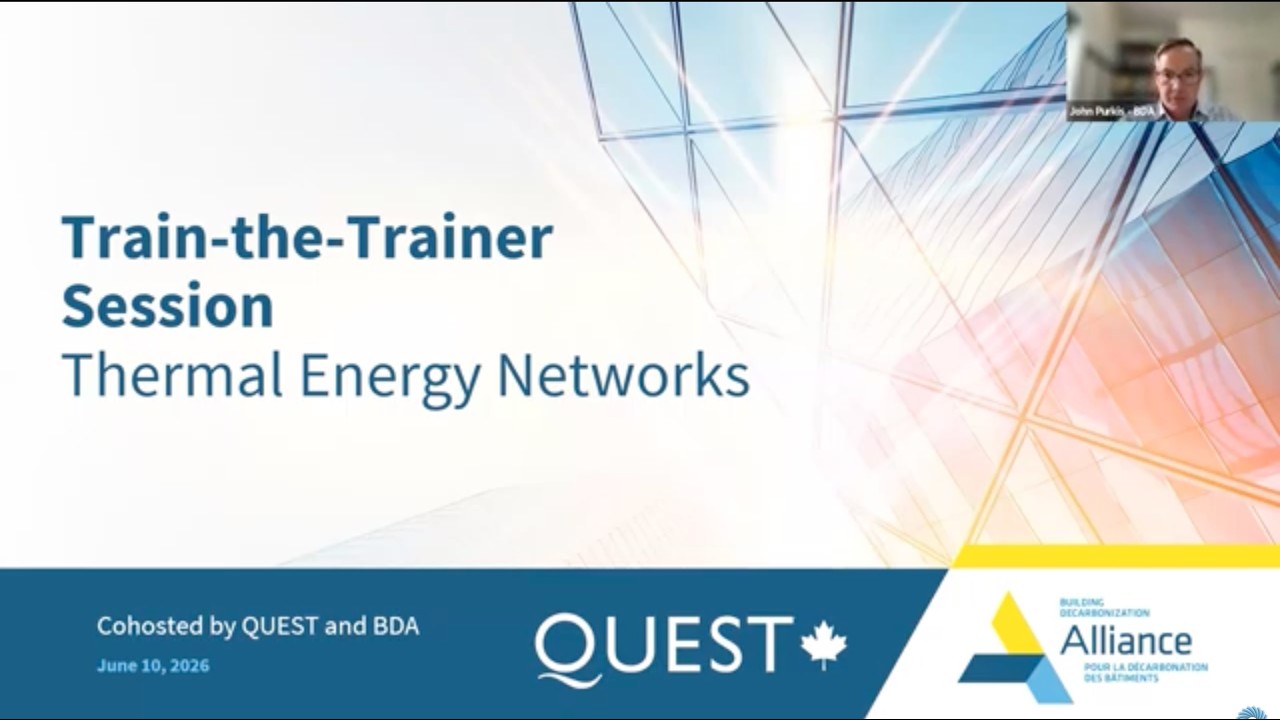
Train-the-Trainer Session: Thermal Energy Networks
Keywords
Summary
180 words
Critical Evaluation
Value of the Information & Strength of the Argument
The session provides valuable, practical information for trainers, offering a comprehensive overview of TENs and a suite of tools to support their work. The argumentation is solid, based on research and case studies, and clearly outlines the benefits and barriers of TENs. The presentation is well-structured, with clear explanations and examples, making it a useful resource for capacity building. However, the content is largely promotional, focusing on the BDA’s resources and encouraging adoption, rather than providing a balanced critical analysis. The argumentation is persuasive but may lack depth on potential drawbacks or alternative solutions.
Scientific Rigor, Source Quality, Title Accuracy
The session demonstrates scientific rigor by referencing a white paper and toolkit developed by the BDA, which are based on research and stakeholder consultations. The sources cited are credible, including the BDA’s own publications and the Green Municipal Fund’s guidebook. However, the session does not provide external peer-reviewed sources, and the information is presented from a single perspective. The title accurately reflects the content, and the session is well-organized with clear objectives. The inclusion of expert testimonies adds credibility, but the lack of independent verification limits the overall rigor.
198 words
Title / Content Match
The title accurately reflects the content: a train-the-trainer session focused on thermal energy networks, covering fundamentals, resources, and delivery strategies.
Quality & Reliability
7/10
The session is a training webinar led by experts from the Building Decarbonization Alliance and QUEST, providing practical guidance and resources for trainers. The content is based on a white paper and toolkit developed by the alliance, with references to case studies and policy levers. While the information is credible and well-structured, it is primarily promotional and educational, lacking peer-reviewed sources or independent verification.
Chapters
- Welcome, introductions and objectives
- TENs fundamentals: What do you need to know?
- Using BDA’s TENs resources
- Tailoring the message: testimonies of different narratives
- Breakout with the personas
- Format options and best practices for delivering TENs sessions
- Breakout on your next TENs session
- Next steps and closing
Cited Sources
- BDA Thermal Energy Networks White Paper — Referenced as the foundation of the resources, released last September.
- Green Municipal Fund TENs Guidebook — Mentioned as a freshly released guidebook focused on project development.
Concurring Sources
- International Energy Agency - District Heating — Provides global context on district heating systems and their role in decarbonization.
Contribution & Novelties
The session provides a comprehensive training framework for promoting thermal energy networks in Canada, offering a suite of practical tools and resources. It emphasizes the importance of tailoring messages to different stakeholder personas and provides a stakeholder map to guide engagement. The session also highlights the potential of TENs to decarbonize buildings at scale and transition gas utilities. This training is a novel approach to building capacity among regional champions, aiming to create a self-sustaining ecosystem.
Pour aller plus loin :
- Thermal energy network - Wikipedia — Provides background on district heating and cooling systems, relevant to understanding TENs.
- Building Decarbonization Alliance — Official website with resources and publications on building decarbonization.
- QUEST Canada — Organization focused on community energy planning and implementation, relevant to the session’s context.
128 words
Radar Profile
The radar profile shows a balanced distribution across all dimensions, with slightly higher scores in information quantity and quality, indicating a well-rounded and informative session. The technical level is moderate, suitable for a training audience, and the overall reliability is good, though not exceptional.