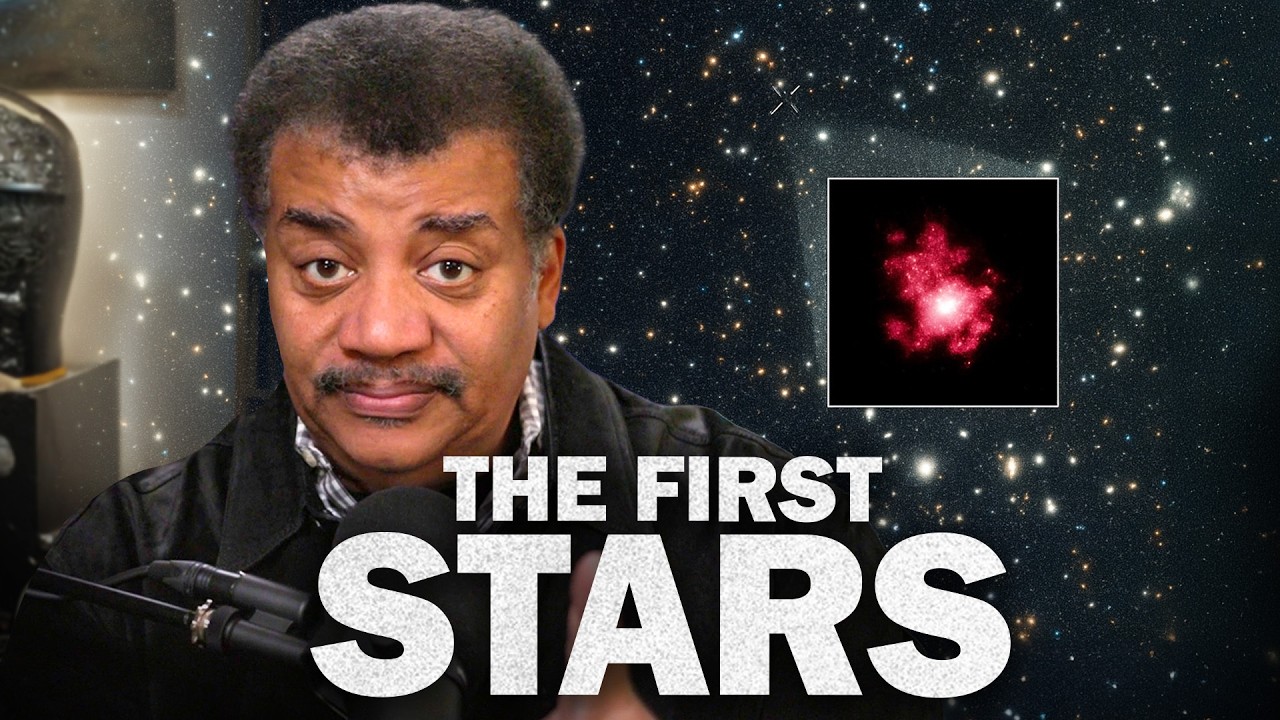
Did JWST Just Find Our Cosmic Ancestors?
Keywords
Summary
144 words
Critical Evaluation
The video provides a clear and engaging explanation of a complex astrophysical topic, making it accessible to a general audience while maintaining scientific accuracy. Neil deGrasse Tyson effectively breaks down the concept of stellar populations and the significance of the potential discovery of Population III stars. The argumentation is solid, grounded in established astrophysical principles such as stellar nucleosynthesis, radiation pressure, and gravitational lensing. The discussion of uncertainties is commendable, as it highlights the need for confirmation and avoids overstating the findings. The video references a specific paper published in the Astrophysical Journal Letters by colleagues from the University of Toledo and Columbia University, adding credibility. However, the video does not provide direct links to the paper or other sources, limiting the ability to verify the claims independently. The inclusion of a sponsored segment for Ground News is clearly marked and does not detract from the scientific content. Overall, the video is informative, well-structured, and scientifically sound, though it could benefit from more detailed citations for viewers seeking further information.
170 words
Title / Content Match
The title accurately reflects the content, which discusses the potential discovery of the first stars (Population III) by JWST.
Quality & Reliability
8/10
The video presents current scientific findings from the James Webb Space Telescope, with clear explanations of stellar populations and the significance of the detection. Neil deGrasse Tyson, an established astrophysicist, provides context and acknowledges uncertainties. The content aligns with known astrophysical concepts, though it is presented in a popularized format without detailed citations.
Chapters
Cited Sources
- Ground News — Mentioned as a tool for comparing news coverage and staying informed on space and science news.
Concurring Sources
- NASA JWST — Official NASA page for the James Webb Space Telescope, which would provide information on its discoveries.
Contribution & Novelties
The video provides an accessible explanation of the potential discovery of Population III stars, synthesizing recent JWST findings with established astrophysical concepts. It clarifies the significance of the detection and the uncertainties involved.
Pour aller plus loin :
- Population III stars — Overview of the hypothetical first generation of stars.
- James Webb Space Telescope — Details on the telescope and its capabilities.
- Gravitational lensing — Explanation of the phenomenon used to observe distant objects.
74 words
Radar Profile
The radar profile shows high scores in information quantity, quality, and reliability, with a slightly lower technical level, indicating a well-balanced and accessible scientific explanation.
💬 Très positif. Sur les 30 commentaires analysés, les spectateurs expriment une grande appréciation pour la clarté des explications et l'enthousiasme de Neil deGrasse Tyson, avec de nombreux remerciements et demandes de contenu supplémentaire.