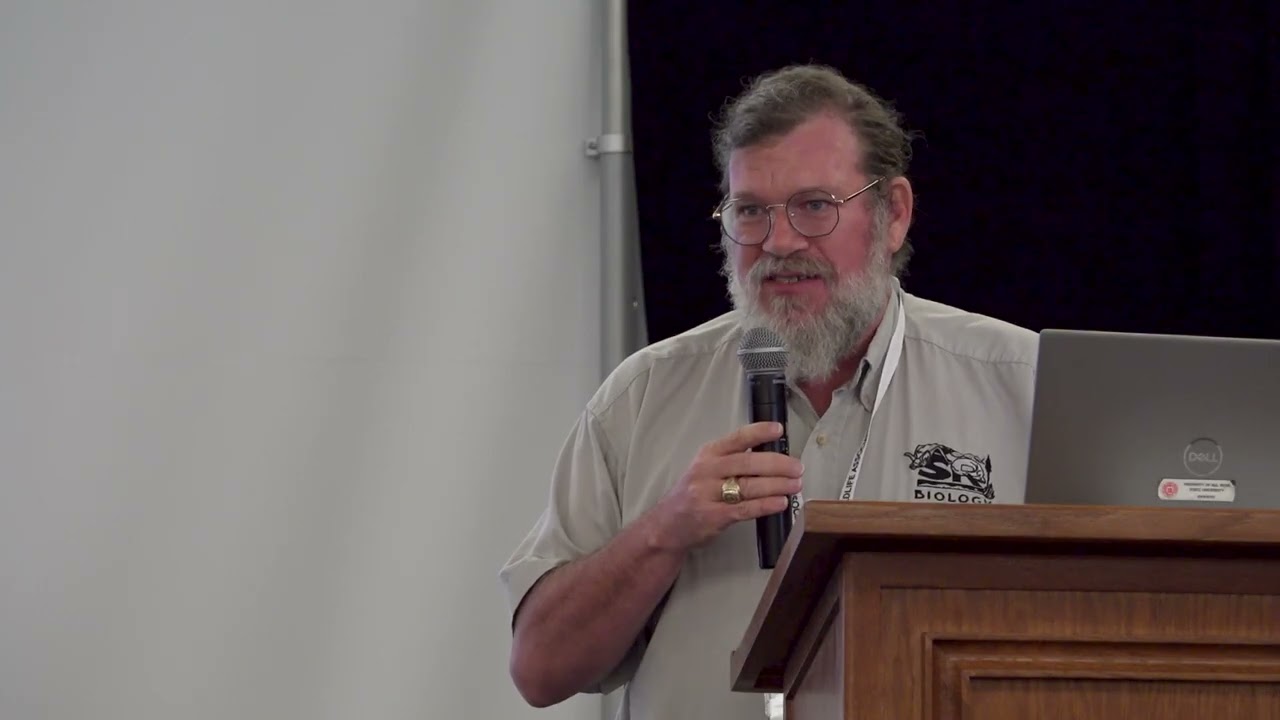
An Update of Three Saltcedar Biocontrols Along the Rio Grande and Pecos Rivers
Keywords
Summary
195 words
Critical Evaluation
Value of the Information & Strength of the Argument
The presentation provides valuable firsthand insights into a long-term biocontrol program, offering practical observations on the dynamics of beetle populations and their impacts. The argumentation is based on extensive field monitoring and personal experience, which lends credibility. However, the talk lacks quantitative data and references to scientific literature, relying heavily on anecdotal evidence. The speaker effectively explains the ecological rationale for biocontrol and addresses potential concerns about non-target effects, but the absence of rigorous data limits the strength of the argument.
Scientific Rigor, Source Quality, Title Accuracy
The speaker is a professor with direct involvement in the project, which enhances the reliability of the information. However, no specific sources are cited during the talk, and the description only mentions the conference. The title accurately reflects the content, focusing on the status of three biocontrol agents. The presentation is scientifically grounded but would benefit from references to published studies. No comments were provided for analysis.
163 words
Title / Content Match
The title accurately reflects the content, which focuses on the status of three biocontrol agents (beetles, scale, weevil) along the two rivers.
Quality & Reliability
7/10
Presentation by a professor with direct involvement in the biocontrol program, based on long-term field monitoring and personal observations. Lacks peer-reviewed citations and detailed quantitative data, but provides credible experiential evidence.
Key Moments
Markers derived by PSI from the transcript: the creator did not define chapters.
- Introduction and background on saltcedar invasion
- History of biocontrol program and beetle species
- Initial caging and monitoring of beetles
- Population explosion and defoliation from 2010-2015
- Decline in beetle populations and current status
- Introduction of tamarisk scale and splendid tamarisk beetle
- Monitoring along the Pecos River and reintroduction efforts
- Q&A on non-target effects and native plant recovery
Contribution & Novelties
This presentation offers a unique longitudinal perspective on the effectiveness of three biocontrol agents over nearly two decades, highlighting the dynamic interactions between them and the challenges of establishing populations in different river systems. It provides practical insights for land managers and researchers involved in invasive species control.
Pour aller plus loin :
- Diorhabda — Overview of the genus and its use in biocontrol.
- Tamarisk beetle biocontrol — Scientific paper on tamarisk beetle impacts.
- Saltcedar ecology — Detailed information on saltcedar biology and management.
84 words
Radar Profile
The radar profile shows balanced scores across all dimensions, with slightly higher reliability and information quality, indicating a solid but not exceptional presentation. The technical level is moderate, suitable for a professional audience.