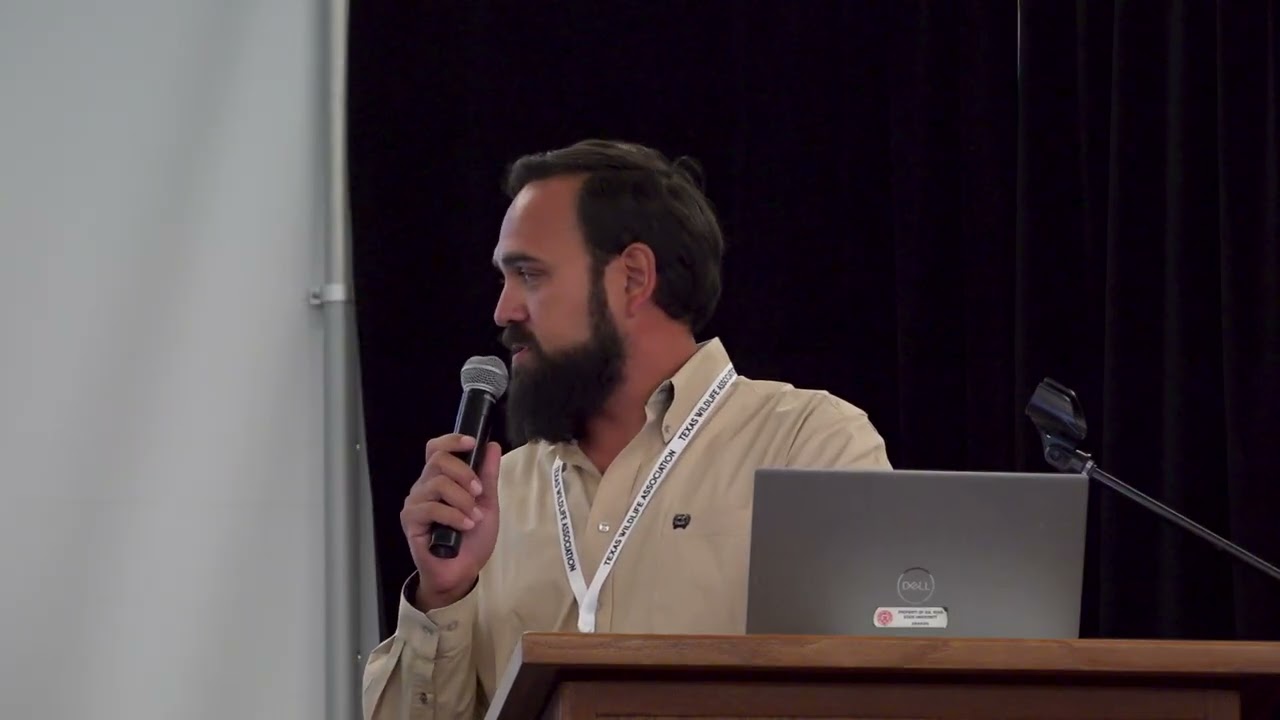
Cows and Desert Grasslands: What We Learned from Grazing Management Research
Keywords
Summary
162 words
Critical Evaluation
Value of the Information & Strength of the Argument
The presentation provides valuable insights from a specific research project, offering practical implications for ranchers and land managers in desert grasslands. The argumentation is based on preliminary data and personal observations, but the speaker acknowledges limitations, such as the short duration and single site. He effectively communicates the complexity of grazing management, emphasizing the need for adaptive strategies. However, the talk lacks detailed statistical analysis and is somewhat informal, which may reduce its scientific rigor.
Scientific Rigor, Source Quality, Title Accuracy
The speaker is affiliated with reputable institutions (Borderlands Research Institute, Sul Ross State University, Texas A&M AgriLife Extension), lending credibility. He references a study with the Dixon Water Foundation, but no specific publications are cited. The title accurately reflects the content. The talk is based on original research, though preliminary, and the speaker does not provide external sources. The informal style and lack of references may be a limitation for a scientific audience.
163 words
Title / Content Match
The title accurately reflects the content, which focuses on grazing management research in desert grasslands.
Quality & Reliability
7/10
Presentation by a research scientist with institutional affiliation, based on a specific study with preliminary data. However, the talk is informal, lacks detailed methodology, and the results are not yet statistically analyzed.
Key Moments
Markers derived by PSI from the transcript: the creator did not define chapters.
- Introduction and context of the presentation
- Discussion of the Trans-Pecos region and its diversity
- Comparison of grazing in high vs. low rainfall areas
- Stocking rates and water spacing considerations
- Fencing and virtual fencing as management tools
- Research study design with Dixon Water Foundation
- Results on forage biomass and species richness
- Conclusions and take-home messages
Cited Sources
- Dixon Water Foundation — Mentioned as the partner for the grazing study
Concurring Sources
- Dixon Water Foundation — Partner organization for the research
Contribution & Novelties
The presentation offers preliminary findings from a grazing study in the Chihuahuan Desert, highlighting that grazing can increase species richness compared to no grazing, and that rainfall and soil are more influential than grazing system alone. It underscores the importance of adaptive management and flexible stocking rates in arid rangelands.
Pour aller plus loin :
- Chihuahuan Desert — Background on the ecoregion.
- Rotational grazing — Overview of the practice.
- Stocking rate — Definition and importance.
75 words
Radar Profile
The radar profile shows moderate scores across all dimensions, with slightly higher reliability and information quality, reflecting the speaker's expertise and the preliminary nature of the data. The lower score in information quantity suggests the talk could have provided more detailed results.