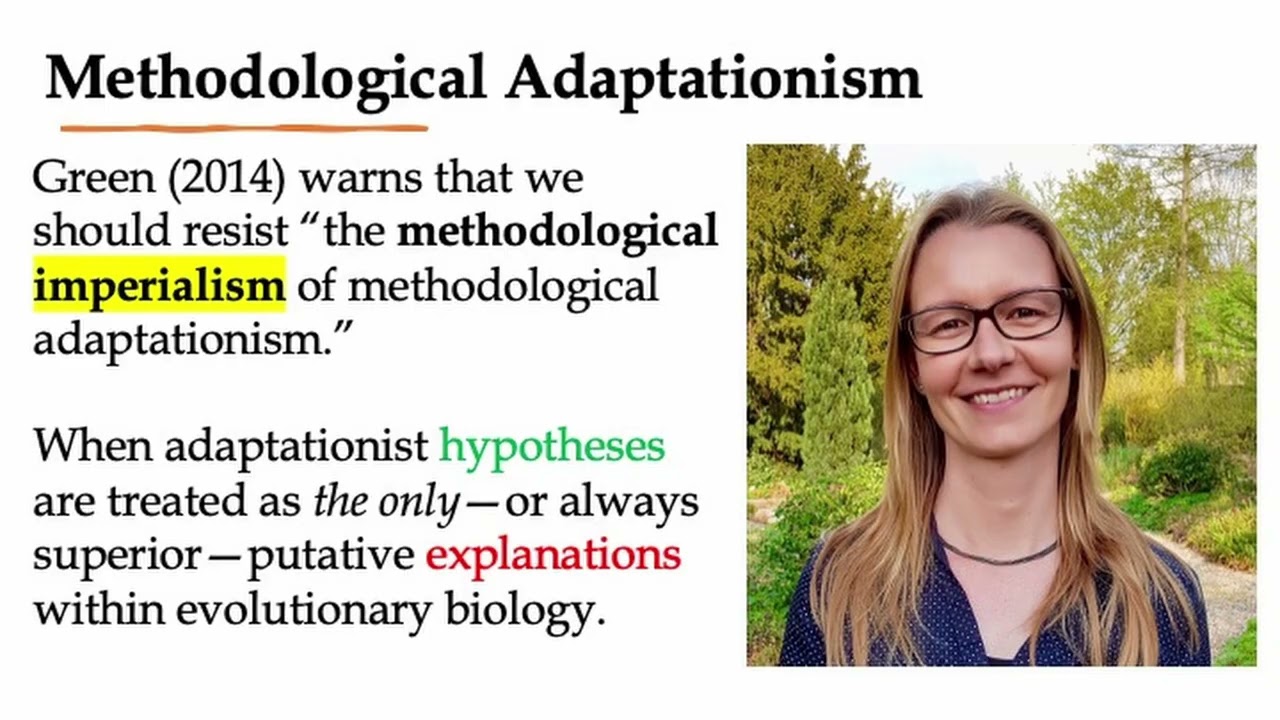
Paul Kelly - Explanatory Aptness: How to Justify Hypothesis Prioritization in Life Science Research
Keywords
Summary
171 words
Critical Evaluation
Value of the Information & Strength of the Argument
The talk offers a valuable contribution by synthesizing two distinct debates and proposing a novel concept that could have practical implications for scientific practice. The argumentation is well-structured: Kelly clearly outlines the problem, draws parallels, and builds a case for explanatory aptness. He uses concrete examples and references to key literature, making the argument accessible to a philosophical audience. However, the concept of explanatory aptness is not fully fleshed out; its criteria and application remain somewhat vague. The argument relies heavily on analogy and may not convince skeptics without more detailed case studies. The appeal to dispositional properties of models is intriguing but underdeveloped.
Scientific Rigor, Source Quality, Title Accuracy
Kelly demonstrates familiarity with relevant literature, citing Godfrey-Smith, Gould & Lewontin, Craver & Darden, Kitcher, and others. He accurately represents the main positions and critiques. The title is appropriate and reflects the content. However, as a conference talk, it does not provide a full bibliography or detailed citations, and some claims are made without extensive support. The talk is more of a proposal than a rigorous defense, but it is grounded in established philosophical debates.
194 words
Title / Content Match
The title accurately reflects the content: the talk introduces and defends the concept of explanatory aptness as a way to justify hypothesis prioritization in life science research.
Quality & Reliability
7/10
The talk presents a novel philosophical concept (explanatory aptness) with a clear argumentative structure, drawing on established debates in philosophy of biology and cognitive science. The speaker cites relevant literature (e.g., Godfrey-Smith, Gould & Lewontin, Craver & Darden, Kitcher) and uses examples. However, as a conference presentation, it lacks peer review and detailed empirical support, and some claims are asserted rather than fully defended.
Key Moments
Markers derived by PSI from the transcript: the creator did not define chapters.
- Introduction and overview of the talk's structure.
- Introduction of the two principles: methodological adaptationism and methodological mechanism.
- Discussion of critiques of methodological adaptationism, including Gould and Lewontin's 'spandrels' paper.
- Discussion of critiques of methodological mechanism, including the role of constraints and the concept of mechanism being overextended.
- Introduction of the logic of research questions and how they constrain possible answers.
- Discussion of the convergence on the division of cognitive labor and why it is unsatisfactory.
- Distinction between hypotheses and models, and introduction of model-based hypotheses.
- Introduction of dispositional properties of models and the proposal of explanatory aptness.
Cited Sources
- The Spandrels of San Marco and the Panglossian Paradigm: A Critique of the Adaptationist Programme — Referenced as the 'spandrels' paper by Gould and Lewontin, critiquing methodological adaptationism.
- In Search of Mechanisms: Discoveries across the Life Sciences — Referenced as the book by Carl Craver and Lindley Darden advocating for mechanistic explanation.
- The Division of Cognitive Labor — Referenced as the source of the concept of division of cognitive labor by Philip Kitcher.
- Darwinian Populations and Natural Selection — Referenced as a work by Peter Godfrey-Smith on adaptationism.
Concurring Sources
- The Logic of Scientific Discovery — Referenced implicitly in the discussion of research questions and hypothesis testing.
- Explaining the Brain: Mechanisms and the Mosaic Unity of Neuroscience — Referenced as a work by Carl Craver on mechanistic explanation in neuroscience.
Dissenting Sources
- The Structure of Scientific Revolutions — Kuhn's work might be seen as challenging the idea that hypothesis prioritization can be based on objective criteria, as scientific paradigms shape what questions are considered important.
Contribution & Novelties
The talk introduces the concept of ’explanatory aptness’ as a novel criterion for hypothesis prioritization, potentially bridging debates in philosophy of biology and cognitive science. It offers a fresh perspective by focusing on the explanatory power of models rather than just hypotheses. The proposal could stimulate further research on how to evaluate and select scientific models.
Pour aller plus loin :
- Mechanistic Explanation — Stanford Encyclopedia of Philosophy entry on mechanisms, relevant to the debate on methodological mechanism.
- Adaptationism — Stanford Encyclopedia of Philosophy entry on adaptationism, relevant to the debate on methodological adaptationism.
- Scientific Models — Stanford Encyclopedia of Philosophy entry on models in science, relevant to the distinction between models and hypotheses.
114 words
Radar Profile
The radar profile shows high scores in technical level and information quality, indicating a sophisticated and well-informed presentation. The moderate scores in quantity and reliability suggest that while the talk is dense and cites sources, it is a proposal rather than a comprehensive review, and some claims are not fully substantiated.