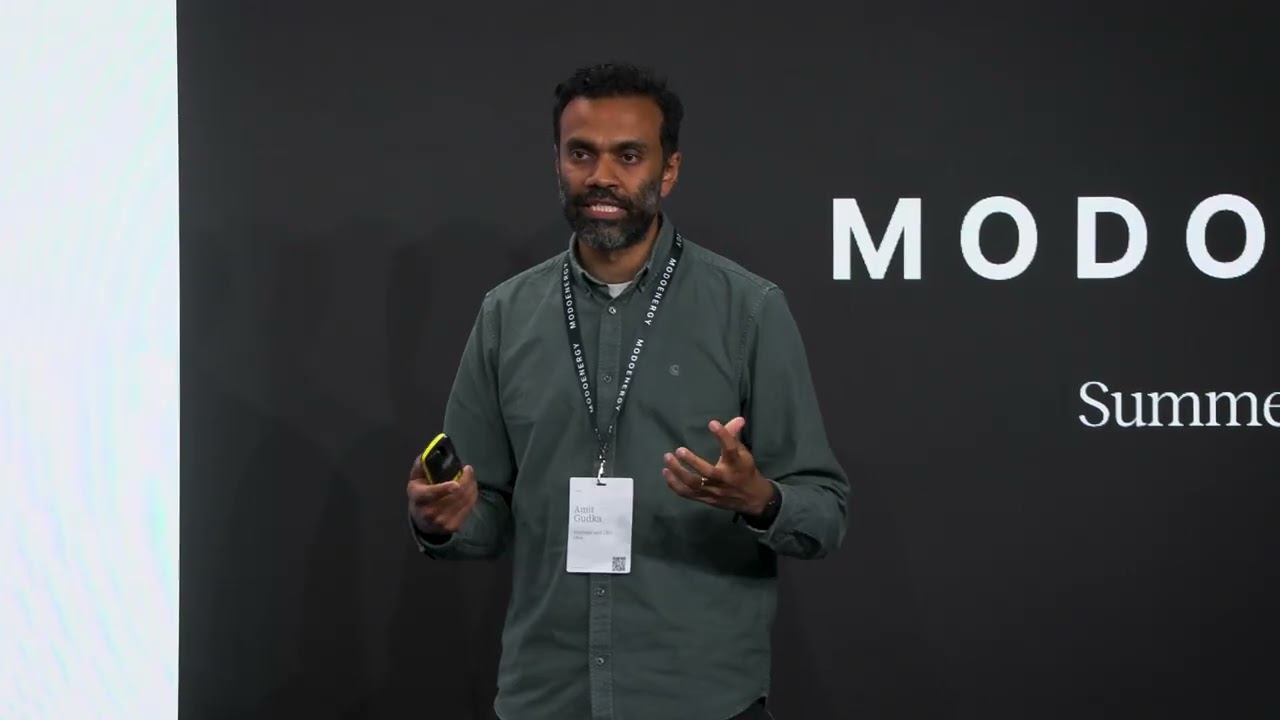
How to Build a Vertically Integrated Energy Storage Company - Amit Gudka (Field)
Keywords
Summary
143 words
Critical Evaluation
Value of the Information & Strength of the Argument
The talk provides valuable insights from a practitioner’s perspective, offering practical lessons on vertical integration, market timing, and operational efficiency. The argumentation is coherent and grounded in real-world experience, though it lacks empirical data or external validation. The speaker’s credibility as CEO of Field adds weight to the claims, but the absence of concrete metrics or case studies limits the depth of the argumentation.
Scientific Rigor, Source Quality, Title Accuracy
The talk does not cite specific sources, but the speaker references his own company’s experience and mentions third-party revenue forecasters like Modo. The title accurately reflects the content, which focuses on building a vertically integrated energy storage company. The talk is an expert opinion rather than a scientific study, so the rigor is moderate, relying on anecdotal evidence.
137 words
Title / Content Match
The title accurately reflects the content, which focuses on lessons from building a vertically integrated energy storage company.
Quality & Reliability
7/10
The talk is based on the speaker's direct experience as CEO of Field, providing practical insights. However, it lacks citations to external sources and is largely anecdotal, which limits its scientific rigor.
Key Moments
Markers derived by PSI from the transcript: the creator did not define chapters.
- Introduction by host, setting the stage for Amit Gudka's talk.
- Amit introduces himself and Field, a vertically integrated energy storage company operating in GB, Germany, Italy, and Spain.
- First learning: Develop uncomfortably early and back your view of the market. He discusses the limitations of third-party revenue forecasts and the importance of in-house fundamentals.
- Second learning: Having an in-house optimization team provides a counterbalance to development delays, allowing for software-speed iteration.
- Third learning: Developing to build is different from develop to flip. He contrasts the long-term focus of in-house development with the market-oriented approach of flipping projects.
- Fourth learning: International expansion reveals that grid and planning bottlenecks are similar across countries, but each has unique regulatory solutions.
- Q&A session: Amit discusses which capability he might outsource (development) and what he might bring in-house next (deeper construction management).
- Final Q&A: Amit reflects on the biggest decisions that contributed to Field's success, including moving into development and building optimization in-house.
Cited Sources
- Modo Energy — Mentioned as a provider of third-party revenue forecasts and the event host.
Concurring Sources
- Modo Energy — The speaker's views on market timing and the need for in-house fundamentals align with Modo's role as a revenue forecaster, though he critiques reliance on third-party forecasts.
Contribution & Novelties
The talk offers a unique insider perspective on the strategic rationale for vertical integration in the energy storage sector, emphasizing the importance of in-house capabilities for long-term value creation. It provides practical lessons on market timing, operational control, and international expansion.
Pour aller plus loin :
- Vertical integration — Provides a general overview of the concept.
- Battery storage power station — Relevant to the technical aspects of energy storage.
- Grid connection reform — Discusses the regulatory and technical challenges of connecting to the grid.
84 words
Radar Profile
The radar profile shows a balanced performance across all dimensions, with slightly higher scores in information quantity and quality, reflecting the speaker's expertise and the practical nature of the talk. The lower score in reliability is due to the lack of external citations and the anecdotal nature of the content.
💬 No comments were provided for analysis.