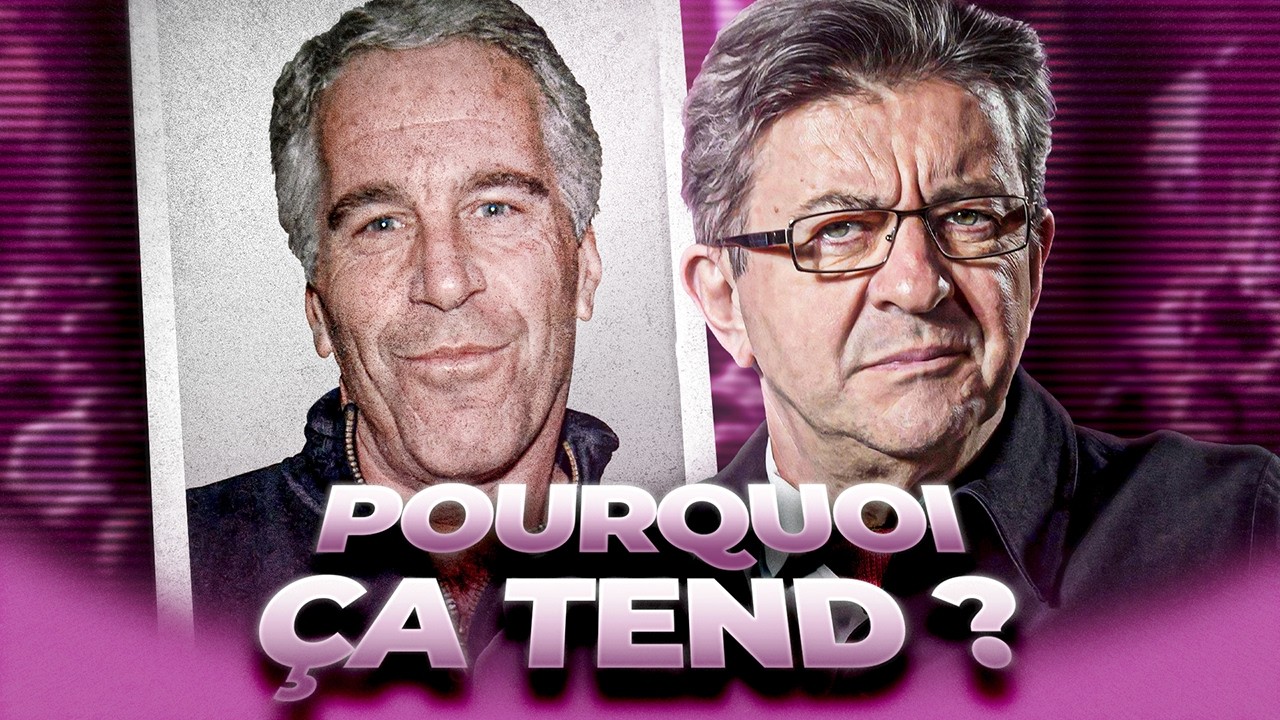
Mélenchon - Epstein : les éléments pour comprendre la controverse - Clément Viktorovitch
Keywords
Summary
139 words
Critical Evaluation
Value of the Information & Strength of the Argument
The video provides valuable insights into the historical and rhetorical mechanisms of antisemitism, particularly regarding name-based stigmatization. Viktorovitch’s argumentation is well-structured, moving from the specific incident to broader historical patterns. He effectively uses academic sources and examples to support his points. However, the argument is heavily influenced by his personal perspective, which may limit its objectivity. He does not thoroughly address counterarguments, such as the possibility that Mélenchon was referring to media attempts to link Epstein to Russia, which some commenters mention. Overall, the argumentation is persuasive but not fully balanced.
Scientific Rigor, Source Quality, Title Accuracy
Viktorovitch demonstrates scientific rigor by referencing historical works and academic articles, such as those by Claire Zalc and Nicole Lapierre. He also cites specific examples from media and political discourse. The sources are relevant and add credibility to his analysis. The title accurately reflects the content, as the video aims to explain the controversy. However, the video is primarily an opinion piece, and the author’s personal involvement is clear. The analysis of comments is not included in the video itself, but the video’s argumentation is coherent and well-supported.
194 words
Title / Content Match
The title accurately reflects the content, as the video aims to explain the controversy surrounding Mélenchon's remarks on Epstein's name pronunciation.
Quality & Reliability
8/10
The video provides a well-structured argumentation based on historical references and scholarly works, but it is primarily an opinion piece with a personal perspective. The author clearly states his personal background and emotional reaction, which adds authenticity but also subjectivity. The sources cited are mostly historical and academic, but the video does not provide a comprehensive review of all perspectives.
Chapters
Cited Sources
- Claire Zalc, Dénaturalisés: Les retraits de nationalité sous Vichy — Cited as a historical reference on name-based antisemitism.
- Nicole Lapierre — Quoted on the role of names in antisemitism.
- Édouard Drumont, La France juive — Mentioned as a foundational antisemitic work.
- Hugues Galli, article on Rivarol — Cited for examples of name-based antisemitism in recent times.
Concurring Sources
- Mediapart article by Fabrice Harfi — Mentioned in the video as raising the question of what 'Epstein' sounds like.
- Arrêt sur image article by Daniel Schneidermann — Cited as another media outlet critical of Mélenchon's remarks.
Dissenting Sources
- Comments defending Mélenchon — Some commenters argue that Mélenchon was referring to media attempts to link Epstein to Russia, not to his Jewish identity.
External References
Contribution & Novelties
The video offers a unique perspective by combining personal experience with historical analysis to explain the controversy. It highlights the often-overlooked role of name pronunciation in antisemitic discourse. The author’s personal background adds authenticity, but the analysis is not entirely novel, as similar points have been made by other commentators. The video does not present new research but synthesizes existing knowledge in an accessible way.
Pour aller plus loin :
- Antisemitism — Provides a broad overview of antisemitism, its history, and manifestations.
- The Protocols of the Elders of Zion — A notorious antisemitic forgery that fuels conspiracy theories.
- Dreyfus affair — A key historical event illustrating antisemitism in France.
109 words
Radar Profile
The radar profile shows high scores in information quantity and quality, reflecting the video's rich historical context and clear argumentation. The technical level is moderate, suitable for a general audience. The reliability score is slightly lower due to the subjective nature of the analysis.
💬 The comments are predominantly critical of the video's interpretation, with many defending Mélenchon and arguing that his remarks were taken out of context. The overall tone is defensive and polarized, with a significant portion of viewers disagreeing with the analysis.