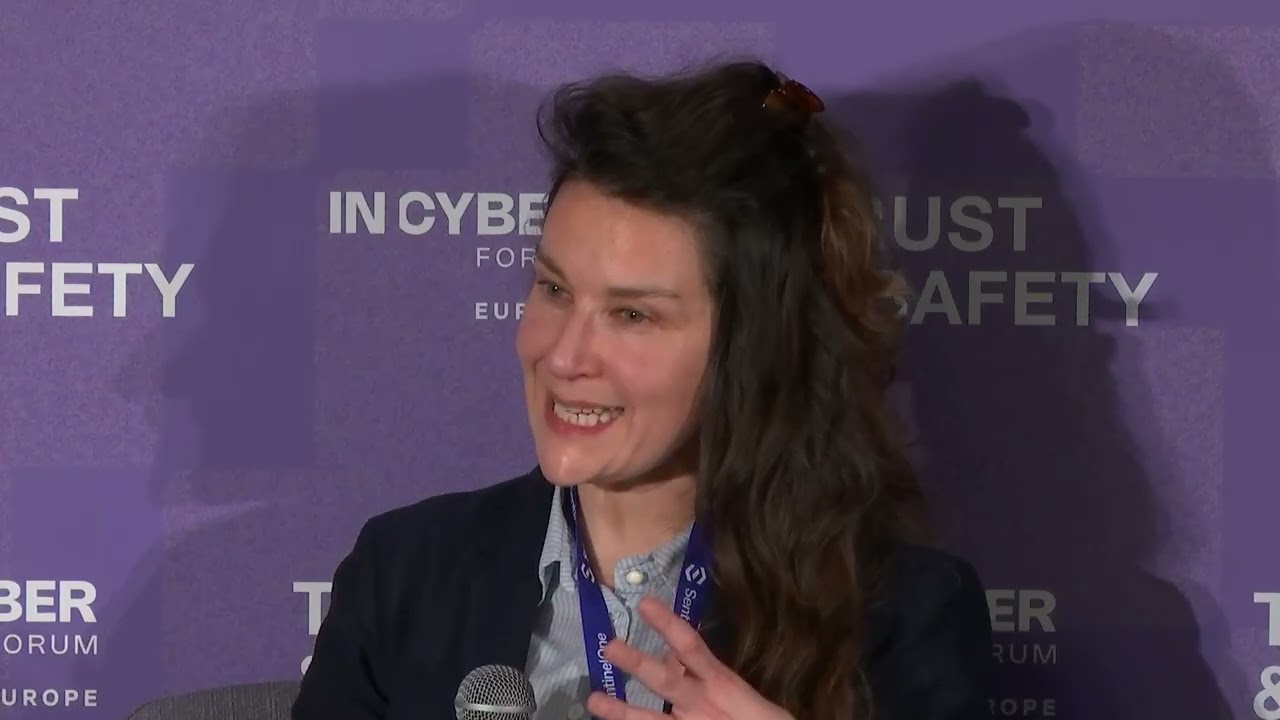
(TR09)(T&S)Building common language for abuse reporting the case for global standardization in trust
Keywords
Summary
138 words
Critical Evaluation
Value of the Information & Strength of the Argument
The discussion provides valuable insights into the practical challenges of abuse reporting and the concrete steps being taken to address them. The panelists argue convincingly that fragmentation in classification and reporting hinders effective response, and they present standardization as a key solution. Their arguments are supported by real-world examples, such as the difficulty of cross-border cooperation and the overwhelming volume of reports. The value lies in the firsthand experience shared, particularly the detailed explanation of the Schema and Seaport, which demonstrate how standardization can improve victim identification and content removal. The argumentation is coherent and persuasive, though it relies more on anecdotal evidence than on systematic data.
Scientific Rigor, Source Quality, Title Accuracy
The panelists are credible experts with direct involvement in the initiatives discussed, lending authority to their statements. However, the discussion lacks formal citations or references to external sources, and the claims are not backed by published research or statistics. The title accurately reflects the content, focusing on the need for a common language in abuse reporting. The description provides links to the INCYBER Forum and LinkedIn, which are relevant but not directly to the technical details discussed. Overall, the scientific rigor is moderate, as the content is practice-based rather than research-based.
213 words
Title / Content Match
The title accurately reflects the content: a panel discussion on building a common language for abuse reporting and the need for global standardization in trust and safety.
Quality & Reliability
8/10
The panel features experienced practitioners from law enforcement, hotline coordination, and technical abuse management, providing credible insights into standardization efforts. Claims are grounded in practical experience and specific initiatives (e.g., XARF, Schema, Seaport). However, the discussion is largely anecdotal and lacks formal citations or data, limiting verifiability.
Key Moments
Markers derived by PSI from the transcript: the creator did not define chapters.
- Introduction to the panel and the problem of silos in trust and safety.
- Rémi Villette discusses cultural and legal challenges in defining CSAM.
- Samantha Woolf explains the fragmentation within INHOPE and the need for standardization.
- Tobias Knecht introduces XARF and the challenges of reporting abuse to ISPs.
- Discussion on the Universal Classification Schema and its benefits.
- Rémi Villette describes the Seaport project and its role in victim identification.
- Samantha Woolf emphasizes the importance of cross-platform response and regulatory compliance.
- Tobias Knecht discusses the scale of abuse and the need for automation.
- Panelists discuss the adoption of the Schema and training efforts.
- Closing remarks on the future of standardization and cooperation.
Cited Sources
- INCYBER Forum Europe — The event where the panel took place, providing context for the discussion.
- INCYBER Europe LinkedIn — Official LinkedIn page of the INCYBER Forum, mentioned in the description.
Concurring Sources
Contribution & Novelties
The panel provides a unique cross-sectoral perspective on abuse reporting standardization, highlighting concrete initiatives like the Universal Classification Schema, XARF, and Seaport. It underscores the practical challenges of fragmentation and the need for a common language to enable automation and faster response. The discussion offers actionable insights for professionals in trust and safety, law enforcement, and industry.
Pour aller plus loin :
- Universal Classification Schema (INHOPE) — Official INHOPE page describing the schema and its role in standardizing classification.
- XARF - Extended Abuse Reporting Format — Official XARF website with specifications and resources.
- GIFCT - Global Internet Forum to Counter Terrorism — Related initiative for information sharing and standardization in counter-terrorism, mentioned as a precedent.
115 words
Radar Profile
The radar profile shows high scores in information quality and reliability, reflecting the expertise of the panelists. The moderate technical level indicates that the content is accessible to a broad audience while still providing depth. The lower quantity of information score suggests that the discussion could have been more comprehensive, but the overall profile supports a solid, credible presentation.
💬 No comments were provided for analysis.