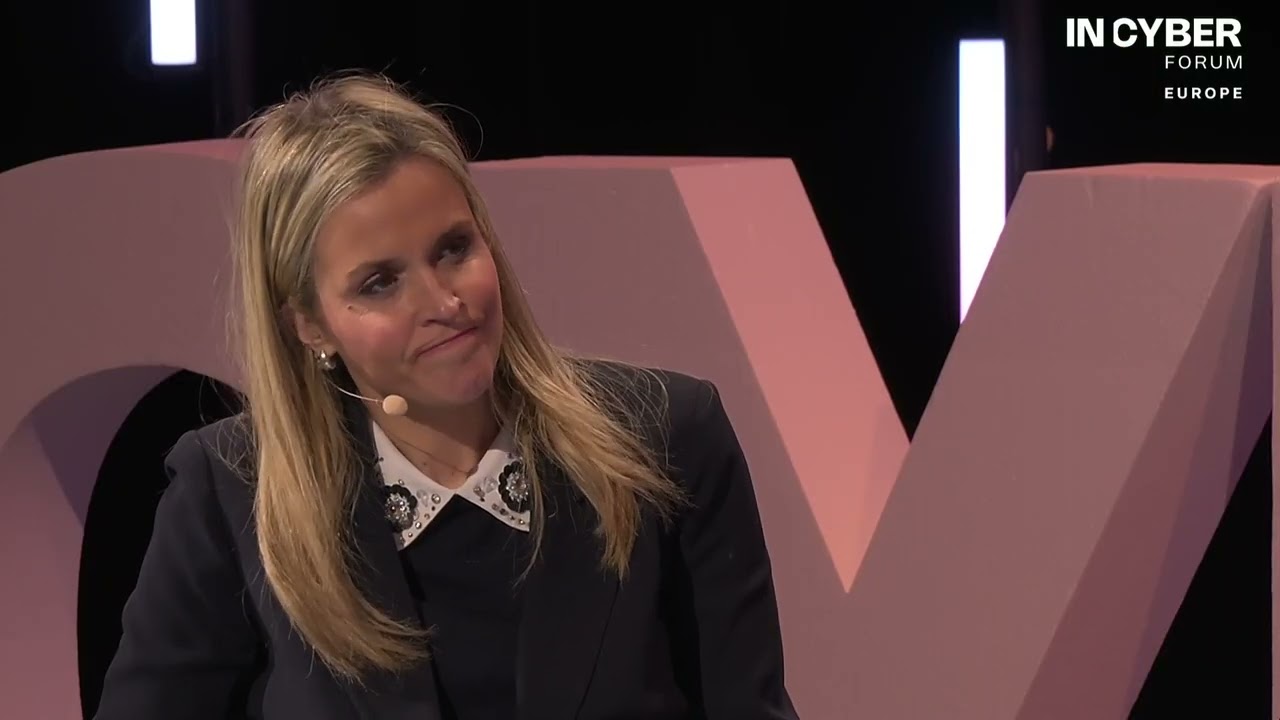
(P01) (INCYBER) Sommet d’ouverture - Andy Yen (Proton) & Octave Klaba (OVHCloud)
Keywords
Summary
136 words
Critical Evaluation
Value of the Information & Strength of the Argument
The discussion provides valuable insights from two key European tech leaders on the strategic importance of technological sovereignty. Yen and Klaba offer concrete examples and analogies to illustrate their points, such as the SAP example and the comparison with China’s investment in technology. Their arguments are coherent and well-structured, though they rely heavily on personal experience and opinion rather than empirical data. The call for a mindset shift from viewing technology as a cost to an investment is compelling and supported by historical examples. However, the lack of quantitative evidence or references to specific studies weakens the overall argumentation.
Scientific Rigor, Source Quality, Title Accuracy
The video is a debate/interview format, so scientific rigor is limited. The speakers cite no specific sources, but their credibility as industry leaders adds weight to their statements. The title accurately reflects the content, and the discussion stays on topic. The description provides links to the INCYBER forum and LinkedIn, which are relevant for further context but not directly cited in the discussion. The lack of citations and empirical data reduces the scientific quality, but the practical expertise of the speakers partially compensates.
197 words
Title / Content Match
The title accurately reflects the content: an opening summit discussion with Andy Yen and Octave Klaba on European technological sovereignty.
Quality & Reliability
7/10
The discussion features two prominent European tech entrepreneurs with direct industry experience, providing credible insights into technological sovereignty. However, the content is largely opinion-based and lacks empirical data or citations, limiting its scientific rigor.
Key Moments
Markers derived by PSI from the transcript: the creator did not define chapters.
- Introduction and first question on why technological sovereignty has become urgent.
- Andy Yen explains that US tech dominance is not new, citing long-term US policy.
- Octave Klaba mentions VMware/Broadcom and Trump as catalysts for European awareness.
- Discussion on 'sovereign washing' with SAP example.
- Klaba defines three levels of sovereignty: data, technological, operational.
- Yen highlights 70% US dominance in European cloud market and calls Europe 'stupid'.
- Klaba explains European market fragmentation and B2B vs B2C challenges.
- Yen contrasts European view of tech as cost vs Chinese view as investment.
- Response to Patrick Pouyanné's criticism: Klaba discusses scale and investment.
- Yen pushes back on perception vs reality, calls for European patriotism.
- Discussion on lack of common European vision and dream.
- Optimism about younger generation and closing remarks.
Cited Sources
- INCYBER Europe Forum — Official website of the forum where this discussion took place.
- INCYBER Europe LinkedIn — LinkedIn page of the forum, providing additional context and updates.
Concurring Sources
- European Commission Digital Strategy — EU policies on cloud computing and digital sovereignty.
Dissenting Sources
- Hyperscaler market dominance — Some may argue that US hyperscalers provide superior performance and scale, which the speakers dispute.
Contribution & Novelties
The video offers a unique perspective from two European tech leaders on the practical challenges and strategic imperatives of technological sovereignty. It introduces the concept of ‘sovereign washing’ and distinguishes three levels of sovereignty, providing a framework for understanding the issue. The discussion also highlights the mindset shift needed in Europe, comparing it to China’s approach.
Pour aller plus loin :
87 words
Radar Profile
The radar profile shows high scores in information quantity and quality, reflecting the depth of discussion, but lower technical level due to the non-technical nature. Global reliability is moderate, as the content is opinion-based.