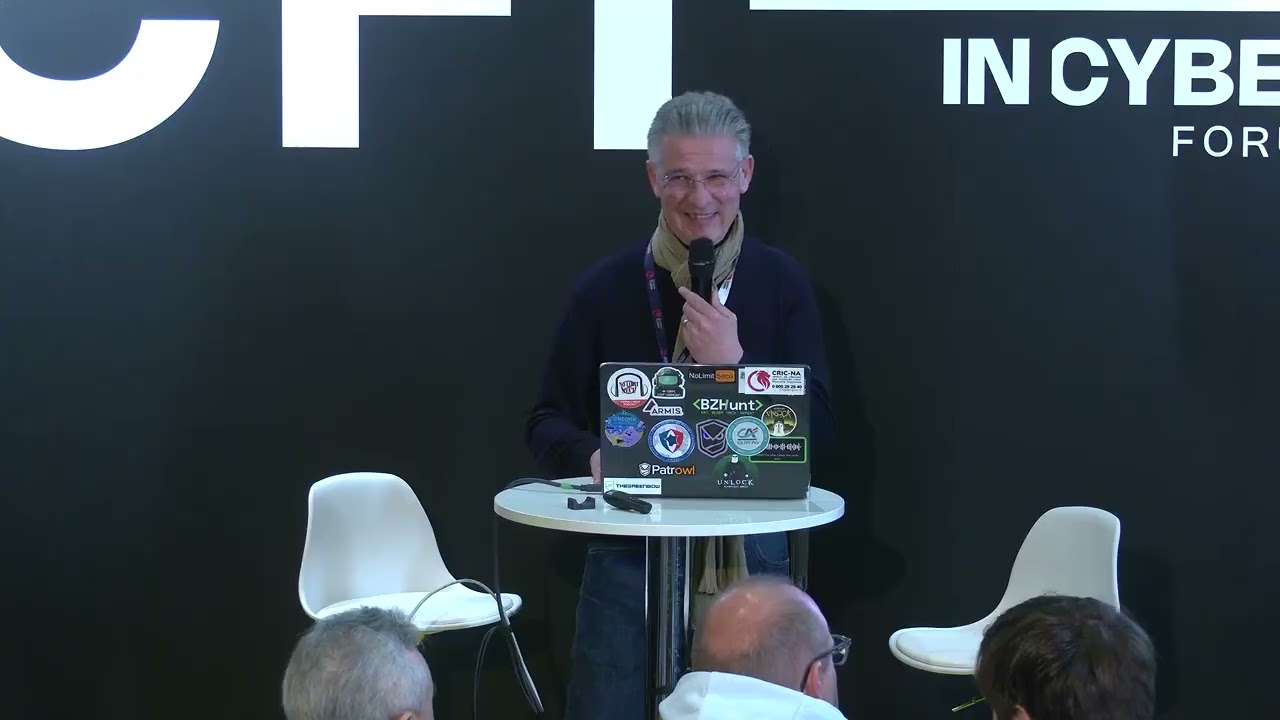
(DT02) (CFI) NIS2, CRA : VRAI ou FAUX ?
Keywords
Summary
182 words
Critical Evaluation
Value of the Information & Strength of the Argument
The video provides valuable insights into the practical implications of NIS2 and CRA for businesses, clarifying common misconceptions and highlighting key compliance requirements. The speaker’s expertise as a lawyer adds credibility, and he supports his arguments with references to legal texts and official publications. However, the presentation is largely opinionated and lacks detailed citations, which could be a limitation for viewers seeking verifiable sources. The argumentation is coherent and well-structured, but some claims, such as the exact number of security measures, should be verified with official documents.
Scientific Rigor, Source Quality, Title Accuracy
The speaker demonstrates a good understanding of the legal texts and provides a detailed analysis. He references the NIS2 directive, the CRA, and French draft decrees, but does not provide specific citations or links to these documents. The title accurately reflects the content, as the video is structured as a true/false quiz. The lack of explicit sources may reduce the overall rigor, but the information appears to be based on current regulatory developments. No comments were provided for analysis.
181 words
Title / Content Match
The title accurately reflects the content: a true/false quiz format addressing common misconceptions about NIS2 and CRA.
Quality & Reliability
7/10
The speaker is a lawyer specializing in cybersecurity, providing a detailed and practical analysis of NIS2 and CRA. The content is based on legal texts and official publications, but the presentation is opinionated and lacks citations to specific sources. The information is generally accurate but should be verified with official texts.
Key Moments
Markers derived by PSI from the transcript: the creator did not define chapters.
- Introduction and overview of the true/false quiz on NIS2 and CRA.
- Explanation of NIS2 self-designation process and sector criteria.
- Discussion on NIS2 not being directly applicable until transposition.
- Comparison of ISO 27001 with NIS2 requirements, highlighting the need for additional measures.
- Clarification that CISOs are not personally liable under NIS2.
- Discussion on the responsibility of company directors and potential suspension of mandates.
- Introduction to the Cyber Resilience Act (CRA) and its broad scope.
- Explanation that SaaS is covered by CRA and the 13 cybersecurity requirements.
- Details on vulnerability management, including SBOM and 5-year support.
- Timeline for CRA compliance and the concept of substantial modification.
- Sanctions under CRA, including market withdrawal and the role of ANFR.
Cited Sources
- Forum INCYBER Europe — The speaker is presenting at this forum, and the video is part of its content.
- INCYBER Europe LinkedIn — LinkedIn page of the forum, mentioned in the video description.
Concurring Sources
- NIS2 Directive (EU) 2022/2555 — The speaker's explanations align with the directive's provisions on self-designation and security measures.
- Cyber Resilience Act (EU) 2024/2847 — The speaker's description of CRA requirements matches the regulation's text.
Dissenting Sources
- ANSSI official guidance — The speaker suggests ANFR as the CRA authority, but ANSSI is the primary cybersecurity authority in France; this may be a point of divergence.
Contribution & Novelties
The video provides a practical, lawyer’s perspective on NIS2 and CRA, clarifying common misconceptions and offering actionable insights for compliance. It highlights the self-designation process, the limited role of ISO 27001, and the broad scope of CRA, including SaaS. The discussion on substantial modification and the role of ANFR adds unique value.
Pour aller plus loin :
- NIS2 Directive (EU) 2022/2555 — Official text of the NIS2 directive.
- Cyber Resilience Act (EU) 2024/2847 — Official text of the CRA.
- ANSSI website — French cybersecurity agency, relevant for NIS2 implementation in France.
91 words
Radar Profile
The radar profile shows high scores in information quantity and technical level, indicating a dense and detailed presentation. The quality and reliability scores are slightly lower, reflecting the lack of explicit citations and the opinionated nature of the content.