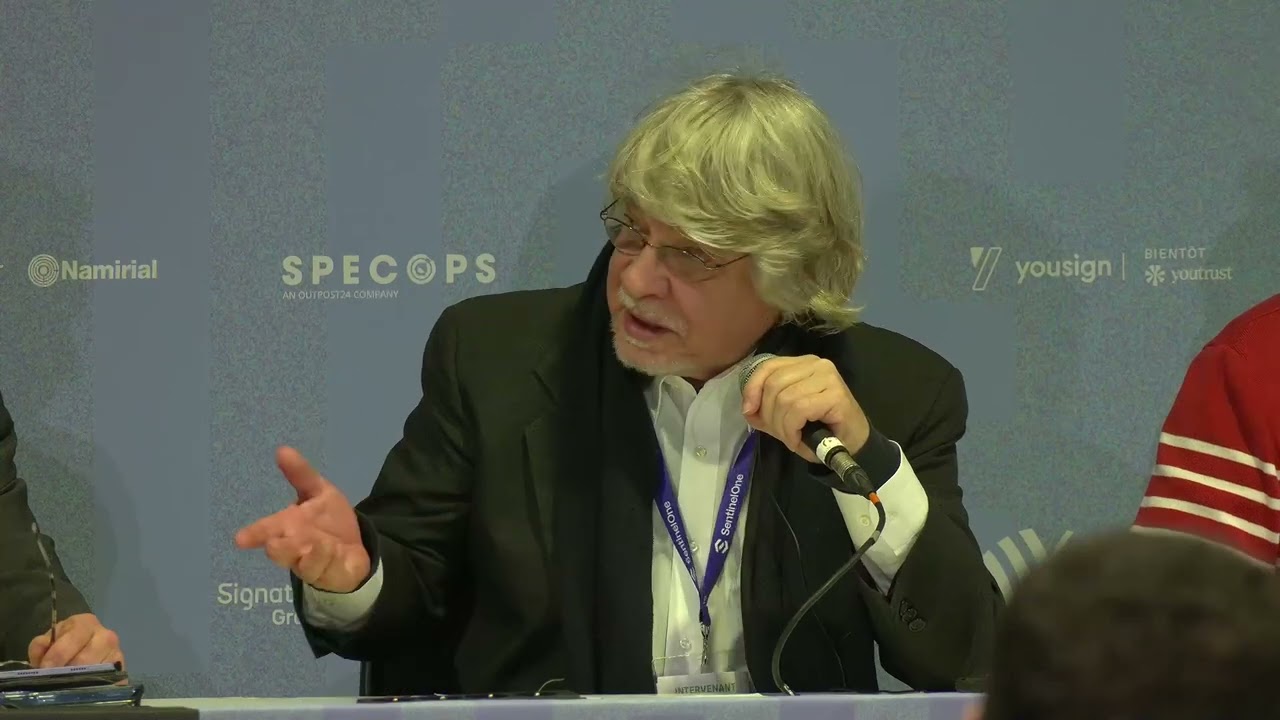
(TR01) (ID Forum) Identité numérique : dynamiques mondiales et choix européens
Keywords
Summary
209 words
Critical Evaluation
Value of the Information & Strength of the Argument
The discussion provides valuable insights into the diversity of digital identity implementations worldwide, highlighting practical challenges and strategic choices. The speakers support their points with concrete examples from their professional experience, such as the World Bank’s projects in Benin and Peru, and the technical details of US state-level implementations. The argumentation is generally solid, with experts acknowledging uncertainties and differing perspectives. However, some claims are made without deep evidence, and the panel format limits the depth of analysis on each topic.
Scientific Rigor, Source Quality, Title Accuracy
The scientific rigor is moderate: the speakers are credible practitioners, but they do not cite formal sources or studies. The discussion is based on professional experience and current projects, which adds practical relevance but lacks academic rigor. The title accurately reflects the content, which compares global and European digital identity approaches. The video includes a brief sponsorship segment for the INCYBER Forum, which is not penalized.
162 words
Title / Content Match
The title accurately reflects the content, which compares digital identity approaches globally and within Europe.
Quality & Reliability
7/10
The discussion features experts with direct involvement in digital identity projects (World Bank, France Identité, private sector). They provide concrete examples and acknowledge uncertainties. However, the format is a panel discussion without formal citations or peer-reviewed sources, and some claims are anecdotal.
Key Moments
Markers derived by PSI from the transcript: the creator did not define chapters.
- Introduction of panelists and topic.
- Discussion on Papua New Guinea's mobile-based identity for remote populations.
- Benin's public digital infrastructure and linking legal identity to unique ID.
- Peru's long-standing biometric system and need to update to new standards.
- US fragmented identity landscape, mobile driver's licenses, and privacy concerns.
- Canada's indecision between European and US standards.
- Switzerland's narrow referendum approval of national wallet.
- Uruguay's adoption of European standards and moderate adoption rates.
- Lithuania's partnership with private providers to deploy a wallet.
- European wallet and large-scale pilots, including digital travel credentials and payments.
Cited Sources
- Forum INCYBER Europe — Official website of the forum hosting the discussion.
- Forum INCYBER Europe LinkedIn — LinkedIn page of the forum for updates and networking.
Concurring Sources
- World Bank ID4D — Supports the discussion on digital identity in developing countries.
- EU Digital Identity Wallet — Aligns with the European approach discussed in the video.
Dissenting Sources
- None — No discordant sources were identified in the video.
Contribution & Novelties
The video provides a comparative overview of digital identity systems across multiple countries, highlighting the diversity of approaches and the influence of historical and cultural factors. It offers insights into the challenges of implementing national identity systems, such as linking legal identity to unique IDs and adapting to new standards. The discussion also sheds light on the European Union’s efforts to create a unified digital identity wallet and the complexities of integrating existing national systems.
Pour aller plus loin :
- eIDAS Regulation — The EU regulation on electronic identification and trust services, foundational for digital identity in Europe.
- EU Digital Identity Wallet — Official European Commission page on the EU Digital Identity Wallet.
- World Bank Identification for Development (ID4D) — World Bank program supporting digital identity systems in developing countries, relevant to the discussion on Benin and Peru.
- ICAO — International Civil Aviation Organization, which sets standards for travel documents, mentioned in the context of digital travel credentials.
158 words
Radar Profile
The radar profile shows high scores in quantity of information and technical level, reflecting the breadth of examples and expert insights. Quality and reliability are slightly lower due to the lack of formal citations and the anecdotal nature of some claims. Overall, the content is informative and credible for a panel discussion.
💬 No comments were provided for analysis.